Rodolfo Marqués: Decoding the Hacker Aesthetic
Rodolfo Marqués (San Antonio de Padua, Provincia de Buenos Aires, Argentina, 1982) stands apart from prevailing trends in contemporary Argentine art—a singular voice committed to interrogating social and cultural phenomena with an approach he himself describes as “hacking,” disrupting conventional thought processes. This ethos of invention permeates his artistic production, resulting in a distinctive body of artifacts and pamphlets that defy easy categorization, solidifying his position as a prominent figure within the evolving landscape of Argentine visual culture. Trained at the Universidad Nacional de las Artes in Buenos Aires, Marqués’s trajectory has been marked by numerous residencies and awards—a testament to his dedication and recognition within the artistic community.
Early Influences: Rhizomatic Thought & Deleuze/Guattari
Marqués's artistic sensibilities were profoundly shaped early on by thinkers like Gilles Deleuze and Félix Guattari, whose concepts of rhizomatic thought—rejecting hierarchical structures in favor of interconnected networks—became foundational to his creative methodology. This influence is palpable in his explorations of spaces and environments that challenge established paradigms. Deleuze and Guattari’s critique of Western metaphysics—their insistence on embracing multiplicity and resisting linear narratives—provided Marqués with a conceptual framework for questioning dominant cultural assumptions and fostering alternative perspectives. He sees rhizomatic thought as mirroring the complex, unpredictable nature of reality itself—a guiding principle informing his artistic endeavors.
Universidad Nacional de las Artes: Foundations in Artistic Principles
His formal education at UNA provided him with a rigorous grounding in artistic principles, fostering a critical perspective on art history and contemporary cultural debates. It was here that he honed his skills as a painter and sculptor, mastering techniques ranging from oil painting to mixed media assemblage—skills that would subsequently underpin his experimental projects. UNA instilled in Marqués not only technical proficiency but also an intellectual curiosity—a desire to engage with artistic traditions while simultaneously pushing boundaries of creative expression. The university’s emphasis on conceptual rigor served as a catalyst for developing his distinctive aesthetic vision.
The Workshop Laboratory Aesthetic: Spatial Exploration & Material Engagement
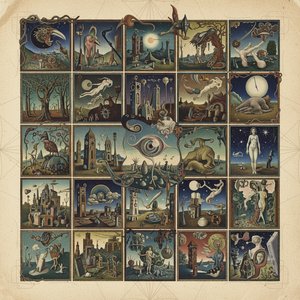
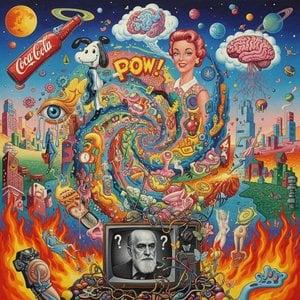
Marqués’s artistic practice is defined by a deliberate aesthetic strategy—the replication of the workshop-laboratory environment. His installations are populated with devices that operate on principles often obscured from view, surrounded by paintings and projection drawings executed on unconventional supports like cardboard, plywood panels, gypsum boards, galvanized metal frames, and marquetry. This visual language isn’t merely decorative; it actively postulates scenarios originating from an imagination fueled by the impact of technology and industry—a deliberate provocation against accepted notions of reality. He seeks to create spaces that stimulate contemplation and question assumptions about how we perceive and interact with our surroundings. The selection of materials—recycled cardboard, repurposed metal—reflects a commitment to ecological awareness alongside fascination for industrial processes.
Publications & Conceptual Framework: Beyond Visual Art
Beyond visual art, Marqués has engaged in writing and editorial pursuits, producing texts that critically examine contemporary aesthetic theory and delve into pivotal moments in Argentine history. Notably, he founded Nueva Bibliofilia Argentina (NBA), a collective dedicated to exploring the intersection of literature and artistic experimentation—a testament to his intellectual curiosity and commitment to fostering dialogue across disciplines. His conceptual framework centers on destabilizing established hierarchies and interrogating dominant narratives, mirroring the spirit of Renaissance utopian thinkers who envisioned worlds brimming with alternative possibilities. He believes that art should serve as a vehicle for challenging conventional wisdom and prompting viewers to reconsider their understanding of the world.
Notable Exhibitions & Recognition: International Showcase
Marqués’s exhibitions have garnered international acclaim, showcasing his distinctive artistic vision in venues ranging from Villa Waldberta in Munich to Galerie Fondazione Prada in Milan and Frieze New York—establishing him as a significant voice within the global art scene. His projects—such as “Masao Gallery,” “Waldengallery,” “NADA,” and “Casa Nacional del Bicentenario”—have consistently pushed boundaries of artistic expression, exploring themes of technology, memory, and social critique. He has received numerous awards recognizing his contributions to Argentine art and culture—a testament to his unwavering dedication and visionary perspective.





![En Cokaygne Se Come Y Se Bebe Sin Preocupaciones [in Cokaygne You Live And Drink With No Worries] — Rodolfo Marqués](/media/artworks/images/thumbnails/9b/5b/9b5b40327e654d2e9141fa04f047744d.jpg)




