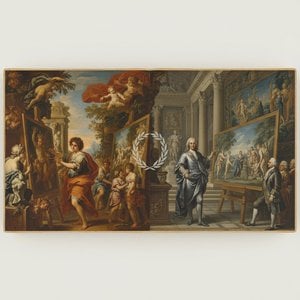
Roberto Cacciari: Bridging Tradition and Innovation in Bolognese Art
Roberto Cacciari (1882 – 1966) stands as a significant figure within the artistic landscape of Bologna and early 20th-century Italy. Born into a family steeped in architectural heritage, his formative years instilled an appreciation for meticulous craftsmanship and enduring forms—influences that would profoundly shape his own artistic endeavors. Studying under the tutelage of Silvio Gordini, Cacciari honed his painting skills while simultaneously pursuing academic excellence at the University of Bologna, establishing himself as both artist and educator. This dual commitment fostered a unique perspective on artistic development, blending classical sensibilities with burgeoning modernist ideas—a synthesis that distinguishes him from many of his contemporaries who embraced solely abstract expressionism.
Early Influences & Education
Gordini’s guidance instilled in Cacciari a dedication to mastering technique and capturing the essence of Italian art history. He recognized the importance of grounding oneself in the foundational principles of artistic heritage, mirroring the stylistic concerns prevalent during the Belle Époque. This formative influence is palpable throughout his oeuvre, where meticulous detail and careful observation are hallmarks of his approach—a deliberate contrast to the more spontaneous impulses characteristic of emerging avant-garde movements.
Architectural Firm & Academic Career
Beyond his artistic pursuits, Cacciari played a crucial role in shaping Bologna’s architectural landscape alongside Cacciari, Guidacci and Venturi. He served as professor at the University of Bologna for decades, nurturing the talents of aspiring artists and fostering intellectual discourse within the Bolognese academic community. This multifaceted engagement ensured that his artistic vision was disseminated beyond the confines of the studio, contributing to the broader cultural vitality of his city.
Stylistic Characteristics & Notable Artwork Example: ‘The Sepulture of St. Cecilia’
Cacciari’s artistic style is characterized by a harmonious fusion of tradition and innovation. Unlike many contemporaries who surrendered entirely to abstract expressionism—a trend that sought to liberate art from representational constraints—he retained a grounding in figurative representation, skillfully employing charcoal to convey depth and nuance. This masterful technique—evident throughout his works—allowed him to distill complex theological concepts into visually arresting compositions, mirroring the stylistic preoccupations of the Art Deco period. The meticulous attention to detail – evident in every stroke – underscores his commitment to honoring artistic heritage while simultaneously pushing creative boundaries. His most celebrated piece, ‘The Sepulture of St. Cecilia and the Saints Cecilia and Valeriano,’ exemplifies this duality perfectly: a monumental canvas imbued with solemn grandeur yet rendered with remarkable sensitivity to tonal gradation and textural variation. It stands as a testament to Cacciari’s ability to synthesize classical compositional principles with modernist expressive techniques—a stylistic hallmark that distinguishes him from his peers.
Legacy & Museums Collections
Cacciari's contribution to Italian art extends beyond individual masterpieces; he served as a mentor, fostering the artistic growth of younger generations and shaping Bologna’s cultural identity. His paintings reside in notable museums like Pinacoteca Comunale di Recanati and Retiro di San Pellegrino Museum—institutions that safeguard his legacy for future generations of scholars and enthusiasts alike. These collections offer invaluable insights into Cacciari's artistic vision and its resonance with the intellectual currents of his time, solidifying his place as a pivotal figure in Bolognese art history. He represents not merely an artist of his era but also a custodian of Italian artistic tradition—a testament to the enduring power of blending meticulous craftsmanship with intellectual curiosity.