Asesoría de arte gratuita

x

Robert Falk

1886 - 1958

Resumen biográfico

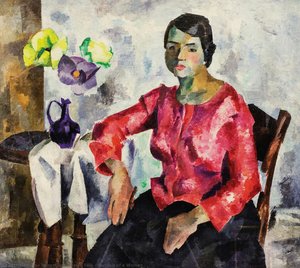
  • Top-ranked work: Portrait of a Woman
  • Died: 1958
  • Copyright status: Under copyright
  • Born: 1886, Moscú, Rusia
  • Nationality: Rusia
  • Más…
  • Lifespan: 72 years
  • Works on APS: 1
  • Art period: Arte moderno
  • Museums on APS:
    • Museo de Artes Visuales de la República del Tártaro
    • Museo de Artes Visuales de la República del Tártaro
    • Museo de Artes Visuales de la República del Tártaro
    • Museo de Artes Visuales de la República del Tártaro
    • Museo de Artes Visuales de la República del Tártaro
  • Top 3 works: Portrait of a Woman

Test de arte

Solo hay una respuesta correcta para cada pregunta.

Pregunta 1:
¿Qué grupo artístico fundó Robert Falk?
Pregunta 2:
¿Dónde estudió arte inicialmente Robert Falk?
Pregunta 3:
¿En qué período hizo Falk experiencia un resurgimiento de popularidad entre jóvenes pintores?
Pregunta 4:
¿Qué influencia artística se le atribuye a Robert Falk por conectar el arte ruso y francés con el modernismo?
Pregunta 5:
¿Dónde residen actualmente las obras maestras de Robert Falk?

Robert Falk: Bridging Tradition and Avant-Garde in Soviet Russia

Robert Rafailovich Falk (1886 – 1958) occupies a singular position within the annals of Russian art—a conduit between the stately grandeur of Tsarist realism and the exhilarating upheaval of Soviet experimentation. Born in Moscow, his artistic trajectory unfolded against the backdrop of transformative societal shifts, shaping him into an artist deeply attuned to both heritage and innovation. His formative years were steeped in the stylistic currents championed by Korovin and Serov, artists who established a visual vocabulary that would resonate throughout his subsequent endeavors—a grounding in academic precision tempered by an unwavering curiosity for new artistic horizons. The establishment of Jack of Diamonds in 1905 marked Falk’s decisive step into the realm of avant-garde collaboration, placing him alongside fellow visionaries committed to dismantling accepted norms and forging uncharted creative paths. This collective ethos mirrored the intellectual ferment of the period, prioritizing daring conceptual explorations and challenging the conventions that had defined previous generations. Continuing his studies at Moscow School of Painting, Sculpture and Architecture solidified his connection to Russian artistic tradition while simultaneously immersing him in the burgeoning influence of Cézanne and Impressionism—artists whose groundbreaking techniques would profoundly impact Falk’s aesthetic sensibilities. Specifically, Cézanne's exploration of geometric simplification and spatial recession became a cornerstone of Falk’s approach to landscape painting, resulting in canvases characterized by remarkable atmospheric depth and meticulously crafted color harmonies. Falk’s role as instructor at VKhUTEMAS (State Higher Artistic and Technical Workshops) during the Soviet era transcended mere pedagogical duty; it represented the embodiment of the avant-garde spirit itself. He fostered a dynamic exchange between seasoned masters and aspiring artists, encouraging them to synthesize traditional craftsmanship with experimental methodologies—a synthesis that mirrored his own artistic practice. This commitment to nurturing young talent extended beyond the confines of the workshop, shaping the intellectual landscape of Soviet art for decades to come. His relocation to Paris in 1928 provided Falk with invaluable exposure to European artistic discourse and broadened his understanding of stylistic diversity. Observing firsthand the developments unfolding across the continent—particularly the rise of Surrealism and Constructivism—he absorbed influences that would subtly enrich his oeuvre, informing his compositional choices and deepening his engagement with abstract forms. Returning to Moscow in 1938, Falk retreated from public life, dedicating himself to solitary contemplation until his passing in 1958. Despite this relative obscurity during the Khrushchev thaw, Falk experienced a resurgence of recognition among younger generations who hailed him as a crucial link between Russian artistic traditions and the avant-garde’s embrace of abstraction—a testament to the enduring power of artistic exploration and its capacity to transcend historical boundaries. Today, Falk's paintings reside prominently within the New Tretyakov Art Museum in Moscow, serving as tangible reminders of his contribution to Soviet art history. His landscapes—particularly those depicting Russian countryside bathed in autumnal light—remain celebrated for their evocative beauty and masterful execution—a legacy that continues to inspire artists and scholars alike. Robert Falk’s oeuvre stands as a compelling illustration of the transformative potential inherent in artistic dialogue—a bridge spanning centuries of aesthetic evolution, cementing his place among Russia's most influential painters.