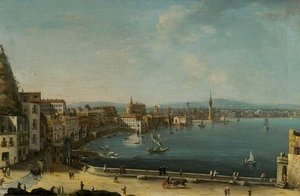
Pietro Antoniani: Painter of Naples and Vesuvius
Pietro Antoniani (Milan, circa 1740 – 1805) was an Italian painter whose artistic vision captured the grandeur of the Neapolitan landscape and the dramatic eruptions of Mount Vesuvius—subjects that resonated deeply with British patrons during his lifetime. While overshadowed by contemporaries like Jacob Philipp Hackert, Antoniani nonetheless established himself as a significant figure within the burgeoning School of Posillipo, a movement dedicated to portraying the beauty and dynamism of the Bay of Naples.- Early Life & Training: Precise biographical details surrounding Antoniani’s formative years remain elusive. He is believed to have been born in Milan around 1740, though definitive records are scarce. His artistic training likely commenced under Jacob Philipp Hackert, a German landscape painter who spearheaded the School of Posillipo and championed a style characterized by luminous color palettes and meticulous observation of nature. This influence profoundly shaped Antoniani’s approach to composition and technique.
- Style & Technique: Antoniani's distinctive artistic style leaned heavily toward Baroque influences blended with Romantic sensibilities. He excelled in depicting expansive seascapes infused with atmospheric perspective—a hallmark of Hackert’s oeuvre—and rendered volcanic eruptions with breathtaking realism, conveying both terror and awe. His brushwork was deliberate and expressive, prioritizing tonal gradation to achieve a palpable sense of depth and movement.
- Notable Works: Antoniani gained considerable renown for his depictions of Vesuvius, particularly “Naples with Vesuvius,” which exemplifies the artist’s masterful ability to capture geological phenomena within an artistic framework. His canvases frequently featured figures engaged in maritime activities—fishing boats, warships—adding narrative elements that enriched their visual impact. Furthermore, he produced impressive historical paintings, notably "San Pietro Martire," showcasing a keen understanding of architectural grandeur and dramatic storytelling.
- Influence & Legacy: Antoniani’s work served as an inspiration for subsequent generations of artists, particularly those associated with the School of Posillipo. His commitment to portraying the natural world with accuracy and emotion solidified his position as one of Hackert's most gifted pupils. Although he didn’t achieve widespread fame during his lifetime, Antoniani’s paintings continue to be admired for their beauty and technical prowess—testaments to a singular talent that captured the spirit of an era.
- Later Years & Death: Antoniani continued to paint prolifically until his death in 1805. He resided primarily in Naples, where he cultivated connections with influential figures within the artistic community. His legacy resides not only in his celebrated landscapes but also in his contribution to establishing a distinctive visual language that reflected the Romantic fascination with sublime grandeur and natural power—a legacy that persists today through reproductions of his masterpieces on platforms like WahooArt.com.