Pieter Oyens: A Quiet Master of Dutch Still Life
Pieter Oyens (1842 – 1894) was a Dutch painter born in Amsterdam, the identical twin brother of David Oyens, who also pursued a career in art. While overshadowed by his more celebrated sibling, Pieter Oyens nonetheless carved out a distinctive niche within Haarlem’s artistic landscape, specializing in meticulously rendered genre scenes that captured the subtle beauty and melancholy of everyday life. His work reflects the prevailing sensibilities of the late 19th century, blending realism with an understated elegance characteristic of the Dutch Golden Age—a tradition championed by Rembrandt and Vermeer, artists who championed realism and psychological insight—yet he possessed a singular sensitivity to capturing fleeting emotions and subtle nuances of human experience.
Early Life & Training
Little is known about Oyens’ formative years beyond his birth in Amsterdam. Like David, he received a formal artistic education, though specific details remain elusive. His training likely encompassed traditional techniques honed by Haarlem’s established ateliers, preparing him for the challenges of translating observation into compelling visual representations. He began at the age of eight, taking drawing lessons from Johan Hendrik Veldhuyzen—a decision driven by his mother's fervent desire to nurture his artistic inclinations. Initial attempts at mastering the banking trade proved unsuccessful, ultimately leading him to prioritize art as his vocation.
Style & Technique
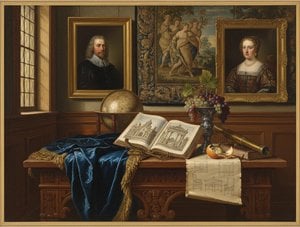
Oyens’ distinctive style is defined by his masterful handling of light and shadow—a hallmark of Caravaggio’s influence—which he skillfully employed to imbue his compositions with a palpable sense of atmosphere. He favored muted palettes, prioritizing tonal gradations over vibrant colors, creating images that prioritized mood and psychological depth over mere decorative splendor. This deliberate restraint mirrored the aesthetic principles of his time, emphasizing emotional resonance rather than ostentation. His meticulous attention to detail—particularly in rendering textures and surfaces—further distinguished his work from more flamboyant contemporaries.
Notable Works
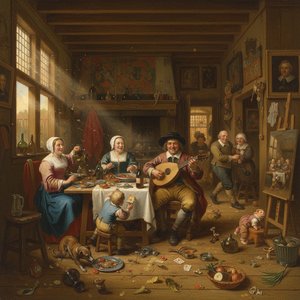
Oyens produced approximately 17 paintings during his lifetime, primarily focused on domestic interiors populated by figures engaged in quiet activities—reading, sewing, or simply contemplating the stillness of the room. His most celebrated piece is “Hendrik Waller (1887-1951) op driejarige leeftijd,” a poignant portrayal of a young boy absorbed in play, capturing a moment of innocent joy against a backdrop of richly ornamented furnishings. This canvas exemplifies Oyens’ ability to distill complex psychological states into deceptively simple visual forms—a testament to his artistic prowess and unwavering dedication to portraying the human condition with compassion and subtlety.
Influences & Artistic Context
Oyens’ artistic vision was undoubtedly shaped by the broader currents of Dutch art history. He stood firmly within the tradition established by Rembrandt and Vermeer—artists who championed realism and psychological insight—yet he possessed a singular sensitivity to capturing fleeting emotions and subtle nuances of human experience. The influence of Caravaggio is evident in Oyens' dramatic use of chiaroscuro, creating powerful contrasts between light and dark that heighten emotional impact. His work reflects the anxieties and aspirations of Victorian society, grappling with themes of mortality, faith, and familial devotion—subjects explored with quiet dignity and profound empathy.
Legacy & Significance
Pieter Oyens’ contribution to Haarlem’s artistic heritage is understated but enduring. His paintings serve as valuable documents of Victorian domestic life, offering glimpses into the rituals and affections of ordinary families. More importantly, his unwavering commitment to tonal harmony and psychological realism solidified his place among the most accomplished practitioners of Dutch still life painting—a genre that continues to inspire artists today. His meticulous observation of everyday scenes—combined with his masterful technique—ensures that Oyens’ work will continue to resonate with audiences for generations to come.