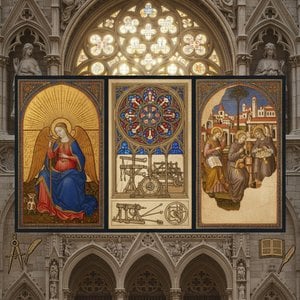
Tournai Passchier Grenier: The Silent Patron of Flemish Tapestry
Pasquier Grenier (c. 1447 – July 21, 1493) stands as a pivotal figure in the history of fifteenth-century Flemish art and textile trade—a testament to how patronage shaped artistic production during the Burgundian Renaissance. Initially believed to be a master tapestry weaver himself, meticulous archival research has definitively established Grenier’s true vocation: he was arguably the most influential tapestry dealer operating within the Duchy of Burgundy and its surrounding territories. His role extended far beyond mere commerce; he actively fostered innovation and oversaw collaborations between workshops in Tournai, Bruges, and Antwerp, propelling Flemish tapestry artistry to new heights.
Early Life & Apprenticeship
Grenier’s origins remain somewhat obscure, though records indicate he was born in Tournai, Belgium—a thriving center for wool production and textile craftsmanship. Precise details of his formative years are scarce, but it is known that he began his career as a wool merchant before transitioning into the lucrative trade of tapestries. This shrewd initial investment foreshadowed his future success as a visionary leader within the burgeoning Flemish textile industry. The very fabric of his life—woven with threads of ambition and astute observation—would ultimately contribute to shaping the artistic landscape of his time.
The Tapestry Trade & Patronage
Grenier’s brilliance lay not in weaving himself, but in identifying and nurturing talent. He cultivated relationships with leading tapestry workshops—particularly those in Tournai and Bruges—and secured commissions from wealthy Burgundian dukes like Philip the Handsome and Charles the Bold. These patrons demanded ambitious narratives depicting historical events and mythological tales, driving Grenier to champion experimental techniques and encourage stylistic developments. His understanding of the market was unparalleled; he recognized that securing royal commissions wasn’t merely about fulfilling orders but about elevating Flemish artistry to new levels of prestige and sophistication. He skillfully navigated political currents and economic realities—a feat that demanded considerable diplomatic acumen alongside entrepreneurial vision.
Notable Commissions & Artistic Influence
Grenier’s involvement in prominent tapestry projects cemented his reputation as a visionary dealer. Among his most celebrated endeavors was the “Attack of Asilah” tapestry (1475), commissioned by Philip the Handsome, showcasing masterful depiction of naval warfare and demonstrating the burgeoning interest in realism within Flemish art. Furthermore, he oversaw the production of “The Siege of Asilah,” which similarly captivated audiences with its dramatic portrayal of military conflict. He wasn’t merely facilitating transactions; he was actively shaping artistic taste and inspiring workshops to push boundaries—a legacy that continues to resonate through centuries of art history. The sheer scale and ambition of these projects underscored Grenier's conviction that art should serve as a conduit for both grandeur and intellectual engagement.
Technique & Innovation
Grenier’s success stemmed from his astute understanding of textile production. He skillfully navigated the complexities of sourcing wool, dyes, and skilled artisans—a feat that required considerable organizational prowess. More importantly, he championed innovative weaving techniques, pushing workshops to explore new textures and color palettes. His influence extended beyond individual commissions; he fostered a broader artistic dialogue that contributed significantly to the stylistic evolution of Flemish tapestry. He recognized that true artistry resided not just in executing a commission but in embracing experimentation and challenging conventional norms—a perspective that distinguished him from many of his contemporaries.
Legacy & Historical Significance
Grenier’s contribution to European art history transcends mere economic activity. He embodies the spirit of Renaissance patronage—a dynamic interplay between aristocratic ambition and artistic creativity. By fostering collaboration and promoting experimentation, Grenier ensured that Flemish tapestry remained at the forefront of artistic innovation during a period marked by political upheaval and cultural transformation. His legacy continues to inspire scholars studying the intersection of art, commerce, and power in fifteenth-century Europe. He remains a symbol of entrepreneurial vision coupled with unwavering dedication to elevating artistic standards—a testament to the transformative potential of patronage in shaping the course of history.