El Alquimista del Color: La Vida y Visión de Oleksa Hryshchenko
Recorrer la vida de Oleksa Hryshchenko, conocido en gran parte del mundo occidental como Alexis Gritchenko, es embarcarse en un viaje por el corazón mismo del modernismo del siglo XX. Nacido en 1883 en la pequeña ciudad ucraniana de Krevets, los cimientos intelectuales tempranos de Hryshchenko no se forjaron en un estudio, sino en los rigurosos pasillos de la academia, donde estudió filología y biología en las universidades de Kiev, San Petersburgo y Moscú. Sin embargo, bajo esta disciplina científica y lingüística latía el corazón de un artista destinado a tender un puente entre las antiguas tradiciones espirituales y las geometrías fracturadas de la vanguardia. Su transición de erudito de las ciencias de la vida a maestro de la expresión visual marca una de las transformaciones más profundas en la historia del arte de Europa del Este.
La trayectoria de su carrera se vio irrevocablemente alterada por sus encuentros con las corrientes revolucionarias que fluían por Europa. Una visita crucial a París en 1911 lo introdujo al lenguaje radical del cubismo, un movimiento que le ofreció una nueva forma de deconstruir la realidad en sus formas esenciales. No obstante, Hryshchenko nunca se conformó con la mera experimentación formal; buscaba una síntesis más profunda y conmovedora. Sus viajes por Italia entre 1913 y 1914 le permitieron comulgar con los maestros del Renacimiento temprano, mientras que su profunda fascinación por la iconografía bizantina le proporcionó un ancla espiritual. Esta intersección única —donde el rigor estructural del cubismo se encontraba con la esencia luminosa y sagrada de la tradición ortodoxa— se convirtió en el sello distintivo de su estilo maduro.
Una Sinfonía de Color y Luz
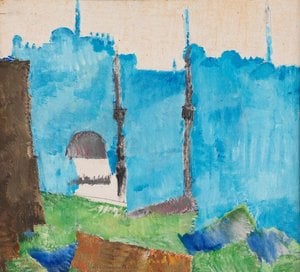
La evolución artística de Hrytraschenko se comprende mejor a través de su concepto de “tsvetodynamos”, o dinámica del color. Alejándose de las paletas reductivas y a menudo monocromáticas del cubismo temprano, desarrolló un enfoque vibrante y expresionista que buscaba capturar la resonancia emocional de la luz y la atmósfera. Su obra se convirtió en una danza de tonalidades diáfanas, donde los límites entre los objetos se disolvían en un juego rítmico de pigmentos. Ya fuera al representar los paisajes bañados por el sol de Constantinopla, la belleza agreste de Grecia o las serenas vistas de la Riviera Francesa, su pincelada poseía una cualidad inmediata y visceral que traducía la experiencia perceptible en una visión interior.
Su maestría técnica no se limitó al óleo sobre lienzo; fue un creador versátil que encontró una expresión profunda en la acuarela, el dibujo y el litografiado. En estos medios, se puede observar la capacidad del artista para equilibrar una delicada translucidez con trazos audaces y estructurales. Sus obras tardías, particularmente aquellas creadas durante su larga residencia en Provenza, reflejan una conexión profunda con el paisaje, haciendo eco de los legados de Cézanne y Van Gogh, al tiempo que mantienen su vitalidad rítmica y distintivamente personal. Este período de su vida, transcurrido bajo la luz del sur de Francia, le permitió perfeccionar un estilo que era simultáneamente moderno en su energía y antiguo en su profundidad espiritual.
El Legado de un Visionario Cosmopolita
La importancia histórica de Oleksa Hryshchenko reside en su papel como mediador cultural. Se situó en la encrucijada entre Oriente y Occidente, traduciendo los valores estéticos de su herencia ucraniana a un lenguaje que resonaba con la vanguardia internacional. Su carrera estuvo marcada por prestigiosas exposiciones en París, Nueva York y Lviv, y sus obras encontraron hogar en colecciones estimadas como el Instituto Ucraniano de América y las colecciones permanentes de los principales museos franceses. No fue simplemente un pintor, sino un teórico del arte y memorista, documentando meticulosamente las conexiones entre el arte sacro histórico y la práctica contemporánea.
Al reflexionar sobre su inmensa contribución al mundo del arte, emergen varios pilares clave de su legado:
- La Síntesis de Tradiciones: Su capacidad inigualable para armonizar las innovaciones geométricas del cubismo con la grandeza espiritual del arte bizantino y renacentista.
- Dinámica del Color: El desarrollo de un lenguaje expresivo único centrado en el poder emocional de la luz y las paletas de colores cambiantes.
- Construcción de Puentes Culturales: Su papel al situar las sensibilidades artísticas ucranianas en la primera línea de los movimientos modernistas parisinos y globales.
- Profundidad Intelectual: Una carrera definida por la rara combinación de rigor académico, perspicacia teórica e intuición creativa pura.
En última instancia, Hryshchenko permanece como una figura singular: un pintor que miró hacia atrás, hacia los iconos del pasado, para encontrar las herramientas necesarias para pintar el futuro. Su vida, que abarca desde las tierras del corazón eslavo hasta la costa mediterránea, sirve como testimonio del poder del arte para trascender fronteras, lenguajes y eras.