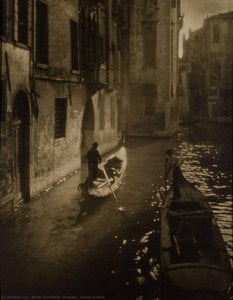
Nicola Perscheid: Pionero del Retrato Artístico y la Lente de Enfoque Suave
Nicola Perscheid (3 de diciembre de 1864 – 12 de mayo de 1930) se erige como una figura singular en la historia de la fotografía alemana de principios del siglo XX, celebrado primordialmente por sus magistrales retratos artísticos impregnados de una cualidad etérea lograda mediante técnicas innovadoras. Nacido en Moselweiß, cerca de Coblenza, emprendió una búsqueda vital dedicada a la narrativa visual, perfeccionando su oficio a través de Europa —recorriendo ciudades como Saarbrucken, Tréveris, Colmar, Niza, Viena y Budapest— y demostrando una adaptabilidad y dedicación admirables a su profesión. Sus años formativos le inculcaría un profundo aprecio por la observación y el detalle meticuloso, cualidades que posteriormente definirían su visión artística.- Primeros años y formación: La educación formal de Perscheid se centró en los estudios clásicos, proporcionándole una comprensión fundamental de la estética y la composición. Sin embargo, fue su aprendizaje como fotógrafo bajo la tutela de Wilhelm Schüle en Coblenza lo que verdaderamente encendió su pasión por este medio y lo situó en el camino hacia la expresión artística.
- La Lente Perscheid: Un hito en la fotografía de retrato: Quizás el legado más perdurable de Perscheid reside en su invención de la “lente Perscheid”, un revolucionario aparato de enfoque suave diseñado específicamente para el retrato de gran formato. Este ingenioso dispositivo priorizaba la captura de matices sutiles de emoción y expresión, rechazando las crudas realidades de los procesos fotográficos convencionales. Esto permitió a los fotógrafos alcanzar un nivel sin precedentes de control artístico sobre la textura de la imagen y el rango tonal.
Visión Artística y Estilo de Retrato
El enfoque de Perscheid hacia el retrato trascendió la mera documentación; él buscaba transmitir la vida interior de sus sujetos, priorizando el estado de ánimo y la atmósfera junto a un parecido preciso. Influenciado por el Impresionismo y el Simbolismo —movimientos que defendían la experiencia subjetiva y la imaginería evocadora—, Perscheid empleó con destreza técnicas de iluminación y elecciones compositivas para intensificar el impacto emocional. Sus retratos se caracterizan por una quietud contemplativa, reflejando un profundo conocimiento de la psicología humana y un compromiso inquebrantable con la integridad artística. Elaboró meticulosamente imágenes que capturaban no solo la apariencia, sino también el espíritu.- Obras notables: Entre su impresionante obra se encuentran piezas cautivadoras como ‘Dame Mit Japanischem Schirm’ (1925), donde utilizó expertamente la impresión al platino para producir un impresionante retrato en blanco y negro rebosante de textura y una luminiscencia de otro mundo. Del mismo modo, su representación de Arnold Schönberg muestra la capacidad del artista para transmitir emociones complejas a través de un encuadre y una gradación tonal cuidadosamente considerados.
- Técnica y consideraciones estéticas: La dedicación de Perscheid a la excelencia artística se extendió más allá de la innovación en las lentes; adoptó procesos de impresión meticulosos —particularmente la impresión al platino— para maximizar la profundidad y la luminosidad de la imagen. Esta técnica le permitió alcanzar un nivel notable de sutileza tonal, reflejando el deseo del artista de capturar la esencia de sus sujetos con una profunda sensibilidad.
Significado Histórico y Legado
Las contribuciones de Nicola Perscheid a la historia de la fotografía son innegables. Se posiciona como una figura fundamental en el establecimiento del retrato artístico como un género distinto, demostrando que la fotografía podía servir como vehículo para transmitir emociones y capturar las cualidades intangibles de la experiencia humana. Su invención de la lente Perscheid alteró fundamentalmente la práctica fotográfica, influyendo en generaciones de artistas y moldeando la sensibilidad estética de la época. Hoy en día, su obra continúa inspirando admiración por su belleza y sofisticación: un testimonio de su perdurable visión artística.Preguntas y respuestas
¿Existe una lista completa de las obras de Nicola Perscheid?
Todas las obras de Nicola Perscheid en este sitio web pueden explorarse desde la página de Todas las obras del artista.
¿Puedo explorar las obras de Nicola Perscheid por técnica?
Las obras de Nicola Perscheid pueden explorarse por técnica en la página de Todos los medios del artista.
¿De dónde es Nicola Perscheid?
Nicola Perscheid nació en Alemania.