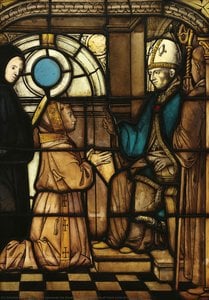
El legado luminoso de Niccolò da Varallo
En el corazón del Renacimiento italiano, donde la luz y la sombra comenzaron a danzar con un realismo recién descubierto, el nombre de Niccolò da Varallo emerge como un maestro de la brillantez. Nacido alrededor de 1425 en la agreste belleza de Varallo della Val d'Oro, Lombardía, su propio linaje estaba impregnado de la alquimia del color. Como hijo de Leonardo da Varallo, un hábil vidriero, Niccolò heredó más que un simple apellido; heredó una comprensión profunda de cómo la luz interactúa con el medio, un don que más tarde definiría su enfoque revolucionario de las vidrieras y los frescos.
Si bien gran parte de sus primeros años permanece velada por las brumas de la historia, su trayectoria artística fue indudablemente moldeada por las vibrantes corrientes culturales de Milán. Se cree que perfeccionó su oficio bajo la tutela del Maestro Giovanni Battista Sant'Anna, una figura prominente en la pintura milanesa. Esta mentoría proporcionó a Niccolò un puente entre las meticulosas y ornamentales tradiciones de la era gótica y el floreciente humanismo del Renacimiento. A través de esta formación, dominó la capacidad de tejer complejas narrativas teológicas en tapices visuales que buscaban tanto la trascendencia espiritual como la precisión técnica.
Un maestro de la luz y el cristal
La contribución más perdurable de Niccolò al mundo del arte reside en sus impresionantes encargos de vidrieras para la Catedral de Milán. En estas obras, trascendió los límites tradicionales del medio, alejándose de diseños estáticos y planos hacia un estilo narrativo más dinámico y emotivo. Sus paneles no son meramente ventanas, sino portales hacia lo divino, caracterizados por una fusión de paletas cromáticas venecianas y la intrincada geometría gótica.
Su maestría es quizás más evidente en sus representaciones de la vida de San Juan Damasceno. A través de estas narrativas de cristal, Niccolò capturó momentos de profundo peso espiritual con una cualidad casi cinematográfica:
- La ordenación de San Juan Damasceno: En este impresionante panel, Varallo utiliza el juego de luces para representar un momento crucial en la teología bizantina, empleando el color para evocar la santidad del ritual.
- San Juan Damasceno recibe al príncipe: Aquí, el artista demuestra su capacidad para plasmar interacciones humanas complejas y la dignidad regia mediante la delicada manipulación de las texturas del vidrio.
- El milagro de la mano reincorporada: Quizás una de sus escenas más cautivadoras, este panel representa la milagrosa unión de la mano de San Juan, una proeza narrativa que utiliza tonos vibrantes para enfatizar la intervención divina y el asombro de los monjes testigos.
Significado histórico y espíritu artístico
La obra de Niccolò da Varallo representa un paso evolutivo crucial en el arte de finales de la Edad Media y principios del Renacimiento. Se situó en la encrucijada de dos mundos, manteniendo el esplendor decorativo de la tradición gótica mientras abrazaba el realismo emergente y la profundidad emocional del Renacimiento. Su habilidad para manipular la luz —la esencia misma de la vidriería— le permitió crear obras que se sentían vivas, respirando con los rayos cambiantes del sol que atravesaban el Duomo de Milán.
Aunque su nombre puede no poseer el mismo reconocimiento inmediato que los gigantes del Alto Renacimiento, su influencia en las artes decorativas y la narrativa eclesiástica es inconmensurable. Permanece como un testimonio del poder de la artesanía, demostrando que cuando la precisión de un vidriero se encuentra con el alma de un pintor, el resultado es un resplandor eterno que sobrevive a siglos de sombra.
Preguntas y respuestas
¿Cómo puedo encontrar obras de Niccolò da Varallo sobre un tema específico?
Explora las obras de Niccolò da Varallo mediante palabras clave en su página de Por palabras clave. Cada palabra clave agrupa las obras relacionadas.
¿En qué movimientos participó Niccolò da Varallo?
Puedes ver los movimientos en los que trabajó Niccolò da Varallo en la página de Todos los movimientos del artista, donde las obras se agrupan por movimiento.
¿Qué estados de ánimo expresan las obras de Niccolò da Varallo?
La página de Rincón de emociones del artista muestra las obras de Niccolò da Varallo organizadas según su atmósfera.