Early Life and Career
Nakabayashi Gochiku I, born in Osaka, Japan, in 1861, embarked on his artistic journey amidst the burgeoning Nihonga movement—a pivotal effort to revitalize traditional Japanese art while absorbing Western artistic concepts. This movement sought to transcend mere imitation of European styles, aiming instead for a harmonious blend that honored heritage and embraced innovation. Gochiku’s formative years were marked by exposure to influential figures like Yamauchi Kosetsu, who instilled in him the foundational principles of calligraphy—a discipline considered paramount within Japanese aesthetics. Recognizing the importance of grounding his artistic vision in established traditions, he diligently honed his skills under Kosetsu's tutelage.
Artistic Style and Contributions
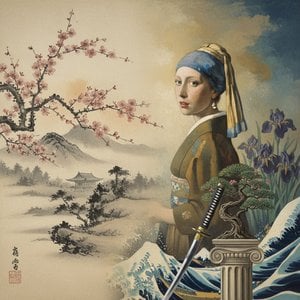
Gochiku I’s distinctive oeuvre predominantly depicted narratives drawn from Japanese folklore and mythology alongside serene landscapes and meticulously rendered still lifes. His stylistic approach represented a crucial step forward in Nihonga’s evolution—a deliberate fusion of time-tested techniques with subtle Western influences. This blending wasn't about abandoning tradition; rather, it was about enriching it with perspectives gained from observing European art forms. He skillfully utilized brushstrokes and pigments rooted in centuries of Japanese artistic practice while simultaneously incorporating compositional elements reminiscent of Impressionism and plein air painting—a conscious acknowledgment of the broader artistic landscape of his era. As a leading proponent of Nihonga, Gochiku I played an indispensable role in shaping the trajectory of Japanese art for decades to come.
Notable Works and Exhibitions
Gochiku I’s artwork gained considerable recognition through its inclusion in prestigious institutions such as the Osaka City Museum of Fine Arts, where curators meticulously showcased his mastery of traditional Japanese painting techniques. His canvases resonated with viewers due to their profound engagement with themes of spirituality and natural beauty—reflecting a deep appreciation for Japan's cultural heritage. Furthermore, Gochiku’s creations were presented internationally, fostering dialogue between artistic traditions across continents and inspiring subsequent generations of artists. These exhibitions solidified his reputation as one of the foremost practitioners of Nihonga during the Meiji period (1868–1912).
Teaching and Mentorship
Beyond his prolific artistic output, Nakabayashi Gochiku I served as a devoted teacher and mentor—guiding aspiring artists toward the pursuit of excellence within Nihonga. He imparted invaluable knowledge regarding brushwork, color palettes, and compositional strategies—ensuring that the legacy of traditional Japanese art would endure into the 20th century. His dedication to nurturing talent underscored his belief in the transformative power of artistic education—a conviction that continues to influence pedagogical approaches today.
Legacy and Impact
Nakabayashi Gochiku I’s enduring impact on Japanese art is undeniable—his pioneering efforts to synthesize Eastern and Western influences established a paradigm for future artists. His stylistic innovations served as a springboard for exploring new expressive possibilities while simultaneously reaffirming the importance of honoring artistic heritage. As a symbol of Nihonga's revival, Gochiku I remains an inspirational figure whose work continues to captivate audiences worldwide—a testament to his unwavering commitment to preserving and advancing Japanese artistic traditions.