early life and training
Mori Tetsuzan (森徹山), born Yoshino (吉野) in 1775, was a pivotal figure in late Edo-period Japanese painting. His artistic journey commenced under the tutelage of Mori Tetsuzan Senior (森徹山), another esteemed painter hailing from Osaka, establishing a lineage rooted in artistic excellence. This formative influence instilled within him the foundational principles of Maruyama Shijō style—characterized by vibrant hues and assertive outlines—a stylistic hallmark that would define his oeuvre. Recognizing his talent, he married Ryu, furthering his family’s dedication to preserving artistic traditions.artistic style and contributions
Mori Tetsuzan's distinctive approach to painting stemmed from a profound engagement with Chinese art traditions prevalent during the Qing Dynasty (1644–1912). This exposure profoundly shaped his stylistic sensibilities, resulting in compositions imbued with dynamism and expressive emotion. His mastery of Maruyama Shijō style—a movement championed by Ōkyo Maruyama—manifested itself in landscapes and animal paintings alike, where bold colors served as conduits for conveying profound psychological depth. Mori Tetsuzan’s artistic vision transcended mere representation; he sought to capture the essence of nature and animate his subjects with palpable vitality.notable artworks
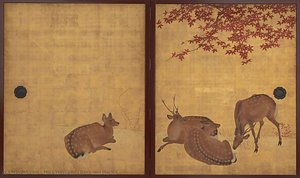
While precise documentation regarding Mori Tetsuzan's individual creations remains scarce, his impact on Japanese art is undeniable. His works exemplify the stylistic convergence of Kyoto and Edo artistic circles—a testament to his adaptability and artistic prowess. Among his celebrated pieces are depictions of deer and maples, rendered with meticulous detail and imbued with symbolic resonance—reflecting the enduring fascination with natural motifs within Japanese aesthetics. Furthermore, Mori Tetsuzan’s influence extended beyond his own creations; he mentored younger artists who would carry forward his stylistic legacy.museums and collections
Mori Tetsuzan's artistic legacy finds recognition in prominent museums worldwide. The Pinacoteca Vaticana houses a significant collection of religious art, showcasing masterpieces from across centuries—including works inspired by Mori Tetsuzan’s expressive style. Similarly, El Museo Hokkaido Museum of Modern Art presents an impressive panorama of contemporary Japanese art, underscoring the enduring relevance of Mori Tetsuzan's artistic innovations.conclusion
Mori Tetsuzan stands as a cornerstone of late Edo-period Japanese painting—a testament to his unwavering commitment to tradition and his visionary embrace of stylistic experimentation. His bold use of color, coupled with masterful compositional techniques, continues to captivate audiences today, securing his place among Japan’s most revered artistic figures.Preguntas y respuestas
¿Dónde se pueden explorar las obras de Mori Tetsuzan agrupadas por palabras clave?
Explora las obras de Mori Tetsuzan mediante palabras clave en su página de Por palabras clave. Cada palabra clave agrupa las obras relacionadas.
¿Dónde puedo ver las obras de Mori Tetsuzan en orden cronológico?
Puedes consultar la cronología de las obras de Mori Tetsuzan en su página de Cronología de obras, donde las piezas aparecen ordenadas por fecha de creación.
¿Dónde se pueden ver las obras de Mori Tetsuzan agrupadas por movimiento artístico?
Puedes ver los movimientos en los que trabajó Mori Tetsuzan en la página de Todos los movimientos del artista, donde las obras se agrupan por movimiento.