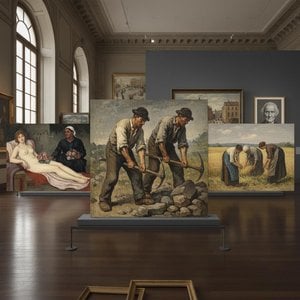
El Alma de Skagen: La Vida y el Legado de Michael Peter Ancher
Michael Peter Ancher se erige como uno de los pintores realistas más célebres de Dinamarca, un maestro cuyas pinceladas están inextricablemente ligadas al fervor artístico de Skagen. Esta remota aldea de pescadores, enclavada donde los mares Báltico y del Norte convergen en el extremo norte de Jutlandia, fue mucho más que un simple sujeto para Ancher; fue el latido mismo de su existencia creativa. Sus lienzos pulsan con una inmediatez que captura no solo la semejan de lo visual, sino también la esencia visceral de la experiencia humana frente al telón de fondo de paisajes costeros indómitos. A través de sus ojos, somos testigos de la dignidad silenciosa de una comunidad definida por su lucha y su armonía con las fuerzas impredecibles de la naturaleza.
Nacido el 9 de junio de 1849 en Rutsker, Bornholm, los primeros años de Ancher estuvieron marcados por circunstancias modestas. Aunque las dificultades mercantiles de su padre limitaron gran parte de su educación formal, una profunda inclinación artística comenzó a emerger en su interior. Este talento innato fue nutrido por la mirada perspicaz de sus compañeros pintores, Theodor Philipsen y Vilhelm Groth, quienes reconocieron su potencial durante sus expediciones a Skagen. Aunque finalmente se matriculó en la Real Academia Danesa de Bellas Artes en Copenhague, el espíritu de Ancher era demasiado inquieto para los confines de la estricta formalidad académica. Optó por marcharse prematuramente, priorizando la experiencia cruda y vivida de sus sujetos sobre los pulidos requisitos de la graduación, una decisión que, en última instancia, definiría su enfoque auténtico del realismo.
La Colonia de Pintores y la Luz del Norte
Los años formativos de Ancher coincidieron con el auge de la colonia de los Pintores de Skagen, un influyente grupo de artistas atraídos por la luz dramática y los cambios atmosféricos de la aldea. Este grupo, encabezado por figuras como Philipsen, fomentó un espíritu de colaboración y experimentación que moldeó profundamente la visión de Anante. Junto a su íntimo amigo Karl Madsen, Ancher ayudó a consolidar un movimiento dedicado a capturar el espíritu único del Norte. Su vida también estuvo profundamente entrelazada con el tejido social de Skagen; en 1880, contrajo matrimonio con Anna Brøndum, una artista y también hija del propietario del Hotel Brøndums. Esta unión no solo lo conectó con el corazón de la comunidad local, sino que también lo situó en el centro de un núcleo artístico donde la creatividad y la vida cotidiana eran indistinguibles.
La obra de Ancher se caracteriza por un retrato inquebrantable de los pescadores de Skagen: hombres que encarnaban el coraje, la resiliencia y una conexión profunda con sus tradiciones ancestrales. Su técnica evita el mero sentimentalismo, optando en su lugar por un realismo robusto que honra la aspereza y la sal de la vida marítima. En sus pinturas, casi se puede sentir la bruma del mar y el peso de las redes. Poseía una capacidad singular para representar las texturas de la piel curtida, la lana pesada y las arenas movedizas de la costa, creando obras que sirven tanto de documentos históricos como de retratos emocionales de un modo de vida que se desvanece.
Significado Histórico y Triunfo Artístico
La importancia perdurable de Michael Peter Ancher reside en su capacidad para elevar las luchas cotidianas de una pequeña aldea pesquera al reino del gran arte. Él no se limitó a pintar paisajes; pintó el alma de un pueblo. Sus mayores logros residen en su capacidad para capturar la tensión entre la vulnerabilidad humana y el inmenso poder del mar. Al centrarse en la dignidad del trabajo y los momentos silenciosos de reposo entre las familias de pescadores, creó un legado visual que sigue siendo una piedra angular de la identidad nacional danesa.
Hoy en día, la obra de Ancher continúa resonando en aquellos espectadores que buscan una conexión con lo auténtico y lo elemental. Su contribución al movimiento de Skagen aseguró que la luz y la vida del norte de Jutlandia se preservaran para la eternidad. A través de su maestría de la luz y la sombra, transformó los momentos fugaces de la existencia costera en monumentos atemporales de la resistencia humana, asegurando su lugar como un titán del realismo del siglo XIX.
Preguntas y respuestas
¿Existe un relato cronológico de Michael Peter Ancher?
La trayectoria de Michael Peter Ancher se despliega etapa por etapa en la página Crónica: una línea de tiempo horizontal de sus obras, agrupadas en capítulos según sus periodos creativos.
¿Puedo estudiar el uso del color de Michael Peter Ancher en toda su obra?
El Genoma de la Paleta de Michael Peter Ancher es una página que presenta el perfil cromático de la obra del artista.
¿Existe una lista completa de las obras de Michael Peter Ancher?
Todas las obras de Michael Peter Ancher en este sitio web pueden explorarse desde la página de Todas las obras del artista.