Maurycy Gottlieb: Una llama fugaz en el romanticismo polaco
La historia del arte se escribe a menudo bajo la sombra de vidas truncadas trágicamente, y pocas figuras encarnan esta conmovedora realidad con mayor profundidad que Maurycy Gottlieb. Nacido en 1856 en Drohobych, Ucrania, dentro del vibrante pero turbulento paisaje del Imperio Austro-Húngaro, Gottlieb emergió como una luz brillante en la tradición artística polaco-judía. Su vida, que apenas alcanzó los veintitrés años, fue un torbellino de intensa creatividad, recorriendo las grandes capitales artísticas de Europa —Viena, Cracovia y Múnich— antes de su prematura muerte en 1879. Contemplar su obra es ser testigo de un alma que intentaba tender un puente entre dos mundos: las profundas raíces históricas de la identidad polaca y los ecos espirituales y ancestrales de su herencia judía.
El ADN artístico de Gottlieb quedó marcado indeleblemente por su formación bajo la tutela de Jan Matejko, el titán de la pintura histórica polaca. De Matejko, Gottlieb heredó un dominio de la composición dramática y un profundo respeto por el peso narrativo. Sin embargo, aunque abrazó el realismo académico y la gran escala defendida por su mentor, Gottlieb infundió sus lienzos con una intimidad psicológica que trasciende la mera documentación histórica. Poseía una capacidad asombrosa para capturar los matices fugaces de la emoción humana, yendo más allá de lo monumental para explorar la delicada, y a menudo melancólica, interioridad de sus sujetos. Esta tensión entre lo épico y lo íntimo se convirtió en el sello distintía de su estilo en desarrollo.
La síntesis de identidad y espíritu
A medida que Gottlieb maduraba, su obra comenzó a reflejar una compleja negociación de la identidad. Era un artista que aspiraba a ser tanto polaco como judío, navegando las complejidades de una crianza secular y una conexión cultural profundamente arraigada. Esta dualidad se manifiesta de forma asombrosa en sus lienzos monumentales, que sirven como hitos espirituales. En "Cristo enseñando en Cafarnaúm", se observa un dominio magistral de la luz y el color, donde la solemnidad bíblica se encuentra con una calidez humanista que se siente notablemente moderna. La pintura no se limita a relatar una escritura; invita al espectador a un momento de profunda y palpable compasión.
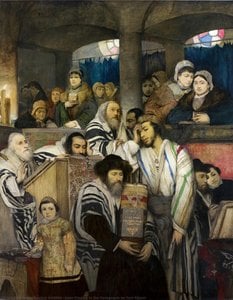
Sin embargo, es quizás en su representación de la vida judía donde el genio de Gottlieb alcanza sus cimas más evocadoras. Su obra maestra, "Judíos orando en la sinagoga en Yom Kippur", es mucho más que un cuadro religioso; es un mosaico profundamente personal de memoria y pérdida. Dentro de esta vasta y atmosférica escena, Gottlieb entretejió sutilmente los rostros de su propia vida: su padre, sus familiares e incluso la mujer cuyo rechazo a su propuesta le dejó el corazón roto. A través de estos autorretratos ocultos, la pintura se convierte en un peregrinaje autobiográfico, capturando la ferviente devoción de una comunidad mientras llora, simultáneamente, la fragilidad de la existencia individual.
Un legado escrito en luz y sombra
Aunque su carrera fue un breve destello, el impacto de Maurycy Gottlieb permanece perdurablemente brillante. Fue pionero en una forma de retrato psicológico que insinuaba sensibilidades postimpresionistas mucho antes de que se convirtieran en un estándar internacional. Su capacidad para dotar incluso a los temas más tradicionales de un sentido de movimiento y profundidad emocional le permitió trascender las rígidas fronteras del academicismo del siglo XIX. Incluso en sus obras más orientalistas o en sus exploraciones de temas shakespearianos, como su galardonada representación de Shylock y Jessica, existe una inconfundible preocupación por la condición humana y el peso del destino.
La tragedia de la muerte de Gottlieb —que se cree fue resultado de la exposición a las inclemencias tras un periodo de profundo dolor personal— solo sirve para santificar su legado artístico. Dejó tras de sí más de trescientas obras que continúan resonando en las salas del Museo Nacional de Cracovia y en diversas colecciones internacionales. Hoy, se le recuerda no solo como un talentoso alumno de Matejko, sino como una figura fundacional del arte judío moderno y una voz vital en el romanticismo polaco. Su vida sigue siendo un testimonio del poder del arte para capturar lo eterno dentro de lo efímero, dejando una huella indeleble en el tapiz cultural de Europa.
Preguntas y respuestas
¿Cómo evolucionó el arte de Maurycy Gottlieb a lo largo del tiempo?
La Crónica de Maurycy Gottlieb es una línea de tiempo con desplazamiento vertical que presenta las obras del artista en orden cronológico, agrupadas en capítulos por periodos de su carrera.
¿En qué ciudad y país nació Maurycy Gottlieb?
Maurycy Gottlieb nació en Drohobych, en Ucrania.
¿Qué estados de ánimo expresan las obras de Maurycy Gottlieb?
La Galería de estados de ánimo de Maurycy Gottlieb es una página que organiza las obras del artista según el estado de ánimo.