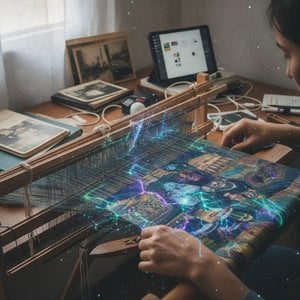
Un tapiz de tradición y modernidad: El legado de Maud Fredin-Fredholm
En la era dorada del diseño escandinavo de mediados de siglo, pocos nombres resuenan con tanta elegancia lúdica como Maud Fredin-Fredholm. Nacida en Gotemburgo, Suecia, en 1919, su vida fue un tejido magistral de herencia cultural e innovación de vanguardia. Ella no se limitó a crear patrones; esculpió un lenguaje visual que capturó el alma misma de una Europa en transformación. Al crecer en Alingsås, como hija del comerciante Herbert Fredin y Anna Persación, sus sensibilidades artísticas fueron nutridas por un profundo aprecio por la artesanía. Su formación académica en Slöjdföreningens Skola entre 1935 y 1941 proporcionó la base técnica sobre la cual construiría su ilustre carrera, fusionando la rigurosa disciplina del diseño con un espíritu creativo irreprimible.
La evolución de la obra de Fredin-Fredholm es un viaje a través de los paisajes cambiantes de la identidad sueca. Al acercarse mediados del siglo XX, la influencia de los principios de la Bauhaus —que enfatizaban la funcionalidad, la simplicidad y la belleza de la forma geométrica— comenzó a permear la estética escandinava. Maud abrazó este movimiento, pero se negó a permitir que el modernismo despojara a la tradición de su calidez. Su trabajo se convirtió en un puente entre lo antiguo y lo nuevo, traduciendo el encanto rústico del arte popular sueco en los motivos elegantes y sofisticados que requería un mundo en proceso de modernización. Esta síntesis única le permitió decorar desde íntimos textiles domésticos hasta espacios institucionales a gran escala, incluyendo escuelas y hogares de ancianos, dotando a la vida pública de color y alegría.
Motivos icónicos y el arte del patrón
Hablar de Maud Fredin-Fredholm es hablar de sus legados más perdurables: los motivos ‘Knäckebröd’ y ‘Snurran’. Estos diseños se convirtieron en algo más que simples patrones textiles; se transformaron en iconos culturales de las décadas de 1950 y 1960. El patrón ‘Knäckebröd’ (pan crujiente), con su ingenioso guiño a un elemento básico de la vida sueca, utilizó formas orgánicas y fondos cromáticos impactantes para crear una sensación de movimiento rítmico. Del mismo modo, el motivo ‘Snurran’ (el huso) se inspiró en la rueca, símbolo de laboriosidad y tradición doméstica, reimaginándola a través de una abstracción geométrica audaz. Estas obras encarnaban una elegancia minimalista que se sentía, al mismo tiempo, arraigada en la tierra y elevada por su modernidad.
Su alcance creativo se extendió mucho más allá del telar. Como una verdadera polímata del diseño, llevó su vibrante visión al medio de la cerámica, colaborando con fabricantes de renombre como Bobergs Fajansfabrik en Gävle. En estas colaboraciones, sus patrones danzaban sobre superficies de arcilla, transformando la alfarería funcional en lienzos en miniatura de arte abstracto. Su capacidad para traducir un solo motivo a través de diferentes texturas —desde la suave caída del algodón hasta el duro esmalte de la porcelana— demuestra una comprensión profunda de cómo el medio afecta al mensaje.
Emprendimiento e influencia global
Más allá de su maestría técnica, Fredin-Fredholm fue una fuerza formidable en el mundo de los negocios del arte. En 1945, estableció su propia empresa de moda, Maud Fredin Fredholm AB, en Gotemburgo. Este proyecto no fue solo un éxito local; a través de una red de agentes y minoristas, su influencia se extendió por toda Europa e incluso llegó a los Estados Unidos. Su espíritu emprendedor condujo a la apertura de boutiques especializadas, como Fönstret en 1954 y la Maud International Boutique en 1965, que operaba con presencia en Alemania y Francia. Esta huella global aseguró que su particular estilo de encanto escandinavo se convirtiera en un estándar reconocido del gusto internacional.
A medida que su carrera progresaba, continuó innovando, trasladando finalmente sus operaciones a Pixbo, donde dirigió un taller y una fábrica que empleaba a decenas de artesanos. La obra de su vida sigue siendo un testimonio del poder del diseño para moldear la identidad. Hoy, cuando contemplamos las líneas limpias y las paletas vibrantes del modernismo de mediados de siglo, vemos las huellas dactilares de Maud Fredin-Fredholm. Ella dejó tras de sí un mundo más colorido, más estructurado e infinitamente más hermoso, demostrando que el verdadero arte se encuentra en la integración perfecta de nuestra historia y nuestro futuro.
Preguntas y respuestas
¿Cuántas obras de Maud Fredin-Fredholm hay disponibles para explorar?
Puede explorar 1 obras de arte obras de Maud Fredin-Fredholm en la página Todas las obras de arte.
¿Dónde y cuándo nació Maud Fredin-Fredholm?
Maud Fredin-Fredholm nació en Göteborg en 1919.
¿Puedo visitar un museo virtual con las obras de Maud Fredin-Fredholm?
La Galería 3D de Maud Fredin-Fredholm es una página que muestra las obras del artista en una galería virtual tridimensional.