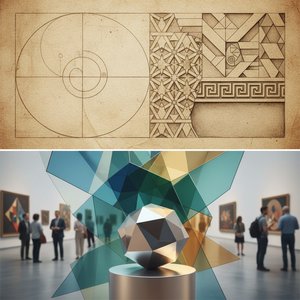
A Pioneer of Geometric Minimalism
Mario Agatiello (b. 1943) stands as a singular figure in Argentine art, recognized for his distinctive geometric style—a bold reimagining of minimalism that elevates it beyond mere simplicity into a realm of profound artistic exploration. Born in Buenos Aires, Argentina, Agatiello embarked on an artistic journey shaped by the intellectual currents of the 1960s, when Minimalism and Conceptualism dominated the art landscape. Yet, he resolutely pursued his own vision, delving into the expressive potential of geometric forms and vibrant hues—a divergence that cemented his reputation as a visionary innovator.
Early Influences and Artistic Formation
Agatiello’s formative years were marked by exposure to diverse artistic movements, including Maximalism and Neo-Rococo. These influences instilled in him an appreciation for complexity alongside restraint, fostering a stylistic approach that would ultimately define his oeuvre. He wasn't merely reacting against prevailing trends; he actively absorbed them, transforming their essence into something entirely new. This synthesis of seemingly contradictory aesthetics speaks to the artist’s intellectual curiosity and willingness to challenge conventional boundaries. His artistic education encompassed explorations of various mediums—painting, sculpture, and printmaking—allowing him to cultivate a multifaceted understanding of visual art principles.
The Geometric Style: Technique and Conceptual Depth
At the core of Agatiello’s artistic practice lies his signature geometric style—characterized by the deliberate use of shapes like triangles, squares, and circles arranged in intricate compositions. These forms aren't presented passively; they are imbued with dynamic energy through bold color palettes and minimalist backgrounds. This technique isn’t simply about visual aesthetics; it embodies a conceptual commitment to reducing art down to its fundamental elements—a strategy that echoes the principles of Minimalism but transcends its limitations. The resulting artworks possess an arresting immediacy, inviting contemplation on form, color, and space. Agatiello meticulously honed his craft, prioritizing precision and balance in every piece—a testament to his unwavering dedication to mastering geometric abstraction.
Notable Works and Exhibitions
Agatiello’s artistic career gained considerable momentum through exhibitions at prestigious institutions such as the Buenos Aires Museum of Modern Art (BAM) and the Colección de Arte Amelia Lacroze de Fortabat. His seminal piece, “Monochrome tending to infinite,” exemplifies his stylistic prowess—a masterful demonstration of abstraction that captures the essence of geometric minimalism. This artwork, lauded for its understated elegance and profound conceptual depth, solidified Agatiello’s position within Argentina's artistic community and garnered international recognition for his groundbreaking contribution to contemporary art. Furthermore, he participated in collaborative projects with fellow Argentine artists, fostering dialogue and enriching the broader artistic landscape.
Legacy and Influence
Mario Agatiello’s influence extends beyond his own creations, resonating with subsequent generations of artists who grapple with similar questions about form and expression. His stylistic approach aligns closely with the Light and Space movement—a pivotal artistic phenomenon that emerged in the 1960s—further cementing his place as a pioneer of innovative visual language. Agatiello’s unwavering dedication to exploring the boundaries of minimalism continues to inspire artists today, ensuring that his distinctive vision persists as a cornerstone of Argentine art history. He remains an enduring symbol of artistic experimentation and intellectual rigor—a testament to his lasting impact on the trajectory of Argentine art.