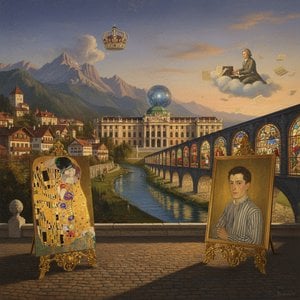
Museums on APS: Los Museos de Mozart de la Fundación Internacional Mozarteum de Salzburgo
Maria Rosa Hagenauer-Barducci: A Salzburg Sculptor's Daughter and Viennese Portraitist
Born in Florence, Italy (1744), Maria Rosa Hagenauer-Barducci’s artistic journey began amidst the intellectual fervor of the Enlightenment—a time when humanist ideals championed reason and observation. Her father, Giuseppe Barducci, served as advisor to Marquis Albuzi, fostering an environment rich in cultural discourse that undoubtedly nurtured her innate talent. This familial connection would prove invaluable as it opened doors to influential figures shaping Salzburg’s artistic landscape.
Rosa’s life took a decisive turn when she married Johann Baptist Hagenauer—a sculptor and architect from Salzburg—establishing herself within a vibrant artistic community deeply rooted in tradition yet receptive to innovation. Their union solidified her position at the forefront of Salzburg’s burgeoning art scene, propelling her towards Vienna where she would continue her creative pursuits and secure prestigious patronage.
Early Life & Artistic Beginnings: Rosa’s fascination with portraiture swiftly propelled her reputation as a skilled artist capable of capturing not merely likeness but also inner character—a hallmark of her distinctive style. Her most celebrated commission arrived in the form of a portrait depicting Anna Maria Mozart, Wolfgang Amadeus Mozart’s mother. This artwork exemplifies Hagenauer-Barducci's unwavering commitment to realism and psychological insight; meticulous detail combined with astute observation transformed mere representation into profound emotional resonance. Beyond portraits, she excelled as a wax modeller, crafting sculptures for discerning clients across Salzburg and Vienna—a testament to her versatility and mastery of technique. Her sculptural endeavors frequently drew inspiration from classical forms, mirroring the artistic sensibilities prevalent during her era—a period characterized by an ardent admiration for Greco-Roman ideals and a steadfast devotion to humanist principles.
Marriage and Family: Rosa’s marriage to Johann Baptist Hagenauer wasn't merely a union of affection but also a strategic alliance that benefited both individuals professionally. Their partnership fostered a collaborative spirit, encouraging mutual artistic growth and securing invaluable support from Hagenauer’s uncle, Lorenz Hagenauer—a prominent figure within Salzburg’s ecclesiastical hierarchy. This familial backing enabled Johann Baptist to pursue his studies at the Vienna Academy of Fine Arts in 1754, where he honed his sculptural skills alongside Rosa, shaping him into one of Salzburg's most accomplished artists. Together they welcomed a child into their family, establishing a home filled with creativity and intellectual curiosity—a microcosm of Salzburg’s artistic spirit during the mid-eighteenth century.
Vienna Years & Patronage: Moving to Vienna in 1771 marked a pivotal moment in Rosa Hagenauer-Barducci's life—a relocation driven by her husband’s ambition to advance his career within the Habsburg court. Her presence attracted the attention of Leopold Mozart, Wolfgang Amadeus’s father, who recognized her exceptional talent and sought her counsel on artistic matters. This connection underscored Hagenauer-Barducci’s influence within Vienna’s artistic circles—a city renowned for its patronage of artists and fostering an environment conducive to creative experimentation. Her work gained recognition from influential figures, securing commissions that solidified her reputation as a leading portraitist of the time.
Notable Commissions & Artistic Style: Hagenauer-Barducci's artistic style was characterized by a harmonious blend of realism and psychological depth—traits evident in her portraits and sculptures alike. She meticulously studied her subjects, capturing not only their physical appearance but also their inner emotions and motivations—a technique that imbued her artworks with profound emotional resonance. Her portrait of Mozart’s mother stands as an enduring testament to her skill and sensitivity; it captures Anna Maria Mozart's gaze and demeanor with remarkable precision, conveying a sense of quiet dignity and contemplative reflection. Furthermore, Hagenauer-Barducci’s sculptural creations showcased her mastery of classical forms—drawing inspiration from Greco-Roman aesthetics and embodying humanist ideals. Her sculptures frequently depicted biblical figures and mythological themes—reflecting the artistic tastes prevalent during her time and demonstrating her profound understanding of artistic symbolism.
Legacy & Historical Significance: Maria Rosa Hagenauer-Barducci's contribution to Salzburg’s artistic heritage remains undeniable—she was one of the first women painters in Salzburg to achieve independent recognition, challenging societal norms and paving the way for future generations of female artists. Her unwavering dedication to her craft exemplifies the spirit of Enlightenment Italy and underscores the importance of fostering creativity within a supportive environment. Though she faced obstacles stemming from familial disputes with the Archbishop of Salzburg—a common predicament for artists navigating complex social dynamics—Rosa persevered in Vienna, continuing to produce artwork and nurturing connections within the artistic circles of the Habsburg court. Her legacy endures as a symbol of artistic ambition and resilience—a reminder that talent transcends gender boundaries and inspires enduring beauty. Hagenauer-Barducci’s influence extends beyond her individual achievements; she embodies the broader cultural transformation occurring during her lifetime—a period marked by an embrace of reason, humanist values, and artistic innovation.
Influences: Hagenauer-Barducci's artistic sensibilities were profoundly shaped by classical ideals—particularly those championed by Greco-Roman sculpture—which instilled in her a reverence for proportion, balance, and idealized beauty. She drew inspiration from the works of Michelangelo Buonarroti and Bernini—artists who epitomized mastery of sculptural technique and conveyed profound emotional depth through their creations. These influences permeated her oeuvre, informing her stylistic choices and enriching her artistic vision.
Technique & Materials: Hagenauer-Barducci employed meticulous observation and skillful brushwork to achieve remarkable realism in her portraits—a hallmark of her distinctive style. She utilized oil paints on canvas—a favored medium during the eighteenth century—allowing for nuanced tonal gradations and capturing subtle variations in texture and color. Her wax modelling technique demanded precision and patience—requiring careful manipulation of pliable wax to sculpt intricate forms with exceptional detail.
Major Achievements: Hagenauer-Barducci’s most celebrated accomplishment was undoubtedly her portrait of Wolfgang Amadeus Mozart’s mother, Anna Maria Mozart—a masterpiece that continues to captivate audiences today. This artwork exemplifies her unwavering commitment to realism and psychological insight—demonstrating her unparalleled ability to convey emotion and character through meticulous observation and skillful brushwork. Beyond portraits, she excelled as a wax modeller, crafting sculptures for discerning clients across Salzburg and Vienna—establishing herself as one of Austria’s foremost sculptors during the Enlightenment era. Her enduring legacy serves as an inspiration to aspiring artists—a testament to the transformative power of creativity and unwavering dedication to artistic excellence.
Embark on a sophisticated journey through Austrian art history. Explore the golden brilliance of Gustav Klimt and the elegance of the Vienna Secession through an expert lens, celebrating the enduring soul of Central European masterpieces.
Embark on a sophisticated journey through the splendor of Austrian art. From Gustav Klimt’s golden masterpieces to the elegance of the Viennese Secession, discover the history and symbolism behind Europe's most iconic works for the discerning collector.
¡Hola! Puedo ayudarte a elegir una obra de arte, realizar el seguimiento de un pedido o resolver tus dudas sobre la garantía. ¿En qué puedo ayudarte hoy?