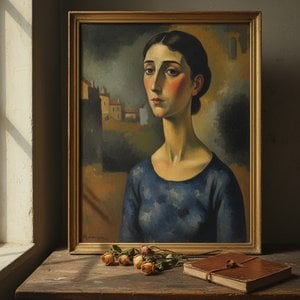
Un visionario siciliano: la vida y el legado de Manlio Gianrizzo
Manlio Gianrizzo emergió del vibrante y soleado paisaje cultural de Palermo, Italia, una ciudad impregnada de historia antigua y reconocida por su profundo patrimonio artístico. Nacido el 3 de enero de 1896 en el seno de una familia donde el pincel era un lenguaje común, Gianrizzo estaba destinado a una vida de búsqueda creativa. Era hijo del pintor Carmelo Giarrizzo, y su crianza se vio enriquecida por la presencia de sus hermanas, Adele y Maria, quienes también fueron pintoras consumadas. Esta inmersión familiar en las artes le proporcionó un aprecio fundacional por la belleza clásica y la disciplina meticulosa necesaria para capturar el mundo sobre el lienzo.
Su viaje artístico formal comenzó en el Istituto d'Arte di Palermo, donde estudió bajo la dirección del pintor romano Alessandro Morani. Fue durante estos años formativos cuando Gianrizzo desarrolló una maestría técnica que le permitiría tender un puente entre la tradición y el espíritu floreciente de la experimentación del siglo XX. Su formación temprana le inculcó una profunda reverencia por los maestros del pasado, particularmente por los ideales renacentistas encarnados por figuras como Rafael y Fra Angelico. Sin embargo, Gianrizzo nunca fue un mero imitador; poseía un alma moderna e inquieta que buscaba infundir las sensibilidades clásicas con la estética en constante evolución de su época.
La fusión de la tradición y la modernidad
La obra de Gianrizzo es celebrada principalmente por sus evocadores paisajes y su sensible retratística. Sus pinturas de la campiña siciliana sirven como algo más que simples registros topográficos; son meditaciones emocionales sobre la luz, la textura y el espíritu perdurable de su tierra natal. Utilizando técnicas como el óleo sobre madera y el óleo sobre tabla, logró una riqueza táctil que dotaba a sus sujetos de una claridad asombrosa. En sus paisajes, se puede percibir el calor del sol mediterráneo y la dignidad silenciosa del terreno siciliano, plasmados con una precisión que honra la tradición clásica mientras abraza una pincelada más moderna y expresiva.
A medida que su carrera progresaba, Gianrizzo demostró una capacidad notable para navegar los cambiantes movimientos artísticos. Aunque sus raíces permanecieron firmemente plantadas en la excelencia figurativa, no fue inmune a los cambios radicales que ocurrían en la escena artística italiana. Se vinculó estrechamente con los Futuristi Siciliani (Futuristas Sicilianos), participando en exposiciones significativas como la Quadriennale di Roma en 1935. Este período de su vida marcó una fascinante evolución estilística, en la que comenzó a integrar sensibilidades más dinámicas y modernas en su trabajo, creando una tensión estética única entre la quietud del retrato clásico y la energía del movimiento contemporáneo.
Una huella imborrable en el arte italiano
Más allá de sus lienzos individuales, Gianrizzo fue una figura fundamental en la comunidad artística organizada de Sicilia. En 1924, impulsado por el deseo de fomentar el talento local y promover una renovada identidad artística siciliana, cofundó el grupo Artisti Siciliani Indipendenti (Artistas Sicilianos Independientes) junto a colaboradores como Pippo Rizzo, Alfonso Amorelli y Vittorio Corona. También desempeñó un papel crucial en la creación de la revista Aretusa, que sirvió como una plataforma vital para el discurso contemporáneo y la difusión de nuevas ideas entre la intelectualidad mediterránea.
La importancia histórica de Manlio Gianrizzo reside en su capacidad para actuar como un conducto cultural. Su obra ha sido distinguida en instituciones prestigiosas, incluyendo el Museo Civico di San Gimignano y la Galleria Nazionale d'Arte Moderna e Contemporanea en Roma, donde sus pinturas cuelgan junto a titanes del arte italiano como Guglielmo Ciardi y Odoardo Borrani. Aunque falleció en Florencia en 1957, su legado permanece como un testimonio del poder perdurable de un artista que supo honrar el peso de la historia mientras abrazaba sin miedo la luz del futuro.
Preguntas y respuestas
¿Existe un resumen de todos los temas que pintó Manlio Gianrizzo?
El Índice temático de Manlio Gianrizzo es una página que organiza las obras del artista según sus temas.
¿Dónde y cuándo nació Manlio Gianrizzo?
Manlio Gianrizzo nació en Palermo en 1896.
¿Dónde puedo ver la paleta cromática de la obra de Manlio Gianrizzo?
El uso del color de Manlio Gianrizzo en las obras listadas en este sitio web puede estudiarse en la página ADN de la Paleta del artista.