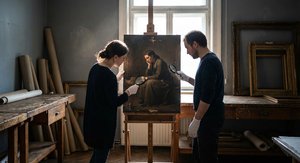
A Voice of Tradition: Exploring the Artistry of Lutfa Chitrakar
Lutfa Chitrakar hails from Bengaluru, India, a region steeped in artistic heritage and deeply connected to ancient traditions. Born into the Chitrakar clan—a lineage celebrated for its mastery of paubha painting since time immemorial—she embodies the spirit of unwavering dedication to preserving and transmitting this invaluable art form across generations. Her journey began at just twelve years old, ignited by the encouragement of her father and relatives who practiced religious arts themselves, marking the genesis of a lifelong passion for visual storytelling rooted in spiritual symbolism.
Early Influences: Chitrakar artists have historically served as custodians of Hindu mythology and folklore, meticulously recreating narratives onto scrolls using pigments derived from natural minerals—a technique passed down through families for centuries. This heritage instilled within her an understanding of how art can communicate profound philosophical ideas in a way accessible to all. The meticulous process of replicating myths and legends demanded patience and precision – qualities that would become hallmarks of her artistic practice.
The Birth of Santal Scroll:
Her most notable work, “The Birth of Santal Scroll,” stands as a testament to her artistic vision and profound understanding of cultural storytelling. This scroll vividly portrays the Santal people’s creation myth—a narrative brimming with symbolism that simplifies complex philosophical concepts for a layperson's grasp. It’s not merely an illustration; it’s an interpretation, meticulously crafted to convey the essence of Santal cosmology and spirituality. Chitrakar’s approach distinguishes her from many contemporary artists, prioritizing clarity and accessibility alongside artistic excellence. She sought to honor the traditions of her clan while adapting them to a modern audience, demonstrating a remarkable balance between reverence for the past and engagement with the present. The scroll's luminous colors and intricate detail exemplify the dedication required to master the paubha technique—a painstaking process that ensures each image resonates with spiritual significance.
Technique: Lutfa Chitrakar employs a traditional paubha technique—a painstaking process involving grinding pigments into fine powders and applying them to parchment using brushes dipped in acacia gum—resulting in luminous colors and exceptional detail. This method, passed down through generations of Chitrakar artists, demanded immense skill and patience. The careful blending of pigments and the meticulous application of color created images that were not only visually stunning but also imbued with spiritual depth.
Recognition & Legacy:
Recognized as one of Nepal’s foremost paubha artists, Chitrakar's tireless efforts over several years have cemented her reputation for unwavering commitment to her craft. More than just producing beautiful images, she strives to educate and inspire future generations of artists, ensuring that the traditions of paubha painting continue to flourish. Her work speaks volumes about India’s artistic past and its enduring influence on contemporary art—a legacy built upon patience, precision, and a deep reverence for storytelling as a conduit for spiritual enlightenment. She continues to champion the importance of preserving cultural heritage while fostering creativity and innovation – embodying the spirit of her clan's artistic tradition.