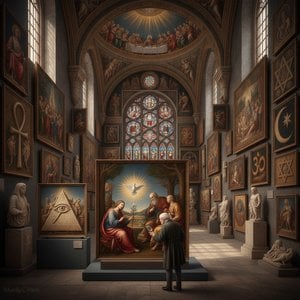
El arquitecto de reinos insondables
Luigi Serafini, nacido en Roma en 1949, ocupa un espacio singular en la imaginación contemporánea, actuando tanto como arquitecto de estructuras físicas como cartógrafo de mundos imposibles. Encontrarse con su obra es adentrarse en un espacio liminal donde las fronteras entre la realidad y el sueño se disuelven. Criado dentro de un linaje artístico, los primeros años de Serafini estuvieron impregnados de los matices de la forma y el diseño, una base que más tarde le permitiría tender un puente entre la lógica rigurosa de la arquitectura y el caos fluido de la fantasía surrealista. Su trayectoria académica por la ETH Zurich y la Università degli Studi di Milano le proporcionó una comprensión sofisticada de la dinámica espacial; sin embargo, su verdadera vocación residía en la construcción de lenguajes y símbolos que desafían las limitaciones de la comprensión humana.
El momento decisivo de la carrera de Serafini —y quizás uno de los logros más significativos del arte conceptual de finales del siglo XX— es la publicación del Codex Seraphinianus en 1981. Esta obra monumental sirve como una enciclopedia de un mundo inexistente, plasmada a través de meticulosas ilustraciones dibujadas a mano y un alfabeto enteramente inventado. El Codex no es simplemente un libro; es una profunda provocación contra la tiranía del significado lingüístico. Al presentar un sistema de comunicación que es intencionadamente indescifrable, Serafini obliga al espectador a abandonar la búsqueda de una traducción literal para, en su lugar, conectar con el poder puro y visceral de la percepción visual. Dentro de sus páginas, anomalías biológicas, láminas de moda surrealistas y extraños especímenes botánicos coexisten en un estado de hermosa e inquietante armonía.
Una sinfonía de metalenguaje y forma
Más allá de las enigmáticas fronteras de su famoso códice, la evolución artística de Serafini ha estado marcada por una búsqueda implacable del "metalenguaje": una forma de comunicarse a través de objetos que existen fuera de la semiótica tradicional. Su práctica se caracteriza por una versatilidad extraordinaria, moviéndose sin fisuras desde la precisión estructural del diseño arquitectónico hasta las texturas caprichosas de la escultura cerámica y la grandeza teatral del diseño de escenografía para ballet. Cada medio sirve como un recipiente para su fascinación por lo extraño y lo invisible. En sus esfuerzos escultóricos, se encuentra una exploración táctil de la forma que refleja las figuras orgánicas pero alienígenas presentes en sus ilustraciones, creando un universo cohesivo donde lo físico y lo imaginario están inextricablemente unidos.
La maestría técnica evidente en su trabajo es nada menos que asombrosa. Ya sea al representar los patrones intrincados y vibrantes de una lámina de moda alienígena o al esculpir objetos complejos y multicapa, existe una sensación palpable de detalle minucioso. Su capacidad para evocar emociones a través de medios puramente estéticos —sin el apoyo de un lenguaje reconocible— es lo que eleva su obra de la mera fantasía a una profunda indagación filosófica. Nos invita a considerar la naturaleza de la existencia y la fragilidad de nuestros propios sistemas de entendimiento. A través de su arte, se alienta al espectador a abrazar el misterio de lo desconocido, encontrando belleza en aquello que permanece para siempre fuera de nuestro alcance.
Legado y el horizonte infinito
La importancia histórica de Luigi Serafini reside en su capacidad para desafiar la relación fundamental entre el observador y lo observado. En una era dominada por el intercambio rápido de información y la constante demanda de claridad, Serafini ofrece un santuario de ambigüedad. Su obra se erige como un testimonio del poder perdurable de la imaginación y de la posibilidad de crear significado a través de la pura experiencia estética. Ha alterado fundamentalmente el panorama del diseño contemporáneo al demostrar que el arte puede operar de manera totalmente independiente de los sistemas lingüísticos o culturales establecidos.
Hoy en día, la influencia del enfoque visionario de Serafini se puede apreciar en diversas disciplinas, desde la ilustración surrealista hasta la tipografía experimental y la instalación conceptual. Su legado no se encuentra en un único movimiento, sino en la fascinación persistente por lo "intraducible". Mientras continuamos navegando por un mundo cada vez más complejo, los paisajes enigmáticos del Codex Seraphinianus y las maravillas táctiles de sus objetos de metalenguaje permanecen vitales, recordándonos que las verdades más profundas son a menudo aquellas que no pueden ser pronunciadas, sino solo sentidas.
Preguntas y respuestas
¿Cómo puedo encontrar todas las obras de Luigi Serafini por técnica?
Para encontrar todas las obras de Luigi Serafini por técnica, visite la página de Todas las técnicas del artista.
¿De dónde es Luigi Serafini?
Luigi Serafini nació en Italia.
¿Puedo visitar un museo virtual con las obras de Luigi Serafini?
Puede realizar una visita virtual: la página Galería 3D de Luigi Serafini presenta las obras del artista en una galería tridimensional.