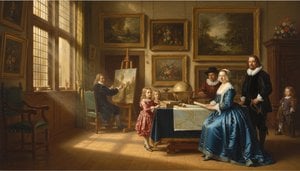
Ludolph Büsinck (c. 1600–1669): Pioneer of Chiaroscuro Printmaking in France
Ludolph Büsinck (c. 1600–1669) stands as a pivotal figure in the history of French art, recognized primarily for his groundbreaking contributions to chiaroscuro woodcut printing—a technique that irrevocably altered artistic expression during the Baroque period. Born around 1590s in Hann. Münden, Germany, Büsinck’s artistic journey commenced amidst the rich cultural landscape of the German Renaissance, equipping him with foundational skills in painting and engraving that would propel his subsequent innovations. His early works adhered steadfastly to Renaissance stylistic conventions—characterized by meticulous detail and palpable realism—demonstrating a profound respect for tradition while simultaneously fostering an inquisitive spirit ready to embrace artistic experimentation.
Early Life and Training
Ludolph Büsinck’s formative years were marked by instruction from local masters, cultivating his mastery of painting and wood engraving techniques. These skills served as bedrock for his later explorations into chiaroscuro—a dramatic interplay of light and shadow that would become synonymous with his artistic signature. His initial endeavors showcased a meticulous attention to detail and an unwavering commitment to portraying subjects with breathtaking accuracy—reflecting the prevailing aesthetic sensibilities of his time. This grounding in Renaissance tradition undoubtedly fueled his ambition to transcend stylistic boundaries, establishing him as a visionary artist determined to forge new paths within the realm of visual art.
Career in Paris: Innovation and Collaboration
Around 1623, Büsinck embarked on an ambitious relocation to Paris—a city pulsating with artistic fervor and intellectual dynamism—where he joined forces with fellow artists like Fortuné Louis Méaulle, united by a shared passion for wood engraving and literary pursuits. This collaborative environment exerted considerable influence on Büsinck’s stylistic trajectory, prompting him to integrate French artistic sensibilities into his oeuvre. Notably, he produced a series of monumental chiaroscuro woodcuts during his Parisian tenure—prints that catapulted him to prominence within the artistic community and cemented his reputation as an intrepid innovator. Collaborations with artists such as Georges Lallemand further enriched his creative output, embodying the spirit of artistic exchange prevalent in 17th-century Paris—a period characterized by intellectual curiosity and a fervent desire for artistic advancement.
The Art of Chiaroscuro: Technique and Vision
Ludolph Büsinck’s artistic style is distinguished by its unwavering devotion to chiaroscuro—a technique that revolutionized printmaking by harnessing the expressive power of tonal shading alongside stark contrasts between light and dark. This method, originating in Germany but rapidly gaining acceptance in France during Büsinck's era, involved carving separate blocks for shades of ochre and brown alongside a black line block—a painstaking process demanding exceptional precision and artistic discernment. The resulting prints achieved remarkable visual impact—capturing the essence of illumination and darkness to convey profound emotional resonance—reflecting Büsinck’s astute understanding of how light could illuminate subjects and heighten their dramatic effect. His work stands as an enduring testament to his mastery of chiaroscuro, establishing him as a pioneer whose innovations continue to inspire artists today.
### Notable Works and Legacy
Ludolph Büsinck's artistic legacy extends far beyond his individual prints; he served as an inspiration for subsequent generations of artists—demonstrating the lasting influence of his groundbreaking technique. His oeuvre resides in prestigious museums across Europe, including the Ashmolean Museum and the Nelson-Atkins Museum of Art—a testament to the enduring appreciation for his artistic contributions. Particularly noteworthy is his altarpiece commissioned for St John’s Church in Göttingen—a masterpiece that exemplifies Büsinck's meticulous craftsmanship and stylistic refinement—representing a pinnacle of Baroque art and solidifying his place as one of France’s foremost printmakers. His prints continue to captivate audiences today, offering a glimpse into the artistic fervor of the Baroque period and underscoring Büsinck’s pivotal role in establishing chiaroscuro printmaking as a cornerstone of French art history—a legacy that transcends time and continues to resonate with admiration for his visionary artistry.
Por el equipo editorial de WahooArt.com
Cuestionario de arte
Cada pregunta tiene una única respuesta correcta.
Pregunta 1:
¿Dónde nació Ludolph Büsinck?
Pregunta 2:
¿Qué técnica artística utilizó Büsinck para crear sus obras más destacadas?
Pregunta 3:
¿En qué ciudad desarrolló principalmente su carrera artística?
Pregunta 4:
¿Con qué artista colaboró Büsinck conocido por sus grabados?
Pregunta 5:
¿Qué obra maestra realizó Ludolph Büsinck para la iglesia de St John en Göttingen?
Explore the profound precision of German Renaissance art. From Albrecht Dürer’s intricate engravings to the soulful depth of Northern Renaissance portraiture, discover a masterclass in detail, humanism, and technical mastery for the true art enthusiast.
Embark on a journey through the Dutch Golden Age. Discover how masters like Rembrandt and Vermeer used chiaroscuro to manipulate light and shadow, creating timeless depth and spiritual resonance in art history's most captivating masterpieces.
Explore the profound mastery of Rembrandt's chiaroscuro technique. Discover how the Dutch Master manipulated light and shadow to create unparalleled psychological depth and dramatic narrative in the world's most iconic Baroque masterpieces.
¡Hola! Puedo ayudarte a elegir una obra de arte, realizar el seguimiento de un pedido o resolver tus dudas sobre la garantía. ¿En qué puedo ayudarte hoy?