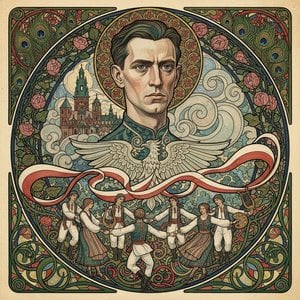
Leon Wyczółkowski

1852 - 1936

Resumen biográfico

  • Nationality: Poland
  • Died: 1936
  • Art period: Siglo XIX
  • Top 3 works:
    • Portrait of Leon Piniński
    • Country Girl in a Yellow Kerchief
    • Bedroom of the President of the Republic of Poland
  • Color intensity:
    • monocromático
    • equilibrado
  • Born: 1852, Poland
  • Movements: polish realism
  • Copyright status: Public domain

Early Life and Education

Leon Jan Wyczółkowski, a luminary of Polish painting, was born in Huta Miastowska, Poland, on April 11th, 1852. His artistic inclinations blossomed early, nurtured by a family steeped in cultural traditions. He pursued his education diligently at Kraków University, where he honed his skills and laid the foundation for his future endeavors as an artist. Subsequently, he enrolled at the Jan Matejko Academy of Fine Arts in Kraków, cementing his commitment to mastering the craft of painting and furthering his artistic development.

Artistic Contributions and Style

Wyczółkowski emerged as a pivotal figure within the Young Poland movement—a vibrant surge of modernist art that reshaped Polish cultural landscape during the late 19th century. He championed realism, striving to depict the world with unflinching accuracy and capturing the essence of everyday life. His canvases pulsated with vivid colors and masterful brushstrokes, reflecting his profound understanding of Impressionist principles. Notably, he was recognized as the principal representative of Polish Realism, particularly during the interbellum period—a testament to his enduring legacy in shaping artistic expression.

Notable Works and Collections

Wyczółkowski’s oeuvre boasts a remarkable array of masterpieces that continue to captivate audiences worldwide. Among these stand out “Zaporizhian Camp” by Józef Brandt and “Call to Arms” by Józef Brandt—works imbued with the spirit of Young Poland and embodying Wyczółkowski's distinctive artistic style. His paintings reside in prestigious museums across Poland, including The National Museum in Warsaw, which houses an expansive collection spanning centuries of Polish art history; Muzeum Narodowe Poznań, showcasing European treasures from the 15th to the 18th centuries; and The Museum Pomorskie in Gdańsk, dedicated to preserving Pomeranian heritage.

Influences and Legacy

Wyczółkowski’s artistic vision drew inspiration from masters such as Rembrandt van Rijn—specifically “León Descansando”—whose masterful use of chiaroscuro illuminated the path toward expressive realism. He mentored artists like Sargent and Toulouse-Lautrec, fostering a tradition of artistic excellence within Poland's academic circles. His unwavering dedication to portraying Polish life with honesty and sensitivity secured his place as an icon of Polish art history—a figure whose influence resonates through generations of painters and continues to inspire admiration for its timeless beauty.

Recommended Reading

For deeper insights into Wyczółkowski’s artistic journey, explore these resources:

Preguntas y respuestas

¿Qué colores utilizaba con más frecuencia Leon Wyczółkowski?

El uso del color de Leon Wyczółkowski en las obras listadas en este sitio web puede estudiarse en la página Genoma de la Paleta del artista.

¿Dónde se encuentran las obras de Leon Wyczółkowski agrupadas por movimiento artístico?

Las obras de Leon Wyczółkowski pueden explorarse por movimiento en la página de Todos los movimientos del artista.

¿En qué ciudad y país nació Leon Wyczółkowski?

Leon Wyczółkowski nació en Huta Miastowska, en Poland.

¿De dónde es Leon Wyczółkowski?

Leon Wyczółkowski nació en Poland.

¿Existe una cronología de las obras de Leon Wyczółkowski?

Existe una cronología de las obras de Leon Wyczółkowski: la página Cronología de obras del artista ordena las obras por fecha de creación.

¿Cuál es el lugar y el año de nacimiento de Leon Wyczółkowski?

Leon Wyczółkowski nació en Huta Miastowska en 1852.

¿Dónde se encuentran las obras de Leon Wyczółkowski agrupadas por palabras clave?

Las obras de Leon Wyczółkowski pueden explorarse por palabra clave en la página de Por palabras clave del artista. Cada palabra clave agrupa las obras relacionadas.

Cuestionario de arte

Cada pregunta tiene una única respuesta correcta.

Pregunta 1:
Q1
Pregunta 2:
Q2
Pregunta 3:
Q3
Pregunta 4:
Q4
Pregunta 5:
Q5