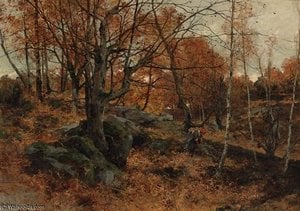
Leon Germain Pelouse: Un Visionario Bretón
Leon Germain Pelouse (1838 – 1891) emergió de la tranquila campiña francesa, específicamente de Pierrefort, Val-d'Oise, como un artista autodidacta que desafió las convenciones y cautivó al público con sus evocadoras representaciones de los paisajes de Bretaña. A diferencia de muchos artistas de su época que perseguían grandes narrativas o temas históricos, Pelouse se dedicó a capturar la belleza sutil de la región bretona: el serpenteante río Sena en Poses, las tranquilas aldeas ribereñas bañadas por el crepúsculo... transformándolos en lienzos rebosantes de profundidad atmosférica y riqueza textural.- Primeros años y comienzos artísticos: Nacido en 1838, la trayectoria artística de Pelouse comenzó de forma inesperada. Empleado inicialmente como viajante de comercio, perfeccionó sus habilidades de observación antes de descubrir la pintura a los dieciséis años. Su servicio militar durante la guerra franco-prusiana le proporcionó experiencias formativas que, sin duda, moldearon su visión del mundo y alimentaron su pasión por retratar el mundo natural.
- Debut en el Salón y recepción crítica: Las ambiciones artísticas de Pelouse se consolidaron cuando comenzó a pintar profesionalmente a los veintisiete años, marcando su debut en el Salón de París en 1865. A pesar de enfrentar críticas considerables respecto a su estilo —caracterizado por una pincelada suelta y una paleta de colores apagados—, perseveró, impulsado por una creencia inquebrantable en su propia visión.
- Inspiración bretona y pintura de paisaje: Al mudarse a Bretaña alrededor de 1870, Pelouse encontró un terreno fértil para la expresión artística. La dramática costa de la región, sus colinas onduladas y sus valles brumosos sirvieron como una fuente constante de inspiración, dando lugar a una prolífica producción de paisajes que rápidamente ganaron reconocimiento. Su meticulosa atención al detalle —particularmente el juego entre la luz y la sombra— lo estableció como una figura prominente dentro del movimiento de la Escuela de Barbizon.
- Reconocimiento y mecenazgo: La dedicación de Pelouse fue recompensada con el aplauso tanto de sus colegas artistas como de la crítica, culminando en una prestigiosa medalla otorgada por “Vallée de Cernay” en 1873. Cabe destacar que el gobierno francés reconoció su talento adquiriendo numerosos lienzos —que hoy se encuentran en instituciones como el Orsay, el Museo Malraux y el Museo de Arte de Nantes—, consolidando su legado como uno de los pintores más celebrados de Bretaña.
- Legado e influencia: La obra de Pelouse encarna una profunda conexión con la naturaleza y refleja la influencia impresionista en el arte francés. Sus paisajes contin정한 a inspirar admiración por su belleza serena y su técnica magistral, demostrando el poder perdurable de la observación y la sensibilidad artística. Sigue siendo un artista fundamental en la historia del arte bretón.
Obras Notables y Estilo Artístico
La obra de Pelouse incluye obras maestras tales como “La Seine à Poses”, “Riverside Village At Dusk” y “Landscape With Storm Clouds”. Su estilo distintivo priorizaba la captura de momentos fugaces de luz y atmósfera, utilizando pinceladas sueltas y armonías cromáticas sutiles para transmitir la esencia de sus sujetos. Empleó con destreza superficies texturizadas —logradas a menudo mediante el impasto— para dotar a sus lienzos de una fisicidad palpable y resonancia emocional. La meticulosa representación de los elementos naturales por parte del artista, particularmente las nubes y el follaje, demuestra un profundo entendimiento de los principios artísticos arraigados en la observación y la sensibilidad.Conexiones e Influencias
Las sensibilidades artísticas de Pelouse fueron, sin duda, moldeadas por la Escuela de Barbizon, la cual defendía la pintura plein air y enfatizaba el realismo como un medio para transmitir la grandeza de la campiña francesa. Además, se benefició de colaboraciones con otros artistas como Albert Gabriel Rigolot, quien lo guio y fomentó su desarrollo artístico. Su trabajo refleja también un interés por los temas orientalistas —particularmente paisajes inspirados en Marruecos—, demostrando las corrientes artísticas más amplias que circulaban por toda Europa durante finales del siglo XIX.Colecciones de Museos
Las pinturas de Pelouse se exhiben con orgullo en varios museos franceses prominentes, incluyendo el Musée d'Orsay y el Musée Malraux, mostrando su contribución al patrimonio artístico de la nación. Estas instituciones ofrecen a los visitantes la oportunidad de experimentar de primera mano la belleza y la profundidad emocional de los paisajes de Pelouse, un testimonio de su influencia perdurable en el arte bretón y la pintura impresionista.Preguntas y respuestas
¿Puedo explorar las obras de Leon Germain Pelouse por paleta de colores?
Puedes explorar las obras de Leon Germain Pelouse por paleta de colores en la página de Por paletas de colores del artista.
¿En qué ciudad y país nació Leon Germain Pelouse?
Leon Germain Pelouse nació en Pierrefort, Francia.
¿Qué obras de Leon Germain Pelouse son las más vistas?
La página de Estadísticas de Leon Germain Pelouse presenta estadísticas calculadas a partir de las obras del artista listadas en este sitio web.