Lê Phổ: A Synthesis of Impressionism, Surrealism and Vietnamese Tradition
Lê Phổ (1907 – 2001) stands as one of Vietnam’s most celebrated artists, a figure whose oeuvre embodies the confluence of Western artistic movements—particularly Impressionism and Surrealism—with deeply rooted traditions of Chinese art and Vietnamese culture. Born in Ha Dong District, Hanoi, Lê Phổ embarked on his artistic journey at École Supérieure des Beaux Arts de l'Indochine (ESBA), establishing himself as a pivotal voice within the burgeoning avant-garde scene of French Indochina during the early decades of the 20th century. This formative period profoundly shaped his stylistic sensibilities and cemented his commitment to exploring themes of beauty, femininity, and contemplation.
Early Hanoi Years (1930s): Impressionistic Roots
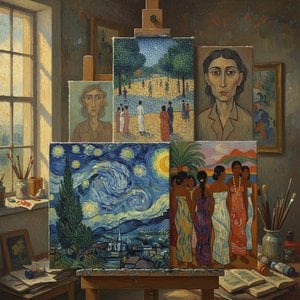
Lê Phổ’s initial works exhibited a distinctly Impressionistic style, characterized by luminous color palettes and loose brushstrokes—a direct response to the influence of artists like Monet and Renoir. These paintings often depicted serene landscapes of Vietnam, capturing the tranquil essence of rural Vietnamese life. The École Supérieure des Beaux Arts de l'Indochine instilled in him a foundational understanding of Western painting techniques, prioritizing observation and capturing fleeting moments of light and color—a stylistic approach that would define his early artistic endeavors. His canvases resonated with nostalgia for Vietnam’s past grandeur, reflecting the historical magnificence of the country through a lens informed by Impressionistic aesthetics.
Parisian Engagement (1936-1945): Surrealist Explorations
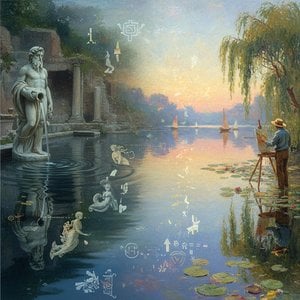
Following his relocation to Paris in 1936, Lê Phổ’s artistic explorations intensified. He embraced Surrealist techniques—dreamlike imagery and unexpected juxtapositions—drawing inspiration from artists such as Dalí and Magritte. This stylistic shift reflected a broader intellectual engagement with psychoanalytic theories and signaled a desire to delve into the subconscious realm. During this period, he collaborated closely with fellow Surrealists, experimenting with diverse mediums including sculpture and printmaking, pushing the boundaries of artistic expression beyond conventional realism. The influence of Surrealism infused his work with symbolic imagery and unsettling perspectives—a deliberate departure from Impressionistic serenity that underscored his fascination with exploring the complexities of human psychology.
The Romanet Period (1946-1960): Mastering Technique
From 1946 until 1962, Lê Phổ’s artistic output flourished under the patronage of Pierre Le-Tan, a Parisian gallery owner who recognized his talent and championed his work internationally. This period witnessed a masterful consolidation of Impressionistic principles alongside Cubist influences—resulting in canvases imbued with both luminous color harmonies and geometric precision. Lê Phổ continued to depict Vietnamese landscapes with meticulous detail, emphasizing the grandeur of nature while simultaneously incorporating innovative compositional strategies. His paintings became increasingly monumental in scale, reflecting his growing artistic confidence and demonstrating his ability to synthesize disparate stylistic approaches into a cohesive visual language.
The Findlay Period (1960-2001): Iconic Visions
From 1960 until his death in 2001, Lê Phổ achieved unparalleled artistic virtuosity—producing numerous works on silk and canvas that cemented his reputation as one of Vietnam’s foremost masters. His canvases became increasingly imbued with spiritual contemplation—capturing the essence of Eastern philosophy through evocative imagery and subtle color palettes. Wally Findlay Galleries played a crucial role in disseminating his art to American audiences, establishing him as an internationally recognized figure within the contemporary art world. Lê Phổ's final artistic period showcased his mastery of technique—combining Impressionistic color harmonies with Surrealist distortions—creating artworks that transcended stylistic boundaries and resonated deeply with viewers across cultures. His legacy endures as a testament to the transformative power of artistic experimentation and a celebration of Vietnam’s cultural heritage.
### Influence and Legacy
Lê Phổ's work stands apart due to its fusion of Eastern and Western traditions, marking him as a pioneer in Vietnamese modern art. Trained at ESBA and mentored by Victor Tardieu—a friend and companion of Henri Matisse—he absorbed the stylistic precepts of Impressionism and Surrealism while simultaneously honoring Vietnam’s artistic heritage. His enduring influence can be seen in subsequent generations of Vietnamese artists who strive to emulate his distinctive visual language—characterized by luminous color palettes, loose brushstrokes, and dreamlike imagery. Lê Phổ's contribution to art history is undeniable; he remains an icon of Vietnamese culture and a symbol of artistic innovation—inspiring admiration for his timeless masterpieces worldwide.