Larissa Sansour: A Visionary Voice from Palestine
Larissa Sansour, born in 1973 in Palestine, is a Palestinian artist currently residing in London, England. Her artistic journey began with an early fascination for photography and film, quickly expanding into sculptural explorations and immersive installation art projects.
Early Influences & Artistic Development
Sansour’s formative years were marked by the complexities of living under occupation, experiences that profoundly shaped her worldview and fueled her creative impulse. These influences permeate her work, manifesting as recurring motifs of displacement, resilience, and a poignant interrogation of identity.
Photography: Capturing Fragments of Reality
Sansour’s photographic practice is characterized by meticulous detail and an uncanny ability to distill emotion from seemingly mundane subjects. Her images often depict landscapes imbued with symbolic resonance—fragments of Jerusalem, for instance—that invite contemplation on memory and the enduring impact of history.
Sculpture & Installation Art: Creating Spatial Narratives
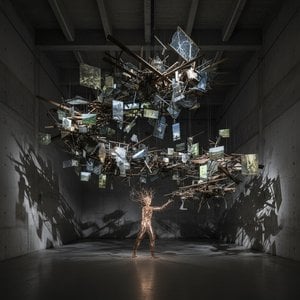
Moving beyond photography, Sansour ventured into sculpture and installation art, utilizing materials like porcelain and geometric forms to construct narratives that grapple with themes of nationhood and societal transformation. Her installations aim to provoke dialogue and challenge viewers’ perceptions of the world around them.
Notable Works & Recognition
Sansour's oeuvre includes pieces such as “Tank” (2003), “Bethlehem Bandolero” (2005), “Happy Days” (2006), “Cairo Taxilogue” (2008), “The Novel of Novel and Novel” (2009), “Falafel Road” (2010), “Palestinauts” (2010), “Nation State” (2012), “In the Future, They Ate From The Finest Porcelain” (2016), and “Archaeology in Absentia” (2016). Her work has garnered critical acclaim for its conceptual depth and artistic innovation.
- Tank (2003): A sculptural exploration of conflict and vulnerability.
- Bethlehem Bandolero (2005): An evocative film installation reflecting on the Palestinian experience.
Larissa Sansour’s art stands as a testament to the power of creative expression to confront difficult truths and foster empathy for marginalized voices—a vital contribution to contemporary artistic discourse.
Sansour studied Fine Art in Copenhagen, New York and Copenhague. In 2009 she presented *Space Exodus*, partaking from Stanley Kubrick’s *2001: A Space Odyssey*. The artist planted the Palestinian flag on the moon.
Her sculptural explorations delve into themes of national identity and societal transformation, utilizing materials like porcelain to construct narratives that grapple with complex social issues. Her installations aim to stimulate reflection and provoke dialogue amongst viewers.
Among her most celebrated pieces are “Tank” (2003), “Bethlehem Bandolero” (2005) and “Happy Days” (2006). These works explore the intersection of memory, history and cultural heritage through photographic and cinematic mediums.
Her artistic vision is informed by a deep engagement with political realities and a desire to challenge conventional perspectives. Sansour’s contribution to contemporary art lies in her ability to articulate profound ideas through innovative visual languages.