Krzysztof Jan Cander: A Master of Flemish Primitive Influence
Krzysztof Jan Cander (1936-2006) was a Polish painter and pedagogue whose artistic journey spanned decades, culminating in a distinctive style rooted in the traditions of Flemish Primitive painting. Born in Ostrowie Wielkopolskim, Poland, he cultivated an unwavering passion for art from a young age, profoundly shaped by encounters with masterpieces like Rubens’ “Zdjęcie z krzyża” during his formative years at Gdańsk PWSSP. This early exposure instilled within him a deep appreciation for meticulous observation and expressive color palettes—elements that would become hallmarks of his oeuvre.
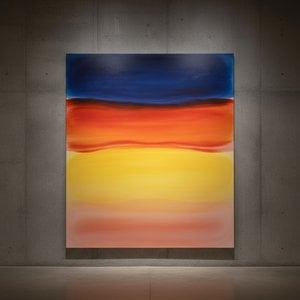
Cander's artistic development unfolded primarily in the 1960s, when he embarked on his professional career. He quickly established himself as a respected figure in the Polish art scene, favoring abstraction and expressionism as mediums to convey complex emotions and ideas. His canvases pulsated with vibrant hues—primarily reds, yellows, and blues—applied with deliberate precision and textural layering, mirroring techniques employed by artists of the Flemish Primitive movement. This stylistic choice wasn’t merely an aesthetic preference; it represented a conscious effort to engage with artistic heritage and explore universal themes of nature, human experience, and the passage of time. He sought inspiration from the monumental landscapes of Pieter Brueghel the Elder and Jan Brueghel III, translating their dramatic depictions of rural life into his own emotive canvases.
- Notable Works: “Death Dance” exemplifies Cander's masterful command of color and form, capturing a dramatic interplay between light and shadow—a characteristic found in the works of Jan Brueghel III and Pieter Bruegel the Elder. The painting’s unsettling composition and intense chromatic intensity are testament to his ability to convey psychological depth through visual language.
- Teaching Legacy: He served as Professor at Gdańsk PWSSP for over 30 years, nurturing generations of aspiring artists and imparting invaluable knowledge about painting and drawing techniques. His students benefited from his unwavering dedication to fostering creativity and honing artistic skills—a legacy that continues to inspire young painters today.
Throughout his career, Cander consistently pursued excellence, experimenting with innovative approaches while remaining steadfast in his adherence to fundamental principles of artistic expression. He explored sculptural forms inspired by Byzantine architecture, creating monumental sculptures for public spaces in Gdańsk and Bydgoszcz—pieces designed to evoke contemplation and communicate grandeur. Furthermore, he undertook commissions for ecclesiastical institutions, crafting intricate stained glass windows that incorporated symbolic imagery—a stylistic homage to the spiritual richness of medieval art.
His artistic output extended beyond painting into sculpture and graphic design, demonstrating versatility and a commitment to exploring diverse creative avenues. He designed monumental sculptures for public spaces in Gdańsk and Bydgoszcz, reflecting his fascination with architectural forms and spatial relationships. Furthermore, he undertook commissions for ecclesiastical institutions, crafting intricate stained glass windows that incorporated symbolic imagery—a stylistic homage to the spiritual richness of medieval art.
Cander’s dedication to his craft garnered him numerous accolades, including the Złoty Krzyż Zasługi (Golden Cross of Merit) awarded by the Polish Ministry of Culture and Art—a testament to his contribution to Polish artistic culture. His paintings are housed in prestigious museums across Poland and internationally, including Kraków, Gdańsk, Chorzów, Bydgoszcz, Ostrowie Wielkopolskim, Wrocław, Cincinnati, San Diego and Tunisia—a lasting legacy of his artistic vision and enduring influence on contemporary Polish art. He was recognized as a pioneer in Flemish Primitive influence, blending meticulous observation with emotive color to create impactful artworks that continue to resonate with audiences today.