Una vida forjada en la resiliencia y la precisión
La vida de Karl Schmid fue un testimonio profundo de la capacidad del espíritu humano para hallar la belleza en medio de la adversidad. Nacido en Zúrich en 1914, sus primeros años estuvieron ensombrecidos por la tragedia personal y la inestabilidad; la pérdida de su padre durante la Gran Guerra y las complejas luchas de salud mental de su madre crearon un entorno que exigía una resiliencia inmensa. Sin embargo, fue precisamente en este crisol de dificultades donde Schmid desarrolló una mirada excepcionalmente aguda para las complejidades de la existencia. Su formación no se limitó únicamente a un estudio tradicional, sino que se nutrió del mundo táctil y disciplinado de la artesanía. Un aprendizaje como ebanista y carpintero le inculcó un respeto fundamental por el material y la estructura, una precisión que más tarde se convertiría en la columna vertebral de sus obras escultóricas y anatómicas.
A medida que maduraba, el viaje de Schmid lo condujo hacia la intersección entre el arte y la ciencia. Su estancia en los sanatorios de Davos, aunque motivada por la enfermedad, resultó ser un periodo de inmensa expansión intelectual y creativa. Fue allí donde transitó por las órbitas de gigantes como Oskar Kokoschka y Ernst Ludwig Kirchner. Estos encuentros fueron mucho más que simples conexiones sociales; fueron diálogos artísticos profundos que ayudaron a moldear su comprensión del expresionismo y de la condición humana. Este periodo de vulnerabilidad compartida y exploración creativa permitió a Schmid entrelazar la emoción cruda de su historia personal con un lenguaje artístico sofisticado.
La síntesis de la forma, la anatomía y la abstracción
La obra de Schmid se caracteriza por una fluidez notable, moviéndose sin fisuras entre las exigencias rígidas de la exactitud científica y los movimientos liberados de la abstracción moderna. Poseía una capacidad poco común para tender puentes entre lo empírico y lo espiritual. En sus ilustraciones anatómicas, se encuentra una dedicación meticulosa a la verdad del cuerpo humano, donde cada línea cumple el propósito de la claridad biológica. Sin embargo, nunca permitió que la ciencia despojara a sus sujetos de su alma; por el contrario, infundió sus estudios con una gracia artística que los elevó de meros diagramas a obras de una belleza profunda.
Esta dualidad es quizás más evidente en su transición a través de diversos movimientos estilísticos:
- Abstracción geométrica y Art Déco: Sus primeras exploraciones adoptaron la elegancia estructurada de la era Art Déco, utilizando líneas limpias y patrones rítmicos.
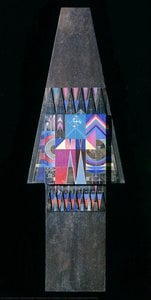
- Principios constructivistas: En obras como su pieza de 1959, “Sin título”, Schmid utilizó el oro sobre negro para crear una cualidad dinámica y musical, reflejando la energía de la lira a través de la precisión geométrica.
- La intersección entre arte y ciencia: Sus obras tardías, incluyendo la evocadora “Obra espiritual” (1986), demuestran una maestría para sintetizar influencias dispares, mezclando la lógica estructural de sus raíces en la talla de madera con un expresionismo profundo y contemplativo.
El legado de un visionario versátil
Karl Schmid permanece como una figura singular en la historia del arte suizo, un polímata cuyas contribuciones abarcaron la pintura, la escultura, el grabado y la enseñanza. No existió simplemente dentro de un único movimiento; más bien, actuó como un conducto entre el mundo táctil del artesano y el mundo intelectual de la vanguardia. Su capacidad para colaborar con luminarias como Hans Arp y Kokoschka da fe de su prestigio dentro de la comunidad artística europea, aunque su trabajo permanece profundamente personal, arraigado en sus propias observaciones de la vida, la muerte y las maravillas biológicas del mundo natural.
Hoy en día, Schmid es recordado no solo por la maestría técnica de sus tallas en madera o la precisión de sus grabados, sino por su capacidad para encontrar una verdad unificada en los fragmentos de la experiencia humana. Su legado continúa inspirando a quienes buscan hallar la armonía entre la mente analítica y el corazón creativo, demostrando que el arte puede ser tanto un estudio riguroso de la realidad como un escape trascendente de ella.
Preguntas y respuestas
¿En qué periodo histórico trabajó Karl Schmid?
Karl Schmid trabajó durante el periodo Edad Moderna. Este periodo sitúa la actividad del artista en la historia.
¿Puedo ordenar las obras de Karl Schmid por color?
Las obras de Karl Schmid pueden explorarse por color en la página Índice Espectral del artista.
¿Dónde puedo ver el perfil cromático de la obra de Karl Schmid?
El Genoma de la Paleta de Karl Schmid es una página que presenta el perfil cromático de la obra del artista.