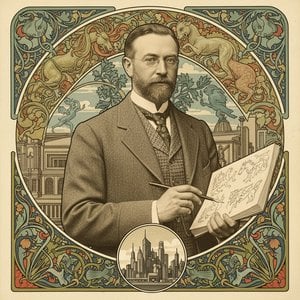
Karl Albert Buehr: A Painter of Tranquility and Impressionistic Giverny
Karl Albert Buehr (1866–1952) was a German-born American painter who achieved renown for his serene landscapes and evocative depictions of Monet’s gardens at Giverny. His artistic journey spanned decades, marked by unwavering dedication to capturing the beauty of nature and establishing himself as a pivotal figure in the California Plein Air Revival movement. Buehr's legacy resides not only in his captivating artworks but also in his contribution to fostering an appreciation for Impressionistic techniques and conveying profound emotional resonance.
Early Life and Artistic Beginnings
Born in Feuerbach, near Stuttgart, Buehr’s formative years were steeped in artistic tradition. His father, Frederick Buehr, was a respected botanist and educator, instilling in Karl Albert a lifelong fascination with the natural world—a passion that would profoundly shape his artistic vision. Henrietta Doh (Dohna?), Buehr's mother, nurtured his intellectual curiosity alongside fostering a familial appreciation for art and culture. These influences combined to cultivate an artist’s sensibility from a young age, propelling him toward pursuing formal training in Stuttgart before relocating to Chicago in the 1880s.
Chicago Years and Influences
Buehr's arrival in Chicago coincided with a burgeoning artistic community eager to embrace new approaches to painting. He studied under Theodore Lukits, a celebrated California Impressionist who championed the use of pastel mediums for outdoor landscapes—a technique Buehr would champion throughout his career. Lukits’ emphasis on capturing fleeting moments of light and color served as an invaluable guide, shaping Buehr's artistic sensibilities and solidifying his commitment to Impressionistic principles. This mentorship proved instrumental in establishing Buehr’s distinctive style and fostering a deep connection with the Californian landscape.
The Giverny Period: Capturing Monet’s Vision
Buehr’s most enduring contribution to art history lies in his meticulous renderings of Claude Monet's gardens at Giverny—a project undertaken during his residency in France between 1908 and 1952. Buehr painstakingly recreated Monet’s iconic lily pond and surrounding flowerbeds, employing pastel pigments with remarkable precision to convey the ethereal quality of light and atmosphere. His paintings exemplify Impressionistic ideals, prioritizing subjective perception over objective representation—a testament to Buehr's artistic integrity and his unwavering devotion to honoring Monet’s legacy. Works like “Springtime in Giverny” and "Girl Seated on a Tree" stand as enduring symbols of Impressionism's pursuit of beauty and emotional truth.
California Plein Air Revival and Legacy
Buehr’s influence extended beyond the confines of Giverny, impacting the burgeoning California Plein Air movement. Alongside Arny Karl and Peter Seitz Adams, Buehr spearheaded a revival of pastel painting outdoors—a bold departure from traditional studio practices. His dedication to capturing the immediacy of nature resonated with fellow artists seeking inspiration and authenticity. Buehr’s artistic legacy continues to inspire contemporary painters who strive to emulate his masterful technique and convey profound emotional depth. Furthermore, Buehr's work resides in museums like Royal Albert Memorial Museum (RAMM), showcasing his enduring impact on art appreciation and cultural heritage.