Asesoría de arte gratuita

x

Kamat Foto Flash

Resumen biográfico

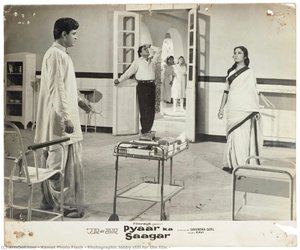
  • Top-ranked work: Photographic lobby still for the film
  • Also known as: Damodar Kamat
  • Top 3 works: Photographic lobby still for the film
  • Museums on APS:
    • Museo de Arte - Fotografía
    • Museo de Arte - Fotografía
    • Museo de Arte - Fotografía
    • Museo de Arte - Fotografía
    • Museo de Arte - Fotografía
  • Ver más…
  • Works on APS: 1
  • Born: Belgaum, India
  • Copyright status: Under copyright
  • Nationality: India

Test de arte

Solo hay una respuesta correcta para cada pregunta.

Pregunta 1:
¿Cuál fue la profesión inicial de Damodar Kamat antes de establecer su estudio de fotografía?
Pregunta 2:
¿Dónde comenzó Damodar Kamat su carrera en el mundo del cine?
Pregunta 3:
¿Qué película es considerada la más emblemática de las fotografías capturadas por Damodar Kamat?
Pregunta 4:
¿Cuál fue el enfoque distintivo del estilo fotográfico de Damodar Kamat?
Pregunta 5:
¿Con quién colaboró Damodar Kamat extensamente durante su carrera cinematográfica?

Damodar Kamat: The Silent Guardian of Hindi Cinema’s Visual Legacy

Damodar Kamat (1923 – 1967) wasn't a name that resonated loudly in the annals of Bollywood history. Yet, his contribution to Indian cinema is undeniable—a quiet revolution captured through countless photographs that documented the golden age of Hindi film. Born in Belgaum, Karnataka, Kamat’s journey began humbly, mastering signboards before discovering his true calling: photography. This passion propelled him to Kolhapur where he honed his skills under Kaka Samant, a respected photographer who instilled in him a meticulous approach and an unwavering dedication to capturing moments with precision.

Early Years & Artistic Training: Seeds of Vision

Kamat’s fascination for colors and languages fueled his desire to learn new techniques—specifically mastering German manuals on photography. This autodidactic spirit would prove invaluable as he embarked on his career at Bombay Talkies in 1945, where he began documenting film sets with an eye for detail. He wasn't merely recording images; he was striving to distill the very essence of a scene—the palpable atmosphere, the unspoken emotions conveyed by actors and crew alike. This formative period instilled in him a profound respect for observation and composition—principles that would guide his artistic endeavors throughout his life.

Bombay Talkies & The Birth of Kamat Foto Flash: Establishing Roots

Recognizing the importance of visual storytelling, Kamat established Kamat Foto Flash in 1945—a studio that quickly became synonymous with Bollywood publicity shots. He partnered with Vidyadhar Kamat and Neha Kamat to continue his father’s legacy. The studio's ethos was simple: capture the soul of filmmaking—the raw energy of production, the subtle nuances of performance. This commitment to authenticity resonated deeply with filmmakers like Guru Dutt and Raj Kapoor, who appreciated Kamat’s uncompromising standards and artistic vision.

Iconic Collaborations: Framing Bollywood History

Kamat Foto Flash became a fixture on the sets of Bollywood classics like *Phool Aur Patthar*, *Pyaasa*, *Sangam*, *Jis Desh Mein Ganga Behti Hai*, and many more. He worked closely with legendary filmmakers such as Guru Dutt, Raj Kapoor, Mohan Segal, OP Ralhan, Sunil Dutt, and Bimal Roy—artists who understood the transformative power of visual representation. Kamat’s photographs weren't just images; they were windows into a bygone era—snapshots of creativity, ambition, and artistry that continue to inspire filmmakers today. He meticulously crafted compositions that conveyed emotion and atmosphere, prioritizing capturing the essence of each scene.

Beyond The Lens: A Legacy Preserved

With over 1,00,000 negatives in all formats, Kamat Foto Flash represents an unparalleled archive of Hindi film history—a testament to his unwavering dedication to preserving cinematic memory. Today’s filmmakers and photographers recognize Kamat Foto Flash's contribution to film history. His meticulous attention to detail and his commitment to capturing authentic moments continue to inspire artists across generations. Damodar Kamat’s legacy isn't one of grand pronouncements or celebrated accolades—it’s found in the countless film frames that bear witness to his artistic brilliance, ensuring that Hindi cinema’s visual history will forever cherish its silent guardian.