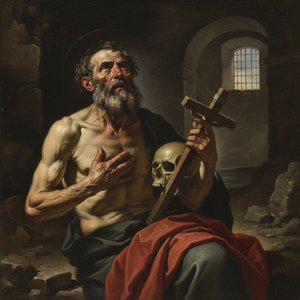
Juan de las Roelas (c. 1570 – 1625): Bridging Mannerism and Baroque Splendor
Juan de las Roelas, a Flemish painter who indelibly shaped the artistic landscape of Seville during the turbulent transition from Mannerist to Baroque painting, remains an enigmatic figure whose life story is shrouded in speculation. Despite scarce biographical documentation—a frustrating predicament compounded by early misattribution—scholarly research has dramatically revised our understanding of his origins and career trajectory. The prevailing narrative concerning his birth in Seville was overturned in 2000 thanks to the meticulous work of Spanish historian José María Sánchez Cantón, who unearthed compelling evidence demonstrating that a contemporary Carmelite canon bearing the same name had inhabited Seville during the period under scrutiny. This corrected account posits that Roelas wasn’t born in Seville but rather hailed from Flanders—a revelation substantiated by two notarial documents revealing the presence of a Flemish painter named Juan de Flandes alongside his father in Valladolid in 1594. These documents definitively established Roelas's Flemish provenance, countering earlier assertions based on flawed historical records.
Early Life and Artistic Training
The precise details surrounding Roelas’s formative years remain elusive. However, the prevailing consensus suggests he was born around 1570 in Antwerp—a thriving artistic hub during the Mannerist era—where his father practiced as a painter. This familial connection undoubtedly instilled within him an appreciation for stylistic innovation and experimentation characteristic of the period. While definitive records concerning Roelas’s formal training are scarce, circumstantial evidence points to an apprenticeship with Titian’s follower in Venice—a journey that would profoundly influence his artistic sensibilities and propel him toward embracing the burgeoning Baroque aesthetic. This Venetian exposure fostered a fascination with dramatic chiaroscuro, opulent color palettes, and dynamic compositions—elements that would become hallmarks of Roelas's distinctive oeuvre. He absorbed influences from Mannerist painters like Parmigianino and Bronzino, incorporating elements of elegance and stylized representation into his early works.
Seville and the Baroque Synthesis
Roelas’s artistic career unfolded primarily in Seville, where he achieved considerable renown as a painter of religious subjects. His involvement in monumental commissions underscored his commitment to conveying spiritual narratives with breathtaking realism and emotional intensity. Notably, he undertook the prestigious task of depicting Saint Andrew's martyrdom for the chapel of the Flemish in Seville Cathedral—a project that cemented his reputation as a champion of Baroque artistic principles. The cathedral’s patronage reflected the broader cultural dynamism of Seville during Roelas’s time, aligning him with the burgeoning artistic fervor emanating from Madrid and Venice. His stylistic approach skillfully blended Mannerist refinements with Baroque exuberance, resulting in paintings imbued with both intellectual depth and visceral impact. He perfected his technique mastering oil painting, achieving remarkable detail and luminosity—a hallmark of the Baroque style.
Major Achievements and Artistic Style
Roelas’s artistic style is characterized by a masterful command of technique—particularly oil painting—and an unwavering dedication to capturing the subtleties of human emotion and naturalistic detail. He employed dramatic lighting techniques reminiscent of Tintoretto, creating scenes filled with palpable energy and emotional resonance. His canvases pulsate with vibrancy, conveying a profound sense of movement and spirituality—a testament to his artistic vision and technical prowess. Among his most celebrated works are “Vision of St Bernard,” “Allegory of the Immaculate Virgin,” and “The Martyrdom of St Andrew”—each demonstrating Roelas’s ability to synthesize Mannerist elegance with Baroque grandeur. These paintings stand as enduring symbols of Sevillian Baroque artistry, captivating viewers centuries later with their expressive power and meticulous craftsmanship.
Historical Significance
Juan de las Roelas's legacy extends beyond his individual artistic achievements. He stands alongside Murillo and Velázquez as one of the foremost figures shaping Seville’s artistic identity during the seventeenth century—a period marked by significant cultural transformation and intellectual ferment. His influence can be seen in subsequent generations of Sevillian painters, solidifying his place among Spain's most celebrated artists. Roelas’s contribution to Baroque painting is undeniable; he helped establish Seville as a center for artistic excellence, securing his enduring reputation as a pivotal innovator and interpreter of the era’s aesthetic ideals. His work continues to inspire admiration and scholarly study—a testament to his profound impact on Spanish art history.