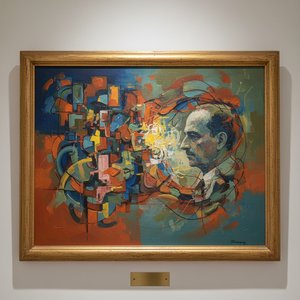
José Guío: A Botanical Visionary Bridging Enlightenment and Exploration
José Guío (1959-2022) stands as a singular figure in Spanish botanical art, embodying the meticulous observation of nature coupled with an artistic sensibility deeply rooted in the intellectual fervor of the Enlightenment. Born in Pulpi, Spain, his career unfolded against the backdrop of significant scientific expeditions and artistic movements, leaving behind a legacy of exquisitely detailed depictions that continue to captivate collectors and scholars alike.
Guío’s artistic journey began under the mentorship of Alejandro Malaspina, the celebrated Spanish naturalist tasked with charting the Pacific Northwest during the Habsburg era. Recognizing Guío's talent for botanical illustration – specifically dissection – Malaspina entrusted him with documenting plant specimens collected during the expedition to New Spain (1788-1803). This formative experience instilled in Guío a profound respect for scientific accuracy alongside an unwavering commitment to artistic beauty, shaping his distinctive style. He skillfully blended anatomical precision with delicate watercolor techniques, capturing not merely the form of plants but also their essence—their textures, colors, and subtle variations—creating images that transcend mere representation. The meticulous detail achieved by Guío mirrored the exacting standards set by Antonio Pineda Bastías, Malaspina’s botanist, demonstrating a shared dedication to scientific rigor combined with artistic finesse.
His involvement extended beyond Malaspina’s expedition; he served as a painter for the Guantanamo Commission (1796-1802), furthering his contribution to Spanish botanical science. This commission demanded equally exacting observation and artistic rendering, focusing on studying flora endemic to Cuba—a task that solidified Guío's reputation as a master of botanical representation. The influence of El Greco is palpable in Guío’s work; the dramatic use of color and expressive brushstrokes undoubtedly impacted his stylistic choices, reflecting a broader engagement with European artistic traditions prevalent during his time. His paintings are housed in institutions like Capilla de San José, showcasing the enduring beauty of classical art alongside the exploration of scientific observation—a testament to Toledo's rich artistic heritage where history and art intertwine seamlessly.
Guío’s artistic development progressed through exposure to European artistic trends prevalent during his time. He honed his skills in Madrid, absorbing inspiration from masters like El Greco, whose dramatic use of color and expressive brushstrokes undoubtedly impacted Guío’s stylistic choices. This connection to El Greco is particularly evident in the San José Museum of Art’s collection where visitors can admire masterpieces reflecting similar artistic sensibilities. The museum itself stands as a testament to Toledo's rich artistic heritage—a place where history and art intertwine seamlessly.
Ultimately, José Guío achieved recognition for his contribution to botanical illustration and Spanish art history. His paintings are housed in institutions like Capilla de San José, showcasing the enduring beauty of classical art alongside the exploration of scientific observation. He remains a compelling figure whose work embodies the spirit of Enlightenment curiosity and artistic excellence—a testament to the transformative power of blending science and art for the enrichment of human understanding.