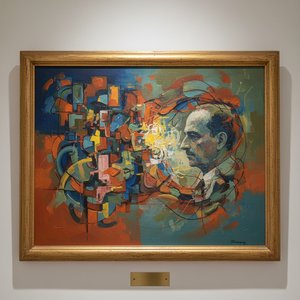
Jorge Arche Miranda (1905-1987): A Pioneer of Cuban Modernism
Jorge Arche Miranda (1905 – 1987) stands as a pivotal figure in Cuban art history, embodying the spirit of innovation and cultural exploration that characterized Grupo de los Once—a collective dedicated to forging a distinctly Cuban visual language. Born in Santo Domingo, Las Villas, Cuba on April 1st, Arche’s artistic journey began amidst the burgeoning influence of European Impressionism and Post-Impressionism, shaping his stylistic approach from its earliest stages. His formative years instilled within him a profound appreciation for capturing fleeting moments of light and atmosphere—a deliberate departure from the academic conventions dominating Cuban art at the time.
Early Life and Artistic Foundations
Arche’s artistic education commenced at “La Academia Vallate de La Sociedad Economica de Amigos del País” in Havana, where he honed his skills alongside fellow artists eager to embrace new aesthetic horizons. Recognizing the transformative potential of European artistic traditions, particularly those championed by Monet and Cézanne, Arche enrolled at San Alejandro Academy—a bastion of Cuban art—where he encountered Victor Manuel Garcia, whose guidance profoundly impacted his artistic trajectory. This mentorship fostered a commitment to experimentation and emotional resonance—values that would become central to Grupo de los Once’s ethos.
Grupo de los Once: Challenging Tradition
Arche's involvement with Grupo de los Once represented a watershed moment in Cuban art history. Driven by a fervent desire to transcend stylistic constraints imposed by European artistic dogma, the collective championed innovation and subjective experience as paramount considerations. Their manifesto declared a rejection of formal conventions—a bold assertion that propelled Grupo de los Once to the forefront of Cuban modernism. The group’s ambition was to portray Cuba authentically—its landscapes, its people, its traditions—reflecting the nation's multifaceted cultural heritage. Arche’s contribution to Grupo de los Once solidified his reputation as a visionary artist committed to redefining Cuban visual culture.
Artistic Technique and Influences
Arche’s artistic technique drew heavily upon Impressionist principles, utilizing broken color and layering brushstrokes with meticulous precision—methods honed by masters like Monet and Cézanne. He skillfully adapted their compositional strategies to depict landscapes and portraits imbued with Cuban character—capturing the essence of his surroundings and conveying profound emotion through nuanced observation. His paintings resonated with a palpable sense of atmosphere and immediacy, reflecting the dynamism of Cuban life and culture.
Notable Works and Legacy
Among Arche’s most celebrated pieces is “Retrato de Monsignor Angel Gaztelu,” executed in 1937—a masterful depiction of religious iconography rendered in oil on board. This artwork exemplifies Arche’s ability to convey profound emotion through meticulous observation and skillful brushwork. Furthermore, his participation in the First National Salon cemented his recognition as a prominent figure in Cuban art history. His dedication to fostering artistic innovation extended beyond his individual creations; he established Escuela de Artes Plástica Camagüey—a testament to his enduring commitment to nurturing future generations of artists. Jorge Arche’s legacy continues to inspire artists and scholars alike, securing his place as one of Cuba's most influential painters—a true pioneer of Cuban modernism.