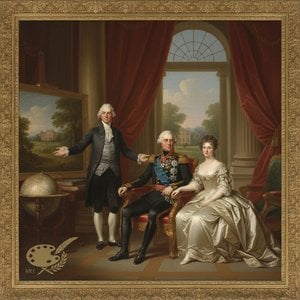
Un legado de luz y deber: La vida de John Wheatley
La historia del arte británico se escribe a menudo a través del prisma de transiciones profundas, y pocas figuras encarnan este movimiento con tanta elegancia como John Laviers Wheatley. Nacido en la histórica ciudad de Abergavenny en 1892, Wheatley fue un hombre cuya vida estuvo inextricablemente ligada al pulso de su época. Descendiente de un linaje de distinción académica —su padre, Sir Zachariah Wheatley, fue alcalde de Abergavenny y ocupó cargos de gran prestigio en la Universidad de Oxford—, Wheatley aportó un rigor erudito innato a sus búsquedas creativas. Su viaje comenzó en los sagrados estudios de la Slade School of Art entre 1912 y 1913, un periodo formativo en el que absorbió las técnicas revolucionarias de maestros como Walter Sickert e Stanhope Forbes. Esta formación le otorgó mucho más que destreza técnica; le brindó una sensibilidad impresionista que le permitió capturar los matices fugaces de la luz y la atmósfera, una cualidad que más tarde definiría sus obras más evocadoras.
Sin embargo, el arte de Wheatley nunca se limitó a la quietud de un estudio. El estallido de la Primera Guerra Mundial lo lanzó a las realidades viscerales del conflicto. Al alistarse en los Artists’ Rifles y servir con la Fuerza Expedicionaria Británica, experimentó de primera mano la dureza y la gravedad de la existencia en tiempos de guerra. Este periodo de servicio transformó su perspectiva, conduciéndolo a su nombramiento como Artista de Guerra Oficial por parte del Comité de Monumentos de Guerra Británico. Con la tarea de documentar las operaciones navales en Rosyth y Southampton, Wheatley se alejó de la mera observación para avanzar hacia un profundo realismo industrial. Sus pinturas de esta era, tales como A Greaser Admiralty Salvage Ship e Divers at Work Repairing a Torpedoed Ship, son lecciones magistrales de tensión; a través de un impasto denso y una paleta sombría y oscura, capturó los esfuerzos claustrofóbicos y heroicos del salvamento marítimo, inmortalizando la lucha mecánica y humana contra el mar.
De educador a curador: Una carrera polifacética
Cuando el humo de la Gran Guerra se disipó, la carrera de Wheatley se expandió hacia los ámbitos de la educación y el liderazgo institucional, demostrando que su influencia se extendía mucho más allá del lienzo. Al regresar a la Slade School of de Arte como instructor entre 1920 y 1925, ayudó a moldear a la siguiente generación de pintores británicos con los mismos principios fundamentales que había dominado décadas antes. Su espíritu viajero y su ambición profesional lo llevaron finalmente a Sudáfrica en 1925, donde aceptó el prestigioso cargo de Profesor Michaelis de Bellas Artes y Arquitectura en la Universidad de Ciudad del Cabo. Este capítulo internacional marcó su transición de pintor de escenas a guardián de la cultura, culminando en su nombramiento como Director de la Galería Nacional de Sudáfrica en 1937.
El regreso de Wheatley a Inglaterra en 1938 marcó otra era significativa de servicio. Como Director de las Sheffield City Art Galleries, se convirtió en una figura fundamental en la escena artística británica durante la Segunda Guerra Mundial. Una vez más, el llamado del deber lo convocó de vuelta a su papel de Artista de Guerra Oficial, esta vez centráéndose en los dignos retratos de dignatarios militares y civiles. Su capacidad para combinar la solemnidad del retrato con la profundidad atmosférica de sus obras marítimas anteriores le permitió tender un puente entre la documentación histórica y las bellas artes. Ya fuera capturando la serena dignidad de un soldado condecorado como James Crichton VC o explorando las texturas oníricas y brumosas de temas impresionistas en piezas como The Darlings, Wheatley permaneció como un maestro de la resonancia emocional.
La importancia perdurable de John Wheatley reside en su capacidad única para navegar la intersección entre el arte y la historia. Su vida fue un tapiz tejido con hilos de deber, rigor académico y una profunda sensibilidad estética. A través de sus diversos roles—
- Artista de Guerra Oficial documentando las realidades industriales y navales de dos Guerras Mundiales;
- Educador fomentando el talento en la Slade School of Art;
- Director de Museo moldeando los paisajes culturales tanto de Sudáfrica como de Inglaterra;
- Retratista capturando la esencia de las figuras más notables de su era;
Wheatley aseguró que los momentos fugaces de lucha y triunfo humano se preservaran con una permanencia que continúa cautivando tanto a coleccionistas como a historiadores. Sigue siendo un pionero cuya obra sirve como una ventana vital al alma de principios del siglo XX.
Preguntas y respuestas
¿Puedo explorar las obras de John Wheatley por palabra clave?
Explora las obras de John Wheatley mediante palabras clave en su página de Por palabras clave. Cada palabra clave agrupa las obras relacionadas.
¿Cómo evolucionó el arte de John Wheatley a lo largo del tiempo?
Un recorrido cronológico por la obra de John Wheatley está disponible en la página Trayectoria del artista, donde las obras se presentan en orden de creación, capítulo a capítulo.
¿Puedo explorar las obras de John Wheatley por paleta de colores?
La página Por paletas de colores agrupa las obras de John Wheatley según sus paletas de colores.