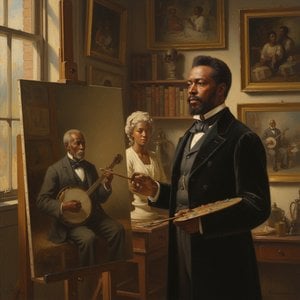
John L. Tweedle: Chronicler of Change and Champion of Photographic Vision
John L. Tweedle (1930-1997) occupies a unique position in the annals of African American photography, cementing his place as an artist deeply intertwined with the socio-political landscape of Chicago during the 1960s. His artistic journey wasn’t simply about capturing images; it was fundamentally driven by a profound desire to bear witness to history—specifically, the explosive eruption of the Division Street Rebellion, an event that irrevocably altered perceptions of Puerto Rican identity and solidified the resilience of its community within the city's urban fabric. Tweedle’s oeuvre transcends mere visual representation, embodying a steadfast dedication to social justice and serving as an enduring inspiration for aspiring photographers worldwide.
Born in Chicago in 1930, Tweedle’s early life was indelibly marked by the pervasive realities of racial segregation and discrimination—experiences that served as formative catalysts shaping his artistic sensibilities. His journalistic vocation commenced with employment at The Chicago Daily News, securing one of the first opportunities for an African American staff photographer within a prominent white-owned newspaper. This courageous initiative established him as a trailblazer and underscored his unwavering commitment to portraying marginalized voices effectively within mainstream media channels. Tweedle’s photographs eloquently conveyed the urgency and multifaceted complexity of the era, meticulously documenting scenes of protest, confrontation, and daily life amidst turbulent social transformations.
The Division Street Rebellion of 1966 stands as arguably Tweedle's most enduring legacy—a pivotal moment captured with unflinching honesty through his lens. He undertook a painstaking documentation process, capturing the confrontations between police officers and Puerto Rican demonstrators advocating for greater autonomy and recognition within Chicago’s political arena. These images – depicting arrests, tense negotiations punctuated by defiant expressions – transcended mere visual record; they became emblematic of the broader struggle for civil rights and fueled spirited debates concerning racial dynamics prevalent in urban America. Tweedle's masterful ability to convey emotion and nuance through his photographic technique solidified his reputation as a storyteller of exceptional caliber.
Beyond his journalistic pursuits, Tweedle expanded his artistic horizons into television production, assuming roles as producer and director for ‘Our People,’ an educational program purposefully designed to cultivate understanding regarding Black culture within Chicago’s vibrant community. This engagement demonstrated Tweedle's broader commitment to social activism—a conviction rooted in the transformative potential of visual media to foster empathy and promote meaningful dialogue about cultural identity. Furthermore, Tweedle served as a mentor to numerous photographers, including Michelle Agins of The New York Times, nurturing talent and championing ethical standards within the photographic profession. His influence extended far beyond his immediate sphere, shaping the trajectory of contemporary photographic artistry.
Tweedle’s artistic style was characterized by a humanist perspective—a deliberate focus on portraying human emotion and experience with sensitivity and compassion. He favored large-format photography, utilizing techniques that permitted him to render detail and texture with remarkable precision. Tweedle's images possessed an immediacy and authenticity that resonated deeply with audiences, reflecting his unwavering belief in the importance of truthful representation. His contribution to documenting pivotal moments in American history ensures that his artistic vision continues to inspire reflection and dialogue about social justice and cultural identity—a testament to his enduring legacy as a chronicler of change and champion of photographic truth.