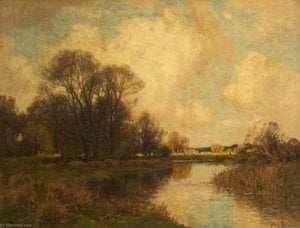
El Legado Luminoso de John Noble Barlow
Bajo la luz suave y cambiante de finales del siglo XIX y principios del XX, pocos artistas capturaron el alma efímera del paisaje con tanta conmoción como John Noble Barlow. Maestro del espíritu impresionista, Barlow poseía una capacidad excepcional para trasladar al lienzo el peso atmosférico de la costa inglesa y el brillo fugaz de las transiciones otoñales. Nacido en Manchester en 1861, su trayectoria fue una de profunda expansión geográfica y estilística. Aunque sus raíces estaban firmemente plantadas en el corazón industrial de Inglaterra, su visión artística se forjó en los prestigiosos estudios de París, donde refinó su técnica bajo la mirada atenta de maestros como Jules Joseph Lefebvre, Paul Louis Delance e Jean-Joseph Benjamin-Constant en la Académie Julian. Esta rigurosa base académica le dotó de un dominio disciplinado de la forma, que más tarde disolvería en la pincelada texturizada y asombrosa que define sus obras más célebres.
La vida de Barlow se caracterizó por un intelecto inquieto y errante, así como por una profunda devoción al mundo natural. Sus viajes por Bélgica, los Países Bajos e incluso las bulliciosas calles de la ciudad de Nueva York enriquecieron su paleta con diversas cualidades lumínicas y matices culturales. Este periodo de exploración le permitió tender un puente entre el realismo académico tradicional y el floreciente movimiento impresionista. Para 1892, tras contraer matrimonio con la estadounidense Marie Elizabeth Johnson, Barlow encontró un hogar espiritual y artístico en St Ives, Cornualles. Fue aquí, entre acantilados escarpados y serenas pozas de marea, donde su arte alcanzó su cenit. El paisaje de Cornualles se convirtió en algo más que un simple tema; se transformó en un colaborador de su proceso creativo, aportando la energía pura y elemental necesaria para sus evocadores paisajes marinos y vistas pastorales.
Maestría de la Luz y la Atmósfera
La verdadera magia de la obra de Barlow reside en su profunda comprensión de la luminosidad. Él no se limitaba a pintar paisajes; pintaba el aire mismo que los habitaba. Su técnica implicaba un sofisticado juego de capas de color y textura, permitiendo que la luz pareciera vibrar bajo la superficie del óleo. Esto es quizás más evidente en su celebrada obra maestra, “Spring, Lamorna”, una pieza que captura el resplandor tierno y revitalizante de la primavera cornualesa con una atmósfera tan palpable que el espectador casi puede sentir la brisa húmeda y salina.
Su repertorio se extendió bellamente hacia el esplendor melancólico del otoño y la quietud de las escenas fluviales. Ya fuera representando el flujo y reflujo rítmico del mar o los tonos apagados y contemplativos de “On the Thames”, Barlow mantuvo un enfoque constante en la resonancia emocional del entorno. Su habilidad para manipular la luz le permitió evocar una sensación de nostalgia y atemporalidad, logrando que sus paisajes se sintieran tanto íntimamente personales como universalmente perdurables. Los siguientes elementos definen sus rasgos estilísticos:
- Pincelada Impresionista: Una dependencia de trazos visibles y texturizados que priorizan la sensación de la luz sobre el detalle anatómico o geológico rígido.
- Narrativa Estacional: Un dominio experto de las paletas de colores específicas necesarias para transmitir la transición desde el renacimiento vibrante de la primavera hasta la decadencia dorada del otoño.
Reconocimiento y Significado Histórico
El ascenso de Barlow dentro de la comunidad artística internacional estuvo marcado por importantes galardones que validaron su posición única entre la tradición británica y la innovación continental. Su presencia en exposiciones prestigiosas, como la National Academy of Design y el Art Institute of Chicago, consolidó su reputación mucho más allá de las costas de Inglaterra. El mundo del arte global tomó nota de su destreza cuando fue galardonado con una medalla de oro (tercera clase) en el Salón de París de 1899 y recibió un mayor reconocimiento en la Exposición de París de 1900. Estos honores no fueron meros triunfos personales, sino que sirvieron para cimentar la importancia del estilo impresionista de Cornualles en el escenario europeo.
Aunque su vida terminó en 1917, dejando un legado grabado en los paisajes de Cornualles y Rhode Island, la influencia de Barlow persiste. Sigue siendo una figura fundamental para quienes estudian la evolución de la pintura de paisaje a principios del siglo XX, un periodo donde los límites entre la realidad y la percepción estaban siendo redibujados con belleza. Su obra permanece como testimonio de una vida dedicada a perseguir la luz, capturando los momentos fugaces de la naturaleza antes de que se desvanecieran en las sombras de la historia.
Preguntas y respuestas
¿Dónde puedo explorar las obras de John Noble Barlow organizadas por color?
La página Índice de color organiza las obras de John Noble Barlow por color.
¿De dónde es John Noble Barlow?
John Noble Barlow nació en Reino Unido.
¿Dónde y cuándo nació John Noble Barlow?
John Noble Barlow nació en Manchester en 1861.