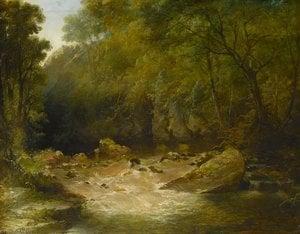
Un pionero del paisaje de Devon
Nacido en la histórica ciudad de Exeter en 1789, John Gendall emergió como una figura transformadora en la escena artística británica, tendiendo un puente entre la pintura de paisaje tradicional y el amanecer revolucionario de la litografía. Su vida estuvo profundamente arraigada en el suelo intelectual y cultural de Devon, una región que serviría por siempre como su musa principal. Al crecer en un entorno de búsqueda académica —siendo hijo de un respetado médico—, Gendiente poseía una sensibilidad refinada que le permitía percibir los matices más sutiles del mundo natural. Sus primeros años no consistieron meramente en observar la naturaleza, sino en comprender su estructura, una habilidad que más tarde le permitiría dominar tanto el pincel como la piedra litográfica.
La trayectoria de la carrera de Gendall se vio alterada irrevocablemente por un encuentro fortuito en los bulliciosos mercados de arte de Londres. Cuando conoció a Rudolf Ackermann, uno de los vendedores de grabados más influyentes de la época, se sembraron las semillas de una revolución técnica. Trabajando bajo la tutela de Ackermann, Gendall fue introducido al floreciente medio de la litografía. Este proceso, que permitía la reproducción de dibujos delicados mediante la impresión en piedra, ofreció una nueva forma de difundir la belleza de la campiña inglesa a un público más amplio. Sus primeras contribuciones a obras como “Picturesque Tour of the Seine” demostraron un dominio emergente de la profundidad tonal y la textura, marcando su transición de un talentoso dibujante a un sofisticado grabador.
El arte de la conexión y la colaboración
A medida que la reputación de Gendall crecía, también lo hacía su participación en las redes profesionales que definieron el mundo del arte del siglo XIX. Su asociación con William Cole se erige como un testimonio de su espíritu colaborativo. Juntos, dirigieron una tienda de grabados que se convirtió en un centro vital para el arte topográfico y paisajista. Este período de su vida se caracterizó por un enfoque intenso en capturar la grandeza del Támesis y las íntimas y ondulantes colinas de su Devon natal. A través de estas colaboraciones, Gendall logró fusionar la precisión del registro topográfico con un enfoque romantizado y emotivo de la luz y la atmósfera.
Más allá de los tecnicismos de la impresión, la vida de Gendall estuvo anclada por una profunda conexión con su comunidad. Su matrimonio con Maria en 1824 aportó un sentido de estabilidad doméstica que reflejaba la paz encontrada en sus paisajes. Él no era simplemente un observador de Devon; era un constructor de su legado cultural. Su papel instrumental en el desarrollo temprano de lo que se convertiría en el museo de la Universidad de Exeter resalta a un hombre dedicado a la preservación y celebración del patrimonio local. Este compromiso aseguró que su visión artística estuviera inextricablemente ligada a la identidad histórica del West Country.
El legado de un cronista visual
La importancia de John Gendall reside en su capacidad para capturar lo pintoresco, un movimiento que buscaba hallar la belleza en lo agreste, lo rural y lo cotidiano. Sus obras sirven como un diario visual de una era pasada, documentando escenas fluviales, la vida local y la luz cambiante del paisaje inglés con una autenticidad que resuena incluso hoy. Su maestría en la litografía ayudó a democratizar el arte, haciendo que las imágenes paisajísticas de alta calidad fueran accesibles para la creciente clase media de la era victoriana.
Al reflexionar sobre su inmensa contribución, se pueden observar varios pilares clave de su impacto perdurable:
- Innovación técnica: Fue un pionero y maestro de la litografía, ayudando a perfeccionar un medio que cambió el grabado para siempre.
- Identidad regional: Su devoción por los paisajes de Devon proporcionó un lenguaje visual fundacional para la historia artística de la región.
- Impacto institucional: A través de su participación en las instituciones culturales de Exeter, ayudó a fomentar un entorno donde el arte y la educación pudieran florecer juntos.
- Versatilidad estética: Navegó con éxito la transición entre las exigencias precisas de la impresión topográfica y las cualidades emotivas de la pintura de paisaje.
Hoy, Gendall es recordado no solo como un pintor, sino como un pionero que capturó el alma del paisaje británico durante un período de profundo cambio industrial y social.
Preguntas y respuestas
¿Puedo explorar las obras de John Gendall por movimiento?
Las obras de John Gendall pueden explorarse por movimiento en la página de Todos los movimientos del artista.
¿En qué periodo histórico trabajó John Gendall?
John Gendall trabajó durante el periodo Siglo XIX. Este periodo sitúa la actividad del artista en la historia.
¿Dónde se encuentran las obras de John Gendall agrupadas por palabras clave?
Para encontrar obras de John Gendall sobre un tema específico, utilice la página de Por palabras clave del artista, que agrupa las obras por palabra clave.