Jean Poyer: A Master of Subtle Renaissance Style
Jean Poyer (c. 1445 – 1503) stands as a singular figure in the artistic landscape of late medieval and early Renaissance France, celebrated primarily for his exquisite manuscript illuminations—works that transcend mere decoration to embody a profound understanding of visual language and humanist ideals. Unlike many contemporaries who embraced bold stylistic gestures, Poyer cultivated a distinctive approach characterized by meticulous detail, delicate brushstrokes, and an unparalleled sensitivity to light and color, marking him as a pivotal innovator within the broader artistic currents of his time.
Origins and Influences: The Gothic Legacy Revisited
Born in Utrecht (Netherlands), Jean Poyer’s formative years coincided with the waning influence of Gothic art—a style dominated by stylized figures and flattened perspectives—yet he absorbed its core principles, transforming them into a new aesthetic vocabulary. His artistic education likely occurred within the workshops of prominent Flemish masters like Jan van Eyck and Rogier van der Weyden, whose pioneering realism established precedents for subsequent generations. However, Poyer’s gaze extended beyond his immediate surroundings; he actively sought inspiration from Italy—specifically the burgeoning Renaissance—where artists such as Andrea Mantegna and Giovanni Bellini were reshaping artistic conventions with their mastery of perspective and naturalism. The presence of Jean Fouquet in Tours, who had introduced Italian stylistic influences into France, further broadened Poyer’s intellectual horizons.
The Tours Workshop: Collaboration and Innovation
Poyer operated within a workshop system typical of the period, employing a small cadre of skilled illuminators—primarily assistants—who diligently replicated his distinctive style. The scarcity of manuscripts bearing his signature underscores the difficulty in definitively attributing authorship to individual hands; stylistic analyses suggest that Poyer’s collaborators possessed remarkable talent, capable of emulating his subtle technique with astonishing precision. Furthermore, evidence indicates that some illuminations were executed entirely by assistants, while others involved Poyer himself applying a portion of pigment—often painstakingly blended—before his helpers completed the task. This collaborative process not only ensured stylistic consistency but also fostered experimentation and innovation within the workshop environment.
Notable Achievements: Illuminated Manuscripts as Vessels of Faith
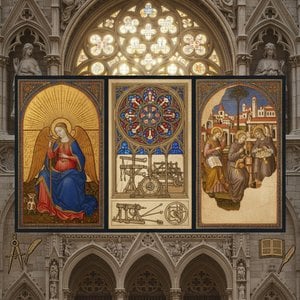
Poyer’s artistic legacy rests principally upon his illuminated manuscripts, which stand as testaments to his exceptional craftsmanship and intellectual engagement. Among his most celebrated creations are the Prayer Book of Anne de Bretagne (c. 1485-1490) and the Briçonnet Hours (“Briconnet heures”), commissioned by Guillaume Briçonnet, France’s secretary of the treasury under Charles VIII. These books exemplify Poyer's stylistic evolution—characterized by a lighter palette, finer brushstrokes, and an unprecedented attention to detail—reflecting the humanist spirit of the Renaissance while retaining vestiges of Gothic tradition. The Prayer Book showcases a remarkable depiction of Mary, mirroring the likeness of Briçonnet’s wife, demonstrating Poyer’s ability to infuse his art with personal symbolism and emotional resonance. These manuscripts are housed in prestigious institutions like the Morgan Library & Museum in New York, ensuring their enduring presence as masterpieces of medieval art.
Legacy and Recognition: A Quiet Genius Amidst Artistic Giants
Despite lacking the flamboyant grandeur of some contemporaries—such as Jean Fouquet or Hugo van der Goes—Jean Poyer distinguished himself through his unwavering commitment to stylistic subtlety and technical virtuosity. He was recognized as a master by Jacques de Besançon, who worked for similar patrons (including King Charles VIII), but his style differed markedly from that of Bourdichon, another prominent illuminator active in Tours during the same era. Although Poyer’s influence extended primarily within the realm of manuscript illumination—a medium comparatively underserved by scholarly attention—his contribution to the artistic landscape remains undeniable. His workshop's output was modest compared to other artists of his caliber, yet his distinctive style endured beyond his lifetime, influencing subsequent generations of illuminators and solidifying his place as a pivotal figure in the transition from Gothic to Renaissance art.