Jean Leon Gerome Ferris: Cronista de la Historia Americana
Jean Leon Gerome Ferris (1863 – 1930) se erige como una figura singular en el panorama de la historia del arte estadounidense, reconocido primordialmente por su monumental serie ‘Pageant of a Nation’ (El Desfile de una Nación), la empresa más ambiciosa de su tipo realizada por un solo artista durante finales del siglo XIX. Nacido en Filadelfia, Pensilvania, Ferris heredó un linaje artístico impregnado de tradición y nutrido por mentores excepcionales; su padre, Stephen James Ferris, era él mismo un pintor de retratos profundamente influenciado por Jean-Léon Gérôme y igualmente cautivado por Mariano Fortuny, una conexión que moldeó profundamente la trayectoria artística de Ferris. Crecer en medio de este vibrante entorno artístico le inculcó una dedicación inquebrantable al oficio, lo que culminó en su formación formal en la Academia de Bellas Artes de Pensilvania y estudios posteriores en la Académie Julian bajo la tutela de William-Adolphe Bouguereau. De manera crucial, se encontró con su homónimo, Jean Léon Géremb, cuya visión artística sirvió como piedra angular para la ambición de Ferris de representar momentos trascendentales de la historia estadounidense. Como el propio Ferris expresó elocuentemente: “el axioma era que uno pintaría mejor aquello con lo que está más familiarizado”, y decidió sumergirse en la narrativa de su nación, una decisión que arrojó resultados extraordinarios.- Primeras Influencias y Formación: La educación artística de Ferris comenzó bajo la tutela de su padre, junto a la mentoría de sus tíos Edward Moran y Thomas Moran, ambos célebres pintores marinos que defendían una estética distintamente romántica. Este período formativo consolidó su comprensión de la técnica artística e inculcó en él un aprecio por la composición dramática y la expresión emotiva.
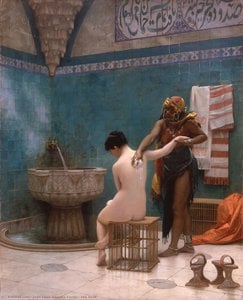
- Inicios Orientalistas: Al igual hecho por muchos artistas de su época, Ferris persiguió inicialmente temas arraigados en el Orientalismo, un movimiento de moda caracterizado por paisajes exóticos y representaciones idealizadas de las culturas orientales. Su pintura “Feeding the Ibis” (Alimentando al Ibis, 1882), valorada en 600 dólares, ejemplifica esta inclinación estilística y demuestra un dominio magistral del color y el detalle.
- El Desfile de una Nación: La obra maestra de Ferris comenzó en 1895 con la ambiciosa tarea de cronicar la historia estadounidense a través de una serie de setenta y ocho pinturas, un proyecto que definiría su legado artístico. Impulsado por una creencia inquebrantable en el poder de la narrativa visual, investigó meticulosamente los eventos históricos y los tradujo en representaciones emocionalmente resonantes.
La Búsqueda de la Pintura Narrativa y el Éxito Comercial
El compromiso de Ferris con la representación de la historia no fue meramente estético; surgió de la convicción de que el arte podía servir como un vehículo para educar al público y fomentar el patriotismo. Al reconocer las limitaciones inherentes a presentar escenas individuales de forma aislada, se asoció estratégicamente con editoriales para asegurar los derechos de reproducción, una decisión que impulsó su obra hacia una circulación maslıva. Las impresiones litográficas, postales, calendarios y tarjetas comerciales con imágenes de “The Pageant of a Nation” se convirtieron en medios publicitarios ubicuos durante la década de 1920 y años posteriores, asegurando que la visión artística de Ferris alcanzara audiencias mucho más allá de los confines del mundo del arte. Sorprendentemente, reproducciones laminadas de sus pinturas seguían estando disponibles para la venta hasta bien entrada 1984, un testimonio del atractivo perdurable de sus narrativas históricas y su capacidad para trascender el tiempo.Obras Notables y Estilo Artístico
El estilo artístico de Ferris se caracterizó por una atención meticulosa al detalle, informada por la tradición académica de Bouguereau pero infundida con un dinamismo expresivo que recordaba la influencia de Gérôme. Sus pinturas capturaron representaciones idealizadas de eventos históricos significativos —escenas de la Revolución Americana, batallas de la Guerra Civil y exploraciones del Oeste— presentadas con un realismo inquebrantable e imbuidas de grandeza moral. Entre sus piezas más celebradas se encuentran “Napoleon in Egypt”, “Dancer with an Apple” y “Painting Breathes Life into Sculpture”, cada una demostrando la habilidad excepcional de Ferris para transmitir emociones a través del gesto y la postura, junto con una ejecución magistral de la textura y la luz.Legado y Significado Histórico
La contribución de Jean Leon Gerome Ferris a la historia del arte estadounidense se extiende más allá de sus logros artísticos; estableció un precedente para proyectos ambiciosos de pintura histórica, un género que había perdido gran parte de su prominencia hacia principios del siglo XX. Su serie ‘Pageant of a nación’ sigue siendo un logro sin parangón en la narrativa visual, capturando el espíritu de su época y consolidando el lugar de Ferris como uno de los principales cronistas de la historia de América. Además, su éxito al asegurar reproducciones comerciales garantizó que su obra continuara inspirando a generaciones de artistas y espectadores por igual, una hazaña notable considerando los desafíos que enfrentaban los artistas al intentar difundir su visión durante un período marcado por cambios en los gustos artísticos y prioridades culturales en constante evolución.Preguntas y respuestas
¿Puedo explorar las obras de Jean Leon Gerome Ferris por palabra clave?
Para encontrar obras de Jean Leon Gerome Ferris sobre un tema específico, utilice la página de Por palabras clave del artista, que agrupa las obras por palabra clave.
¿Puedo estudiar el uso del color de Jean Leon Gerome Ferris en toda su obra?
El uso del color de Jean Leon Gerome Ferris en las obras listadas en este sitio web puede estudiarse en la página Genoma de la Paleta del artista.
¿Existe un recorrido virtual en 3D de las obras de Jean Leon Gerome Ferris?
Las obras de Jean Leon Gerome Ferris pueden verse en una galería 3D en la página Museo 3D del artista.