Los Reinos Encantados de Jean-Baptiste Pillement
En el crepúsculo dorado del siglo XVIII, pocos artistas poseían la capacidad de transportar al espectador a un mundo tan onírico y exótico como Jean-Baptiste Pillement. Nacido en Nîmes en 1728, Pillement emergió no solo como un pintor, sino como un maestro de la atmósfera, entrelazando la delicada elegancia del estilo Rococó con una profunda fascinación por lo distante y lo desconocido. Aunque sus primeros años permanecen parcialmente velados por las brumas de la historia, su ascenso dentro de la jerarquía artística francesa fue nada menos que meteórico. A través de su meticulosa formación bajo el estimado Jean-Baptiste Huet, dominó los sutiles matices de la acuarela, un medio que le permitió capturar la luz efímera y los pigmentos vibrantes necesarios para dar vida a sus visiones fantásticas.
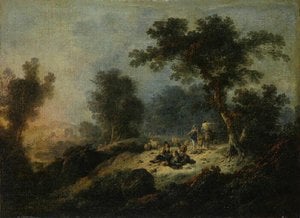
La obra de Pillement sirve como una ventana a los movimientos de la Chinoiserie y el Exotisme que cautivaron a la aristocracia francesa. A diferencia de los tradicionalistas de su época, que buscaban consuelo en las ruinas romanas clásicas o en sombríos retratos históricos, Pillement miraba hacia el horizonte. Sus viajes por Italia y su profundo compromiso con los motivos persas le permitieron construir paisajes que se sentían tanto exuberantes como de otro mundo. En sus manos, el mundo natural fue reimaginado; palmeras imponentes, ríos serpenteantes y aves de plumaje brillante se convirtieron en los protagonistas de un drama silencioso y hermoso. Este dominio de lo exótico lo convirtió en una figura indispensable en las cortes de Luis XV y María Antonieta, ya que su arte proporcionaba un escape muy necesario hacia un reino de pura e inalterada imaginación.
Técnica, Influencia y el Espíritu Rococó
La brillantez de la técnica de Pillement reside en su capacidad para equilibrar la precisión con un resplandor suave y etéreo. Utilizó una delicada técnica de sfumato —una magistral mezcla de tonos mediante capas meticulosas— que otorgaba a sus paisajes una cualidad casi translúcida. Este enfoque le permitió evocar la profundidad atmosférica de maestros como Claude Lorrain, aunque infundió estos cimientos clásicos con una energía singularmente caprichosa. Sus composiciones nunca eran estáticas; pulsaban con una vitalidad rítmica, caracterizada a menudo por:
- Intrincado Detalle Botánico: Un profundo enfoque en la flora que se sentía tanto científicamente inspirada como míticamente realzada.
- Vibración Cromática: El uso de colores audaces y saturados para representar la exuberancia de los entornos tropicales y orientales.
- Fluidez Decorativa: Una capacidad para cerrar la brecha entre la pintura de bellas artes y el diseño decorativo, haciendo que su obra se sintiera igualmente en casa en un lienzo o como parte de un opulento mural de interiores.
Su evolución estilística estuvo profundamente moldeada por las exploraciones de artistas como Nicolas Pocock y Gaspar Pérégrine Rigaud. Al absorber sus enfoques del paisaje y la luz, Pillement pudo refinar una estética distintiva que se sentía tanto arraigada en la tradición europea como salvajemente aventurera. Su influencia se extendió mucho más allá del lienzo, ya que sus diseños permearon el tejido mismo de las artes decorativas francesas, influyendo en todo, desde los patrones de los papeles tapiz hasta los motivos de la porcelana.
Un Legado Duradero en la Historia del Arte
La importancia histórica de Jean-Baptiste Pillement no puede sobreestimarse, particularmente en lo que respecta a su papel en la definición del lenguaje visual del lujo de finales del siglo XVIII. Sus prestigiosos encargos, especialmente los impresionantes murales que adornan el Château de Fontainebleau y el Petit Trianon, se erigen como testimonios de su estatus como favorito de la realeza francesa. Estas obras no eran meramente decoraciones; eran entornos inmersivos que ayudaron a definir la identidad estética de una era.
A medida que el mundo del arte transitaba de la exuberancia juguetona del Rococó hacia la disciplina más estructurada del Neoclasicismo, la obra de Pillement permaneció como un puente preciado entre estos dos mundos. Dejó tras de sí un legado de asombro, recordando a las generaciones futuras que el arte posee el poder único de trascender las fronteras geográficas y transportar el espíritu humano a tierras de infinita belleza y misterio. Hoy en día, su nombre sigue siendo sinónimo de lo exquisito, lo exótico y el encanto eterno del Rococó francés.
Preguntas y respuestas
¿Existe una lista completa de las obras de Jean-Baptiste Pillement?
Todas las obras de Jean-Baptiste Pillement en este sitio web pueden explorarse desde la página de Todas las obras del artista.
¿En qué periodo histórico trabajó Jean-Baptiste Pillement?
Jean-Baptiste Pillement trabajó durante el periodo Edad Moderna temprana. Este periodo sitúa la actividad del artista en la historia.
¿Cómo puedo encontrar obras de Jean-Baptiste Pillement en una paleta específica?
La página Por paletas de colores agrupa las obras de Jean-Baptiste Pillement según sus paletas de colores.