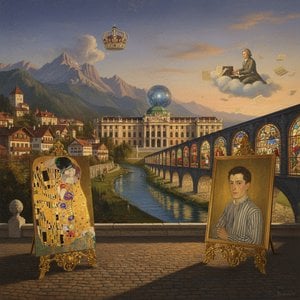
Jan Kotěra: El Arquitecto del Modernismo Bohemio
Jan Kotěra (18 de diciembre de 1871 – 17 de abril de 1923) se erige como una figura monumental en la historia arquitectónica checa, reconocido no solo por la construcción de edificios, sino por moldear el espíritu mismo del arte y el diseño bohemio moderno. Nacido en Brno, Moravia —que en aquel entonces formaba parte de la Austro-Hungría—, los años formativos de Kotěra le inculcarón un profundo aprecio tanto por la tradición como por la innovación, una dualidad que definiría su trayectoria artística a lo largo de toda su vida. Sus estudios iniciales en la Universidad de Viena bajo la tutela de Otto Wagner resultaron cruciales, pues lo expusieron al floreciente movimiento de la Secesión Vienesa y establecieron la influencia de Wagner como piedra angular de su sensibilidad estética. Esta exposición fomentó una comprensión profunda sobre cómo el diseño arquitectónico podía trascender la mera funcionalidad para abrazar formas expresivas arraigadas en el patrimonio cultural.- Primeras influencias y la Secesión Vienesa: La visión artística de Kotěra fue irrevocablemente moldeada por el rechazo de la Secesión a las convenciones académicas. Él absorbió el énfasis de Wagner en la forma escultórica y la grandeza monumental, traduciendo estos principios en sus propios proyectos arquitectónicos.
- <Regreso a Praga y la Unión Mánes: Al regresar a Praga en 1897, Kotěra desempeñó un papel fundamental en la creación de la Unión Mánes de Bellas Artes —un crisol para el fervor artístico nacionalista checo—, consolidando su rol como defensor de los ideales de vanguardia dentro de Bohemia.
Logros Arquitectónicos Notables
El legado arquitectónico de Kotěra se caracteriza por una asombrosa amplitud y profundidad, abarcando proyectos que van desde grandiosos edificios civiles hasta íntimas villas residenciales. Su contribución a la arquitectura checa es innegable, marcada por una distintiva fusión estilística que lo distingue de sus contemporáers. Entre sus obras más celebradas se encuentran:- Museo de Bohemia Oriental (Hradec Králové): Completado entre 1908 y 1912, este museo ejemplifica la magistral mezcla de Kotěra entre el Neogótico y la ornamentación Art Nouveau, un testimonio de su capacidad para honrar la tradición mientras abrazaba la experimentación estilística.
- Casa Peterka (Praga): Situada en la Plaza de Wenceslao, la Casa Peterka encarna el compromiso de Kotěra con el diseño monumental y la integración escultórica, reflejando la grandeza del paisaje cívico de Praga.
- Casa Nacional (Prostějov): Construida en 1907, la Casa Nacional de Prostějov se erige como un faro de la arquitectura modernista checa, caracterizada por su impactante fachada y sus innovadoras soluciones estructurales.
- Villa Trmalova: Construida en Praga-Strašnice entre 1902 y 1904, la Villa Trmalova representa la exploración pionera de Kotěra de la estética arquitectónica rústica, fusionando materiales naturales con un refinado oficio artístico.
- Facultad de Derecho de la Universidad Carolina (Praga): Finalizada entre 1924 y 1927, este edificio muestra la habilidad de Kotěra para sintetizar elementos estilísticos clásicos y modernos, una mezcla armoniosa que refleja el espíritu intelectual del campus universitario de Praga.
Legado e Influencia
El impacto de Jan Kotěra se extendió mucho más allá de sus propias creaciones arquitectónicas, moldeando el paisaje artístico de Bohemia durante las décadas venideras. Fue mentor de una generación de arquitectos checos —entre ellos Josef Gočár—, quienes llevarían adelante la visión modernista de Kotěra y establecerían a Checoslovaquia como un bastión del diseño de vanguardia. Su fe inquebrantable en el poder transformador del arte —particularmente en su capacidad para elevar la vida cotidiana— continúa inspirando el discurso arquitectónico actual. Además, su obra sirvió de inspiración para generaciones posteriores de artistas y diseñadores, consolidando su lugar como una de las figuras más influyentes en la historia artística checa. El legado perdurable de Kotěra reside no solo en los edificios que erigió, sino también en el espíritu de innovación y belleza que impregnó toda su obra: un testimonio de su genio singular y su inquebrantable dedicación a la excelencia arquitectónica.Exploración Adicional
Para una comprensión más profunda de la vida y obra de Jan Kotěra, consulte estos recursos: También puede descubrir más sobre sus proyectos en la Národní galerie v Praze (https://www.ngprague.cz).Preguntas y respuestas
¿Cómo puedo ver todas las obras de Jan Kotěra?
Puede explorar todas las obras de Jan Kotěra en este sitio web desde la página de Todas las obras de arte del artista.
¿Dónde puedo visitar el museo virtual en 3D con las obras de Jan Kotěra?
Las obras de Jan Kotěra pueden verse en una galería 3D en la página Galería 3D del artista.
¿De dónde es Jan Kotěra?
Jan Kotěra nació en República Checa.