Jacques Hérold: A Pioneer of Lyrical Abstraction
Jacques Hérold (1910 – 1987) occupies a unique position within the twilight years of surrealism, remembered primarily for his unwavering dedication to abstraction and his profound connection with Constantin Brâncuși—a relationship that fundamentally shaped his artistic trajectory. Born in Piatra Neamt, Romania, amidst a Jewish family deeply rooted in tradition, Hérold’s early life unfolded against the backdrop of Galați, a vibrant port city brimming with artistic fervor and intellectual curiosity. His formal education commenced at Bucharest's School of Fine Arts in 1925, equipping him with foundational skills that would serve as bedrock for his subsequent explorations into visual expression.
However, it was Paris—reached in 1930—that truly ignited Hérold’s artistic spirit. Embracing the moniker Jacques Hérold, he plunged headfirst into the epicenter of European avant-garde culture, joining André Breton's Surrealist Group and immersing himself in its revolutionary ethos. This affiliation wasn’t merely coincidental; it was a catalyst for transformative creative encounters—a meeting with Brâncuși proving particularly influential. The sculptor’s pioneering investigations into form and materiality resonated deeply within Hérold’s artistic sensibilities, inspiring him to pursue stylistic innovations that prioritized sculptural principles alongside pigment and gesture.
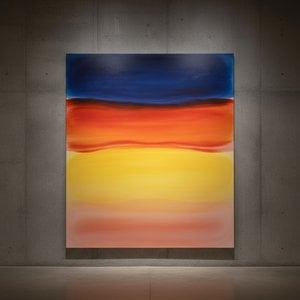
The Surrealist Group's insistence on tapping into the subconscious mind—translating dreams and fantasies onto canvas—became a guiding force in Hérold’s artistic process. His debut solo exhibition in 1947 served as an undeniable affirmation of his burgeoning reputation within the surrealist community, presenting works that showcased a nascent fascination with expressive abstraction while simultaneously hinting at Brâncuși's enduring impact. Following this pivotal moment, Hérold embarked on a journey toward lyrical abstraction and tachisme—techniques characterized by spontaneous brushstrokes and deliberately textured surfaces—a stylistic evolution mirroring broader trends in European art during the postwar era. This deliberate rejection of representational accuracy underscored a commitment to conveying emotion and psychological depth through purely visual means.
His versatility extended beyond sculptural pursuits; he garnered considerable acclaim for his contributions as book cover artist and illustrator, demonstrating an ability to adapt his artistic vision across diverse mediums. Notably, in 1958, Hérold received the prestigious Copley Foundation Prize—a testament to his unwavering dedication to artistic innovation and a recognition of his profound contribution to the realm of visual art.
Hérold’s participation in the Venice Biennale in 1986 marked a poignant culmination of his illustrious career, just one year before his passing—a final affirmation of his enduring legacy as a visionary artist who championed abstraction and honored the influence of Brâncuși's sculptural explorations. His final artworks continued to grapple with themes of memory and materiality, embodying the spirit of his lifelong pursuit of artistic excellence and solidifying his place within the annals of modern art history. Jacques Hérold’s oeuvre remains an invaluable testament to the transformative power of surrealism and its indelible imprint on abstract expressionism—a legacy that continues to inspire artists today.