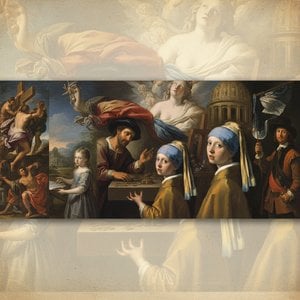
Domenico Fiasella: A Genoese Baroque Visionary
Domenico Fiasella (1589 – 1669), affectionately nicknamed “Il Sarzana,” stands as a pivotal figure in the Genoese Baroque artistic landscape. Born in C, he descended from a silversmith family and received an early education in craftsmanship under Aurelio Lomi and Giovanni Battista Paggi—a formative experience that instilled a meticulous attention to detail – a characteristic that would permeate his prolific output. His journey began with studies at Rome’s Accademia del Nudo, where he honed his artistic skills under the tutelage of Guido Reni and ciriaco mattei, securing commissions from influential patrons like Vincenzo giustiniani and propelling him into collaborations with celebrated artists such as Cavalier d'arpino.
- Early Career & Patronage: Fiasella’s initial success stemmed from recognition by prominent academicians – Reni and Mattei – who championed his talent, securing commissions from wealthy patrons like Vincenzo giustiniani and fostering connections with fellow artists of distinction. This early patronage established him as a rising star within the Roman artistic milieu, aligning him with influential figures shaping the Baroque aesthetic.
- Roman Influences: His time in Rome profoundly impacted his artistic sensibilities, exposing him to the stylistic innovations of Mannerism and paving the way for a more dynamic Baroque approach. The influence of artists like Parmigianino and Bronzino is palpable in Fiasella’s compositions, demonstrating an understanding of complex visual rhetoric and a deliberate rejection of idealized forms—a hallmark of Mannerist art that nonetheless served as a springboard for Baroque grandeur.
- Notable Commissions: Among his most significant undertakings were depictions of Christ Healing the Blind and Christ Raising the Son of Nain – masterpieces bequeathed to the John and Mable Ringling Museum of Art upon Fiasella’s passing—and Queen Artemisia, commissioned by Cardinal Ludovico Carafa di Montepulciano. These commissions underscored Fiasella's reputation as a masterful painter capable of conveying profound spiritual narratives with breathtaking visual impact.
Returning to Genoa in 1616, Fiasella established a thriving studio, becoming a cornerstone of Genoese artistic production. He undertook ambitious fresco projects, notably the Story of Esther for Palazzo Lamellini alla Zecca and an Annunciation in Santa Maria Assunta church – demonstrating his mastery of monumental painting techniques and cementing his reputation as one of Genoa’s foremost artists. His influence extended beyond his own creations; he mentored a generation of Genoese painters, including Angelica Veronica Airola, Valerio Castelli, Francesco Gentileschi, and Giovanni Andrea Podestà, shaping the artistic trajectory of the city.
- Genoese Studio & Apprenticeship: Fiasella’s studio in Genoa served as a crucible for artistic innovation, nurturing talent and fostering collaborative endeavors with fellow artists like Giacomo Legi. He instilled meticulous attention to detail—a characteristic inherited from his silversmith family—resulting in artworks imbued with remarkable precision and expressive power.
- Mentorship Legacy: He imparted his knowledge to numerous pupils—among them Angelica Veronica Airola, Valerio Castelli—leaving an indelible mark on the Genoese Baroque tradition. His teachings emphasized both technical proficiency and artistic vision, ensuring that Fiasella’s stylistic principles would continue to resonate throughout subsequent generations of Genoese artists.
- Collaborations & Artistic Dialogue: His partnerships with Giacomo Legi exemplify the artistic exchange characteristic of the period, reflecting broader trends in European art history. These collaborations fostered intellectual stimulation and broadened Fiasella's artistic horizons, contributing to the vibrant cultural landscape of Genoa during his lifetime.
Fiasella’s artistic style is characterized by dramatic compositions infused with vibrant color palettes and masterful use of chiaroscuro—techniques honed during his Roman studies—resulting in emotionally resonant depictions of religious subjects. His works resonate with a palpable sense of movement and dynamism, mirroring the fervor of the Baroque era and reflecting an unwavering commitment to conveying spiritual grandeur. Domenico Fiasella’s legacy endures as a testament to Genoese artistic excellence and a cornerstone of Baroque art history. He is remembered for his ability to capture the sublime beauty of faith through meticulously crafted paintings that continue to inspire awe and admiration centuries later.