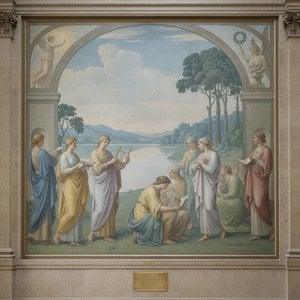
Primeros años y formación en Friuli
Giovanni Antonio de’ Sacchis, conocido universalmente como Il Pordenone, irrumpió en la escena del Renacimiento italiano como una fuerza de la naturaleza más que como el producto de un cuidadoso entrenamiento académico. Nacido alrededor de 1484 en Fruili-Visenza, Italia, sus orígenes no se hallaban en los centros artísticos establecidos de Florencia o Roma, sino en la ciudad relativamente provincial de Pordenone, un lugar que moldearía indeleblemente su estilo distintivo. Los detalles sobre su educación temprana permanecen algo esquivos; a diferencia de muchos de sus contemporáneos, no parece haber beneficiado de un aprendizaje formal con un maestro de renombre. En su lugar, se cree que recibió la instrucción inicial de su padre, también artista, y desarrolló sus habilidades a través de la experiencia práctica y la observación. Esta falta de una formación convencional contribuyó, posiblemente, a la energía cruda y a la ejecución a veces deliberadamente "tosca" que caracterizó su obra, diferenciándolo de los estilos más pulidos que prevalecían en otros lugares. Sus primeros encargos fueron principalmente piezas religiosas locales, lo que le permitió perfeccionar su oficio mientras establecía una reputación dentro de la región de Friuli. Incluso en estos trabajos iniciales, son evidentes los indicios del toque dramático y la audaz paleta de colores que se convertirían en sus sellos distintivos.Una estrella ascendente: expansión de su influencia y encuentros romanos
A principios del siglo XVI, el talento de Pordenone había comenzado a atraer una atención más amplia. Se expandió más allá de los encargos locales, emprendiendo proyectos cada vez más ambiciosos en ciudades como Cremona y Venecia. Alredres de 1516, un viaje crucial a Roma le permitió entrar en contacto con las obras maestras del Alto Renaciente de Rafael y Miguel Ángel. Aunque carecía del riguroso entrenamiento anatómico de estos maestros, Pordenone absorbió su poder compositivo y su grandeza, traduciéndolos a través de su propio y único prisma. Este encuentro no condujo a la imitación, sino que provocó una síntesis: una mezcla de los ideales clásicos con una sensibilidad distintivamente del norte de Italia. Regresó de Roma imbuido de nuevas ideas, pero mantuvo una independencia feroz en su enfoque. Su obra comenzó a exhibir un sentido agudizado del drama, una intensidad emocional y una voluntad de experimentar con técnicas poco convencionales. Este periodo vio el desarrollo de ciclos de frescos a gran escala, notablemente en la Catedral de Cremona, donde sus escenas de la Pasión conmocionaron a los espectadores con su realismo visceral y su poderosa representación del sufrimiento humano, un presagio de la fuerza expresiva que más tarde definiría a artistas como Goya.Los años venecianos: colaboración, rivalidad y madurez artística
Los años transcurridos desde 1527 hasta su prematura muerte en 1539 se desarrollaron principalmente en Venecia, una ciudad rebosante de innovación artística. Aquí, Pordenone se convirtió en una figura prominente de la vibrante escena artística veneciana, colaborando con artistas más jóvenes como Tintoretto en la Scuola Grande della Carità. Esta colaboración resultó mutuamente beneficiosa; el estilo energético de Pordenone influyó en las composiciones dinámicas de Tintoretto, mientras que este último probablemente absorbió parte de la pericia técnica de Pordenone en la pintura al fresco. Sin embargo, su estancia en Venecia no estuvo exenta de desafíos. Se desarrolló una feroz rivalidad con Tiziano, alimentada por la competencia por los encargos y las diferentes filosofías artísticas. Incluso los rumores sugieren que la muerte de Pordenone pudo haber sido sospechosa, insinuando la intensidad de esta animosidad profesional. A pesar de estas tensiones, Pordenone continuó produciendo un cuerpo de obra notable durante sus años venecianos, refinando su estilo característico y consolidando su reputación como uno de los principales pintores manieristas de Italia. Sus retablos y murales se caracterizaron por efectos de iluminación dramáticos, combinaciones de colores vibrantes y un sentido palpable del movimiento.Técnica, estilo y legado perdurable
El enfoque artístico de Il Pordenone estuvo marcado por una combinación distintiva de velocidad, vigor y una expresividad deliberada. Vasari describió famosamente su ejecución como "tosca", pero esto no debe interpretarse como una falta de habilidad; más bien, refleja un rechazo consciente al pulido refinado favorecido por algunos de sus contemporáers. Priorizó el impacto emocional sobre el detalle meticuloso, empleando pinceladas audaces y combinaciones de colores poco convencionales para crear obras que eran tanto visualmente impactantes como emocionalmente cargadas. Sus composiciones suelen presentar figuras dinámicas, gestos dramáticos y un sentido agudizado del realismo, cualidades que lo distinguieron de los estilos más idealizados prevalentes en otras partes de Italia. Su magistral uso del color, particularmente su capacidad para crear efectos luminosos mediante capas y veladuras, fue ampliamente admirado. La influencia de Pordenone en las generaciones posteriores de artistas fue profunda. Allanó el camino para el desarrollo del Manierismo veneciano, inspirando a pintores como Tintoretto e influyendo incluso en Tiziano en sus obras tardías. Su legado se extiende más allá de su círculo inmediato; su énfasis en la intensidad emocional y el realismo dramático presagió el estilo Barroco que dominaría el arte europeo en el siglo XVII.- Composiciones dramáticas
- Paleta de colores vibrante
- Pincelada enérgica
- Intensidad emocional
Obras maestras y atractivo imperecedero
Aunque muchas de las obras de Pordenone se perdieron o dañaron a lo largo de los siglos, una cantidad significativa sobrevive, ofreciendo vislumbres de su extraordinario talento. Los frescos de la Catedral de Cremona siguen siendo un testimonio de su maestría temprana, mientras que sus colaboraciones en la Scuola Grande della Carità en Venecia muestran su estilo dinámico y sus técnicas innovadoras. “Cristo y María Magdalena” (1532) ejemplifica su capacidad para transmitir una profunda devoción religiosa a través del color vibrante y figuras expresivas. Sus retablos, como los creados para iglesias por todo el norte de Italia, se caracterizan por su grandeza y poder emocional. Hoy en día, Il Piente es reconocido como una figura fundamental del Renacimiento italiano: un artista que desafió las convenciones, abrazó la experimentación y dejó una marca indeleble en la historia del arte. Sus obras continúan cautivando a los espectadores con su energía pura, su intensidad dramática y su atractivo perdurable.Preguntas y respuestas
¿En qué movimientos trabajó Il Pordenone?
La página Todos los movimientos agrupa las obras de Il Pordenone por movimiento artístico.
¿En qué periodo histórico trabajó Il Pordenone?
Il Pordenone trabajó durante el periodo Renacimiento. Este periodo sitúa la actividad del artista en la historia.
¿De dónde es Il Pordenone?
Il Pordenone nació en Italia.
¿Dónde puedo ver las obras de Il Pordenone en una galería 3D?
Es posible realizar una visita virtual: la página Museo 3D de Il Pordenone presenta las obras del artista en una galería tridimensional.
¿En qué ciudad y país nació Il Pordenone?
Il Pordenone nació en Friuli-Venecia, en Italia.
¿Cuál es el lugar y el año de nacimiento de Il Pordenone?
Il Pordenone nació en Friuli-Venecia en 1484.
¿Dónde puedo ver el perfil cromático de la obra de Il Pordenone?
El perfil cromático de la obra de Il Pordenone se muestra en la página Genoma de la Paleta del artista.