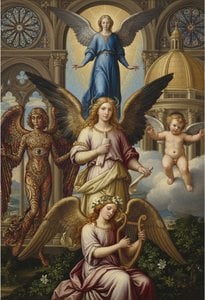
El visionario del subconsciente: la vida y el legado de Hugo Simberg
En los paisajes tranquilos y envueltos en niebla de la Finlandia de finales del siglo XIX, surgió una voz artística única que alteraría para siempre el panorama cultural de la nación. Hugo Gerhard Simberg (1873–1917) no era simplemente un pintor; era un tejedor de sueños, un cronista de lo invisible y un maestro del movimiento simbolista. Nacido en Hämeenlinna, hijo del coronel Nicolai Simberg y Ebba Matilda Simberg, su infancia estuvo impregnada de un entorno que nutrió tanto la disciplina como la imaginación. Si bien los antecedentes militares de su padre le proporcionaron una base estructurada, fue la influencia de su tía Alexandra —una pintora aficionada que le enseñó a leer— lo que probablemente sembraba las primeras semillas de su vocación artística. Su viaje hacia las profundidades de la psique humana comenzó lejos del campo de batalla, orientándose, en cambio, hacia los reinos etéreos del folclore y el mito.
La formación académica de Simberg fue un tapiz de diversas influencias y un riguroso entrenamiento. Perfeccionó su oficio en la Escuela de Dibujo de la Sociedad de Arte Finlandesa entre 1893 y 1895, estudiando bajo la tutela de luminarias como Helene Schjerf_beck e Elin Danielson-Gambogi. Sin embargo, fue su profunda conexión con el legendario Akseli Gallén-Kallela lo que verdaderamente esculpió su identidad estilística. Bajo la mentoría de Gallén-Kallela, Simberg desarrolló una profunda reverencia por el poder expresivo de la naturaleza salvaje finlandesa y sus cualidades más oscuras y enigmáticas. Este periodo de estudio le inculcó la capacidad de fusionar las texturas tangibles de la naturaleza con el peso intangible de la complejidad psicológica, creando un estilo que se sentía tanto arraigado en la tierra como a la deriva en los cielos.
Un tapiz de mito, macabro y melancolía
Encontrarse con un lienzo de Simberg es adentrarse en un mundo donde los límites entre la realidad y la pesadilla se desdibujan bellamente. Como figura central del simbolismo finlandés, su obra evitaba el literalismo del realismo en favor de explorar temas como la muerte, lo sobrenatural y la condición humana. Sus pinturas suelen presentar figuras enigmáticas —duendes, ángeles heridos y viajeros misteriosos— que habitan paisajes llenos tanto de pavor como de serenidad. En obras maestras como El jardín de la muerte y El ángel herido, Simberg logró una hazaña inusual: dotó a lo macabro de una profunda ternura. No abordaba la muerte como un final aterrador, sino más bien como una parte silenciosa e inevitable de un ciclo místico más amplio.
Su destreza técnica le permitió navegar por diversos medios, desde inquietantes acuarelas hasta imponentes óleos. Su habilidad para manipular la luz y la sombra creó una atmósfera de "serenidad macabra", donde incluso los temas más perturbadores eran representados con una gracia delicada y onírica. Esta dualidad se aprecia quizás mejor en obras como El rey duende durmiendo, donde el uso de animales simbólicos y sombras místicas invita al espectador a un estado de asombro contemplativo. A través de su participación en las Exposiciones de Otoño de los Artistas Finlandeses a partir de 1898, llevó estas visiones privadas al ojo público, cautivando tanto a la crítica como al público con su capacidad para capturar los elementos "invisibles" de la existencia.
Importancia histórica y resonancia eterna
El legado de Hugo Simberg se extiende mucho más allá de las fronteras de Finlandia. Sus viajes por Londres y París lo expusieron a la vanguardia europea, permitiéndole integrar innovaciones estilísticas internacionales en su perspectiva única y finlandesa. Esta síntesis de folclore local y simbolismo cosmopolita aseguró que su obra resonara en un escenario mucho más amplio. Una de sus contribuciones arquitectónicas más significativas fue el encargo de decorar la Iglesia de San Juan en Tampere entre 1904 y 1906, una hazaña que demostró su capacidad para traducir sus íntimas exploraciones psicológicas en espacios comunitarios grandiosos.
Aunque su vida fue trágicamente corta, terminando a la edad de cuarenta y cuatro años, Simberg dejó una huella indeleble en la historia del arte. Sigue siendo una figura fundamental cuya obra continúa inquietando e inspirando a los espectadores contemporáneos. Su importancia reside en su valentía para confrontar los aspectos más oscuros del alma humana con belleza en lugar de miedo. Hoy en día, sus obras sirven como ventanas vitales a la psique de finales del siglo XIX, recordándonos que, dentro de las sombras de nuestros temores, existe una verdad profunda y poética sobre lo que significa estar vivo.
Preguntas y respuestas
¿Puedo estudiar el uso del color de Hugo Simberg en toda su obra?
El uso del color de Hugo Simberg en las obras listadas en este sitio web puede estudiarse en la página ADN de la Paleta del artista.
¿A qué periodo histórico pertenecía Hugo Simberg?
Hugo Simberg trabajó durante el periodo Edad Moderna. Este periodo sitúa la actividad del artista en su contexto histórico.
¿Puedo explorar las obras de Hugo Simberg por tema?
Las obras de Hugo Simberg pueden explorarse por tema en la página Índice temático del artista.