Asesoría de arte gratuita

x

Índice

Resumen biográfico

  • Top-ranked work: PAGODA AMID PEACH GROVE
  • Copyright status: Under copyright
  • Top 3 works:
    • PAGODA AMID PEACH GROVE
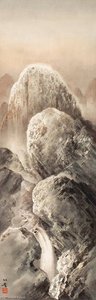
    • The Guilin Elephant Trunk Hill
    • WILLOWS BY THE BROKEN BRIDGE
  • Works on APS: 6

Huang Huanwu: A Master of Tranquil Landscapes

Huang Huanwu (born circa 1760 – living) stands as a prominent figure in late Qing Dynasty Chinese landscape painting, renowned for his masterful depictions of serene winter ponds and evocative portrayals of birds amidst snowy mountains. While biographical details remain somewhat sparse—a testament to the challenges faced by artists during that era—his artistic legacy speaks volumes about his dedication to capturing the essence of nature’s beauty and conveying profound philosophical ideas rooted in Daoist principles. Little is known definitively about Huanwu's formative years. He emerged from Guilin, Guangxi Province, a region celebrated for its karst topography and rich artistic tradition. Tradition suggests he received his initial training under the tutelage of renowned masters who instilled in him a deep appreciation for ink wash painting—specifically the meticulous observation of natural forms and the skillful use of brushstrokes to convey atmospheric conditions. This foundational education shaped Huanwu’s artistic vision, prioritizing harmony with the environment and reflecting Daoist ideals within his compositions. Huang Huanwu’s distinctive style is characterized by exceptional calmness and restraint. He favored a technique known as *Gu Yun Xing Shui*, translating roughly to “silent mountain, flowing water,” which perfectly encapsulates his artistic vision. His compositions prioritize subtle tonal variations—delicate washes of ink layered upon each other—to create an illusion of depth and luminosity. Huanwu’s brushwork is remarkably precise yet fluid, capturing the textures of snow-covered peaks and the ripples on frozen lakes with breathtaking accuracy. This meticulous approach ensured that every stroke conveyed not merely visual information but also a feeling of tranquility and contemplation – qualities central to Daoist philosophy. “Ducks in the Winter Pond” exemplifies his mastery of winter landscapes. The painting captures a tranquil scene—ducks gliding across a glassy expanse of ice—illuminated by soft moonlight, conveying a sense of stillness and contemplation. This artwork embodies Huanwu’s signature style: understated beauty achieved through careful tonal gradation and precise brushwork, mirroring the serenity found in Daoist meditation practices. “Egret and Carps” showcases Huanwu’s ability to depict birds in harmony with their environment. This piece portrays herons perched gracefully on lily pads amidst a pond teeming with carp, symbolizing longevity and prosperity – motifs frequently found in Daoist iconography. The artist skillfully rendered the plumage of the heron and the shimmering surface of the water, demonstrating his technical prowess while simultaneously conveying symbolic meanings rooted in Chinese folklore and spirituality. Huanwu's artistic sensibilities were undoubtedly influenced by the prevailing philosophical currents of his time—particularly Daoism—which emphasized living in accordance with nature’s rhythms and achieving inner harmony. The artist’s meticulous attention to detail and his unwavering commitment to conveying emotional resonance cemented his place as one of the most respected landscape painters of the Qing Dynasty. His enduring legacy resides not only in the aesthetic beauty of his paintings but also in their profound reflection of Daoist principles—a testament to the transformative power of art to inspire contemplation and connect us with the natural world.