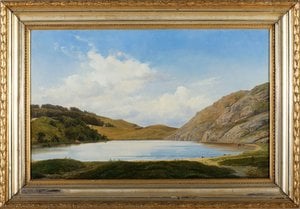
El alma de la costa de Skagen: La vida y el legado de Holger Drachmann
Holger Henrik Herholdt Drachmann fue mucho más que un simple practicante de las artes; fue un pulso vital dentro del Modernismo escandinavo, un hombre cuyo espíritu creativo tendió puentes entre los mundos de la poesía lírica y la pintura evocadora. Nacido en Copenhague en 1846, sus primeros años estuvieron ensombrecidos por la profunda pérdida de su madre, un acontecimiento que muchos estudiosos creen que nutrió una sensibilidad de por vida hacia el drama y lo heroico. Al crecer como hijo de un cirujano naval, Drachmond a menudo se refugiaba en reinos imaginativos, organizando juegos teatrales donde encarnaba las legendarias hazañas de héroes marítimos daneses como Peder Tordenskjold. Esta fascinación temprana por la narrativa y la grandeza del mar se convertiría más tarde en la piedra angular de su identidad artística, manifestándose tanto en sus versos expansivos como en sus turbulentos paisajes marinos. A medida que su viaje creativo se desarrollaba, Drachmann se sintió atraído lejos de las limitaciones académicas de la ciudad hacia los paisajes rugosos y luminosos del norte. Un momento crucial ocurrió en 1872, cuando una visita a Skagen, junto al artista Frits Thaulow, encendió una devoción de por vida por la colonia artística de Skagen. Este remoto rincón de Dinamarca, donde el estrecho de Skagerrak se encuentra con el Mar del Norte, le proporcionó una musa inagotable y dramática. En este entorno único, Drachmann se alejó del realismo meticuloso y rígido para abrazar, en su lugar, un estilo que priorizaba la resonancia emocional y la verdad atmosférica y cruda del paisaje nórdico. Su obra comenzó a reflejar una hermosa tensión entre la sentimentalidad lírica de su alma poética y las observaciones impresionistas y vigorosas del mundo natural.Una maestría dual entre el verso y el lienzo
Si bien la historia suele recordar a Drachmann como uno de los poetas y dramaturgos más célebres de Dinamarca, sus contribuciones a las artes visuales son igualmente profundas en su intensidad emocional. Él consideraba su pintura como una actividad secundaria a su escritura; sin embargo, esta misma relación permitió que sus lienzos poseyeran una cualidad poética única. Su pincelada rara vez se preocupaba por la mera precisión topográfica; más bien, buscaba capturar la esencia intangible del mar: su poder, su luz y su misterio. En obras maestras como “Hammersø”, se puede observar la influencia del impresionismo, donde trazos audaces y una paleta vibrante trabajan en armonía para representar la línea costera no solo como tierra y agua, sino como una entidad viva y palpitante de drama y asombro. La amplitud de su producción creativa se comprende mejor a través de los temas que unificaron sus diversas disciplinas:- Grandeza marítima: Su fascinación por la historia naval y el mar proporcionó una temática constante tanto para sus poemas épicos como para sus pinturas marinas.
- Naturalismo y luz: A través de su asociación con los pintores de Skagen, dominó el arte de capturar la luz fugaz y etérea característica de la costa danesa.
- El Modernismo escandinavo: Su obra encarnó el cambio del movimiento hacia el realismo, la conciencia social y un alejamiento de las tradiciones académicas romantizadas.
Significancia histórica y espíritu perdurable
El legado de Drachmann está inextricablemente ligado a la identidad cultural de Dinamarca y al movimiento escandinavo en general. Fue una figura central en una comunidad de artistas —que incluía a Michael y Anna Ancher y P.S. Krøyer— que transformaron un pequeño pueblo de pescadores en un santuario de luz e innovación reconocido mundialmente. Su capacidad para fusionar lo literario con lo visual ayudó a definir una era en la que el arte se convirtió en una herramienta para explorar tanto la identidad nacional como la condición humana. Incluso mientras navegaba por las complejidades de la fama y las mareas cambiantes de la moda artística, su dedicación a capturar el espíritu de su entorno permaneció inquebrantable. Aunque falleció en 1908, los ecos de su creatividad continúan resonando en las salas del Museo Skagens y en los corazones de aquellos conmovidos por su imaginería evocadora. Drachmann permanece como un símbolo del artista como narrador, un hombre que podía encontrar lo épico dentro de una sola ola y lo profundo dentro de un verso. Su vida se erige como un testimonio del poder del paisaje escandinavo para inspirar un movimiento que cambió para siempre la trayectoria del arte del norte de Europa.Preguntas y respuestas
¿Con qué otros nombres se conoce a Holger Drachmann?
Holger Drachmann también es conocido por los nombres Holger Henrik Herholdt Drachmann.
¿Puedo explorar las obras de Holger Drachmann por palabra clave?
Para encontrar obras de Holger Drachmann sobre un tema específico, utilice la página de Por palabras clave del artista, que agrupa las obras por palabras clave.
¿Puedo explorar las obras de Holger Drachmann por técnica?
La página Todas las técnicas agrupa las obras de Holger Drachmann por técnica.