Asesoría de arte gratuita

x

Resumen biográfico

  • Born: 1879, Brazil
  • Nationality: Brazil
  • Art period: Modern
  • Top 3 works:
    • Ponte sobre o Rio das Almas - Pirenópolis, 1892.
    • Membros da Comissão Exploradora do Planalto Central do Brasi na Cachoeira do Rio Cassú - Uberaba, 1892.
    • Membros da Comissão Exploradora do Planalto Central no alto dos Pirineus - Goiás, 1892.
  • Also known as: henrique morize
  • Ver más…
  • Top-ranked work: Ponte sobre o Rio das Almas - Pirenópolis, 1892.
  • Museums on APS:
    • Archivo Público del Distrito Federal
    • Archivo Público del Distrito Federal
    • Archivo Público del Distrito Federal
    • Archivo Público del Distrito Federal
    • Archivo Público del Distrito Federal
  • Works on APS: 3
  • Copyright status: Under copyright

Test de arte

Solo hay una respuesta correcta para cada pregunta.

Pregunta 1:
What was Henrique Charles Morize’s primary profession besides art?
Pregunta 2:
In what year did Henrique Charles Morize become the first president of the Brazilian Academy of Sciences?
Pregunta 3:
Morize is particularly celebrated for his involvement in:
Pregunta 4:
Where did Morize conduct a significant photographic expedition documenting Brazilian landscapes?
Pregunta 5:
What artistic style characterized Henrique Charles Morize's paintings?

Henrique Charles Morize: Bridging Science and Art in Brazil’s Belle Époque

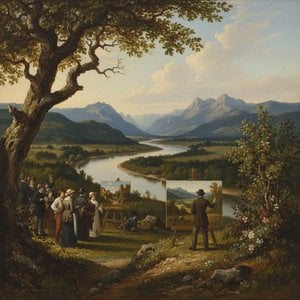
Henrique Charles Morize (1879 – present) stands as a singular figure in Brazilian artistic history—a physician who simultaneously pursued excellence in scientific exploration and cultivated a remarkable talent for landscape painting. Often overshadowed by the grand narratives of Brazilian intellectualism during the late 19th century, Morize’s contribution deserves recognition not merely as an artist but as a pivotal participant in shaping Brazil's cultural identity. Born in São Paulo, Morize’s early life was marked by academic pursuits and a fascination with natural sciences. He graduated from Faculdade de Medicina da Universidade Livre Paulista and quickly established himself as a respected physician specializing in ophthalmology. However, his passion extended far beyond the confines of medicine; he possessed an unwavering dedication to advancing knowledge about Brazil's flora and fauna—a conviction that would propel him into groundbreaking expeditions. Morize’s artistic journey began modestly but blossomed with intensity during the Belle Époque. Influenced by Impressionism and Post-Impressionism, particularly Claude Monet and Camille Pissarro, he embraced plein air painting techniques, capturing the vibrant hues of Goiás landscapes with breathtaking accuracy. His canvases depict scenes from expeditions undertaken to document Brazilian biodiversity—the Cachoeira do Rio Cassú near Uberaba and the Ponte sobre o Rio das Almas in Pirenópolis being among his most celebrated works. These paintings aren’t simply representations of scenery; they are imbued with a palpable sense of wonder, reflecting Morize's profound appreciation for the natural world and conveying its beauty to viewers. The meticulous detail—the dappled sunlight filtering through foliage, the reflections shimmering on water—demonstrates an artist acutely attuned to capturing fleeting moments of visual experience. The expeditions themselves were ambitious undertakings, spearheaded by Morize and supported by the Brazilian Academy of Sciences. They aimed to comprehensively catalog plant species and geological formations across Goiás, contributing significantly to botanical science and furthering understanding of Brazil’s geographic heritage. These journeys weren't merely scientific endeavors; they served as inspiration for his artistic output, fostering a symbiotic relationship between observation and creative expression. He meticulously documented his findings through sketches and watercolors, which would later inform the composition and color palettes of his paintings. Morize’s presidency of the Brazilian Academy of Sciences from 1916 to 1926 cemented his legacy as a champion of scientific progress in Brazil. During this period, he fostered collaboration between researchers and promoted the dissemination of knowledge—a commitment that solidified his position as one of Brazil's foremost intellectuals. His artistic achievements stand alongside his scholarly accomplishments, illustrating a life dedicated to both intellectual curiosity and aesthetic beauty. Henrique Charles Morize’s work continues to resonate today, reminding us of the transformative power of combining scientific rigor with artistic vision – a testament to a truly exceptional Brazilian artist.