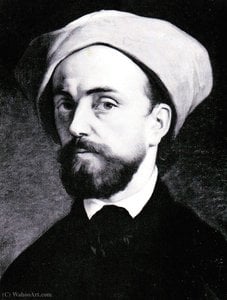
Una voz húngara en las corrientes del Realismo
Henrik Weber, nacido en Pest el 24 de mayo de 1818, emergió como una figura fundamental en el arte húngaro del siglo XIX; un pintor que logró tender un puente magistral entre la delicada sensibilidad del periodo Biedermeier y la fuerza naciente del Realismo. Su historia de vida es un relato de dedicación artística, navegando por las cambiantes mareas estéticas y contribuyendo significativamente al desarrollo de una identidad nacional distintivamente húngara a través de su obra. Aunque inicialmente su padre, el comerciante Mihaly Wéber, intentó orientarlo hacia un camino científico, la pasión innata del joven Henrik por el dibujo resultó irresistible. Sus cuadernos de bocetos, repletos de figuras imaginativas, revelaban un talento que no podía ser reprimido, lo que llevó a su padre a organizar lecciones con János Tóbiás Kálging, un artista local que reconoció y nutrió el potencial del niño.
La formación artística formal de Weber comenzó en 1835 en la Academia de Bellas Artes de Viena. Allí, se vio influenciado por Johann Ender y Leopold Kupelwieser, instructores que lo guiaron sutilmente lejos de las rígidas convenciones académicas hacia una representación más veraz del mundo, un temprano acercamiento al Realismo. Para costear sus estudios, Weber complementó sus ingresos impartiendo lecciones de arte y trabajando como litógrafo, demostrando un espíritu emprendedor desde temprana edad junto a sus aspiraciones artísticas. Su talento pronto fue reconocido, estableciéndolo como un retratista muy solicitado en Viena hacia finales de la década de 1830. Sin embargo, este éxito no definiría la totalidad de su carrera.
De los retratos a las narrativas históricas
Cuando la demanda de retratos decayó en Viena alrededor de 1840, Weber tomó la decisión estratégica de trasladarse a Múnich. Este movimiento marcó un punto de inflexión en su enfoque artístico. Ante los continuos desafíos para consolidar su nombre, comenzó a explorar temas históricos, específicamente escenas extraídas de la historia húngara. La muerte de John Hunyadi, una de esas obras, alcanzó un éxito notable y consolidó la reputación de Weber como una figura prominente en la pintura histórica húngara. Este cambio no fue simplemente una alteración en la temática; fue una afirmación del orgullo nacional y de la identidad artística en una época en la que Hungría experimentaba un creciente sentimiento nacionalista.
Entre 1845 y 1847, Weber emprendió un viaje por Italia, sumergiéndose en sus paisajes y observando la vida cotidiana. Este periodo dio lugar a obras de género que retrataban la vida campesina junto a paisajes evocadores, revelando a un artista profundamente sintonizado con la belleza del mundo natural y la dignidad de la gente común. No obstante, a pesar de la inspiración que ofrecían el arte y los escenarios italianos, Weber sintió una creciente nostalgia por su tierra. Regresó a Pest en 1847, retomando el retrato mientras continuaba explorando la pintura de paisaje e histórica.
Un legado forjado a través de la perseverancia
La vida de regreso en Hungría no estuvo exenta de dificultades. A pesar de su innegable talento, los encargos constantes resultaron esquivos. Weber se mantuvo mediante la litografía para revistas locales —un testimonio de su versatilidad— y continuó ofreciendo lecciones de arte. Este periodo pone de relieve la existencia precaria de muchos artistas durante el siglo XIX, dependientes de un mercado fluctuante y a menudo obligados a diversificar sus habilidades para sobrevivir. Continuó trabajando con diligencia en Pest hasta su muerte el 14 de mayo de 1866.
El estilo artístico de Weber se caracteriza por su mezcla de la precisión del Biedermeier con los principios emergentes del Realismo. Priorizó la representación fiel y el enfoque en la vida cotidiana, influenciado significativamente por Ender y Kupelwieser en Viena, así como por Michelangelo Grigoletti durante su estancia italiana. Su influencia se extendió más allá de sus propias creaciones; fue mentor de artistas más jóvenes, siendo el más notable Károly Lotz, moldeando así a la siguiente generación de pintores húngaros.
Pionero de una voz artística nacional
La importancia histórica de Henrik Weber reside en su papel pionero al establecer el Realismo como una fuerza mayor dentro del arte húngaro. Sus pinturas no eran simples representaciones de eventos; eran declaraciones poderosas que contribuían al desarrollo de la identidad artística nacional durante un periodo de intensos cambios políticos y culturales. La Galería Nacional Húngara conserva numerosos ejemplos de su obra, reconociéndolo como un maestro de la pintura Biedermeier y una figura esencial del arte húngaro del siglo XIX. Además, sus litografías que documentan eventos históricos para “Az Ország Tükre” (“El Espejo del País”) conservan un gran valor histórico, ofreciendo registros visuales de una era crucial.
El legado de Weber es uno de integridad artística y dedicación a retratar el mundo tal como lo veía: un mundo imbuido tanto de belleza como de verdad. Se erige como un testimonio del poder del arte para reflejar y dar forma a la identidad nacional, dejando una huella indeleble en el paisaje cultural de Hungría.
Preguntas y respuestas
¿Qué tan populares son las obras de Henrik Weber?
La página de Estadísticas de Henrik Weber presenta estadísticas calculadas a partir de las obras del artista listadas en este sitio web.
¿Cómo puedo encontrar obras de Henrik Weber en una paleta específica?
Las obras de Henrik Weber pueden explorarse por paleta de colores en la página de Por paletas de colores del artista.
¿Dónde se encuentran las obras de Henrik Weber agrupadas por movimiento artístico?
Los movimientos en los que trabajó Henrik Weber pueden verse en la página de Todos los movimientos del artista, que agrupa las obras por movimiento.