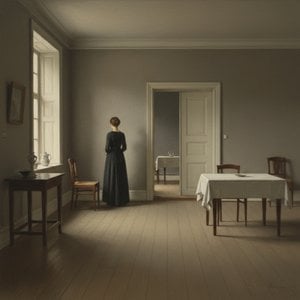
El arquitecto de la luz y la piedra: La vida de Heinrich Hansen
En el gran tapiz del arte danés del siglo XIX, pocos hilos están tejidos con tanta precisión y elegancia estructural como los dejados por Heinrich Hansen. Un maestro que insufló vida a la piedra fría y a las salas silenciosas, Hansen no fue simplemente un pintor de edificios, sino un poeta de la perspectiva. Nacido en 1821 en Haderslev, su viaje desde ser el hijo de un tintoriente de telas de Flensborg hasta convertirse en un prestigioso Consejero de Estado y profesor de la Real Academia Real de Bellas Artes de Dinamarca es testimonio de una vida dedicada a la observación meticulosa de la forma y la luz. Sus primeros años como pintor aprendiz le dotaron de un respeto fundamental por el oficio: una comprensión táctil de los materiales que más tarde le permitiría representar las texturas del mármol, la madera y la mampostería con un realismo sin igual.
La llegada de Hansen a Copenhague en 1842 marcó el inicio de una era transformadora. Al matricularse en la Real Academia Real de Bellas Artes de Dinamarca con la intención de convertirse en pintor decorativo, demostró rápidamente una aptitud para encargos prestigiosos de gran escala. Su temprana colaboración en las opulentas decoraciones del Museo Thorvaldsen señaló su surgimiento como un talento vital capaz de asumir el peso de proyectos artísticos monumentales. Este periodo se caracterizó por una búsqueda implacable de la maestría técnica, evidenciada por su medalla de plata en 1846 por la pintura de modelos vivos, una hazaña que demostró su capacidad para capturar la vitalidad orgánica de la vida incluso mientras se desplazaba hacia las disciplinas más rígidas de la arquitectura.
Un viaje a través de la grandeza europea
La trayectoria de la carrera de Hansen se vio profundamente alterada por sus viajes, financiados por el prestigioso Fondo Reiersenske. En 1847, un viaje a Alemania le permitió refinar su visión artística y, lo que es crucial, comprometerse con la disciplina especializada de la pintura arquitectónica, convirtiéndose, en esencia, en el primer verdadero practicante de este género en Dinamarca. Mientras recorría Europa Occidental, incluyendo los paisajes bañados por el sol de Italia, Hansen absorbió los profundos legados de los Grandes Maestros. El dramático claroscuro de Caravaggio y la profundidad atmosférica de Rembrandt se convirtieron en los instructores silenciosos de su pincel, enseñándole cómo utilizar la sombra para definir el volumen y la luz para sugerir los alcances infinitos de la nave de una catedral.
Sus viajes no fueron meramente observacionales, sino productivos, dando lugar a obras que capturaron el alma de los monumentos europeos. Un logro notable de esta época fue su representación de la Iglesia de Nuestra Señora del Sablon, una pieza tan evocadora de su entorno que fue adquirida para la Colección Real. Este periodo de errancia consolidó su capacidad para traducir la escala monumental de la arquitectura histórica en la experiencia íntima de un lienzo, combinando la precisión de un dibujante con el alma de un romántico.
Legado en perspectiva y prestigio
A su regreso a Dinamarca, la influencia de Hansen permeó las mismas instituciones que dieron forma a la identidad artística de la nación. Tras el fallecimiento de Gustav Friedrich Hetsch en 1864, Hansen ascendió al cargo de profesor de perspectiva en la Academia, un rol que desempeñó con distinción durante muchos años. Su impacto pedagógico aseguró que el estudio rigurooso del espacio, la luz y la ornamentación continuara a través de las generaciones posteriores de artistas daneses. Más allá del aula, su trabajo en sitios históricos significativos —como la monumental tarea de embellecer la capilla funeraria del Rey Christian IV en la Catedral de Roskilde junto a Wilhelm Marstrand— consolidó su estatus como guardián del patrimonio arquitectónico de Dinamarca.
La importancia de Heinrich Hansen reside en su capacidad única para tender un puente entre lo decorativo y lo profundo. Su obra, que abarca desde la atmosférica Capilla Lateral hasta la energía bulliciosa de El Mercado de Pescados, muestra una maestría versátil sobre las diferentes escalas de la experiencia humana. A través de sus ojos, no solo vemos edificios; sentimos el peso de la historia, la quietud de los espacios sagrados y la majestuosidad perdurable del entorno construido. Él permanece como una piedra angular del arte académico danés, un artista que nos enseñó que incluso la piedra más silenciosa guarda una historia esperando ser iluminada.