Asesoría de arte gratuita

x

關良

1900 - 1986

Resumen biográfico

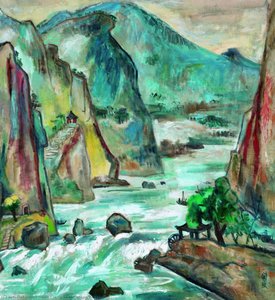
  • Top-ranked work: Landscape of Shimen
  • Top 3 works:
    • Landscape of Shimen
    • The Legend of the White Snake
    • Street Scene in Kunming
  • Nationality: China
  • Died: 1986
  • Art period: Arte moderno
  • Ver más…
  • Born: 1900, Panyu, China
  • Copyright status: Under copyright
  • Lifespan: 86 years
  • Museums on APS:
    • Centro de Investigación del Documento de Arte Moderna y Contemporánea de China
    • Centro de Investigación del Documento de Arte Moderna y Contemporánea de China
    • Centro de Investigación del Documento de Arte Moderna y Contemporánea de China
    • Centro de Investigación del Documento de Arte Moderna y Contemporánea de China
    • Centro de Investigación del Documento de Arte Moderna y Contemporánea de China
  • Works on APS: 5

Guan Liang: Pioneer of Peking Opera Ink Wash Painting

Guan Liang (關良), born in Panyu, Guangdong province in 1900, stands as a pivotal figure in the history of Chinese art – specifically recognized for his groundbreaking fusion of Western painting techniques with traditional ink wash painting, primarily focused on depictions of Peking opera characters. He wasn’t merely an artist; he was a cultural ambassador who bridged artistic traditions and propelled them into a new era. Early Life & Education: Guan Liang's formative years were spent in Tokyo, Japan, where he pursued intensive studies under Fujishima Takeji, mastering the principles of oil painting – a discipline largely absent from Chinese art at the time. This exposure to Western aesthetics profoundly shaped his artistic vision and would later inform his innovative approach. He diligently studied Cézanne’s geometric forms and Matisse's vibrant color palettes, recognizing their potential to enrich the expressive power of ink wash painting. Return to China & Artistic Beginnings: Upon returning to China in 1922, Guan Liang established himself as a teacher at Shanghai Fine Arts School and the National Academy of Art (now China Academy of Art), nurturing generations of aspiring artists. He quickly gained recognition for his talent and dedication to preserving Chinese artistic heritage. During this period he was influenced by Henri Matisse’s bold use of color and composition, which would become hallmarks of his own distinctive style. The Northern Expedition & Artistic Activism: A fervent patriot, Guan Liang joined the Northern Expedition in 1927 against the warlords, serving as Arts and Publicity Director for the expedition army. This involvement instilled in him a deep understanding of social responsibility and fueled his commitment to artistic expression as a tool for cultural advancement. He believed that art could inspire national unity and contribute to shaping public opinion during this turbulent era. Recognition & Exhibitions: Guan Liang’s artistic reputation soared throughout the 1930s and 40s, culminating in his debut solo exhibition in Chengdu, Sichuan province in 1940. Notably, he was selected by the government to participate in the Berlin Arts Institute Exhibition in East Germany in 1957, showcasing China’s artistic achievements on an international stage. This exhibition solidified Guan Liang's position as a leading figure in Chinese art and garnered considerable acclaim from European critics. Shanghai Years & Legacy: Guan Liang settled in Shanghai in the 1960s, establishing a prolific career and becoming Vice Chairman of the Shanghai Branch of the Chinese Artists Association. He continued his scholarly pursuits at Shanghai Jiaotong University as Director of the Art Research Office, cementing his role as an influential educator and researcher. His enduring contribution to Chinese art was commemorated by a memorial exhibition at the Shanghai Art Museum in 1987. Guan Liang’s work remains celebrated for its masterful blend of Western painting techniques with traditional ink wash style—a testament to his visionary spirit and unwavering dedication to artistic innovation. He is remembered as one of China's foremost artists, whose legacy continues to inspire generations of painters.