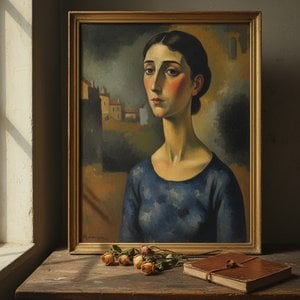
El alma del Rococó: La vida y el arte de Giuseppe Nogari
En el vibrante mundo de la Venecia del siglo XVIII, entre sus canales y aguas, pocos artistas capturante la dignidad silenciosa e introspectiva de la condición humana con tanta conmoción como Giuseppe Nogari. Nacido en 1699, Nogari emergió durante una era transformadora, cuando las sombras pesadas y dramáticas del Barroco comenzaban a ceder ante la gracia ligera y etérea del Rococó. Mientras muchos de sus contemporáneos buscaban deslumbrar la vista con opulentas exhibiciones de riqueza y grandeza, Nogari se labró un nicho único dentro de la escuela veneciana. Su obra sirve como una profunda meditación sobre el carácter, centrándose a menudo en los rostros curtidos y los humildes atavíos de individuos ancianos, plasmados con una profundidad psicológica que trasciende el mero retrato.
Los cimientos de la maestría de Nogari se forjaron en los prestigiosos talleres de Venecia, donde absorbió las diversas corrientes del arte italiano. Se cree que estudió bajo la tutela de Antonio Balestra}, cuya influencia le proporcionó una base sólida en la tradición clásica, pero fue probablemente su paso por el taller de Giovanni Battista Piazzera lo que verdaderamente encendió su espíritu creativo. De Piazzetta, Nogari heredó una predilección por el dramático claroscuro y la capacidad de dotar a sus sujetos de un sentido palpable de emoción. Este linaje, combinado con la delicada sensibilidad pastel de Rosalba Carriera y la sofisticada elegancia de Jacopo Amigoni, le permitió tejer un estilo que era, simultáneamente, mucho más arraigado que el típico floreo rococó y, sin embargo, exquisitamente refinado.
Un dominio de la emoción y la atmósfera
La obra de Nogari es celebrada principalmente por su enfoque distintivo del retrato de medio cuerpo. En lugar de presentar a sus sujetos en un vacío de esplendor aristocrático, a menudo los situaba contra fondos oscuros y discretos que obligaban al espectador a confrontar la humanidad del sujeto directamente. Su técnica se caracterizó por un uso sutil del color y pinceladas suaves y fluidas que otorgaban una textura realista tanto a la piel como a las telas. Existe una cierta belleza melancólica en sus representaciones; poseía un don extraordinario para capturar la dignidad que se encuentra en la sencillez, retratando con frecuencia figuras históricas, religiosas o cotidianas con vestimentas algo desgastadas o modestas.
Este enfoque en la vida interna de sus sujetos sugiere una admiración por el maestro holandés Rembrandt, cuya influencia puede apreciarse en el uso que Nogari hace de la luz para esculpir la forma y evocar estados de ánimo. Ya estuviera pintando a un santo o a un plebeyo, el artista buscaba revelar la narrativa subyente escrita en las líneas de un rostro o en el pliegue de una manga. Su capacidad para equilibrar la ligereza decorativa del Rococó con un realismo profundo y casi sombrío hizo que su trabajo destacara en una era a menudo criticada por su superficialidad.
Comisiones reales y un legado perdurable
Aunque gran parte de su corazón permaneció en los íntimos escenarios del retrato veneciano, la reputación de Nogari le otorgó oportunidades significativas mucho más allá de los canales de su tierra natal. Su talento atrajo la atención de poderosos mecenas internacionales, especialmente de la nobleza alemana que residía en Venecia, como Sigismund Streit y Johann Matthias von der Schulenburg. Estas conexiones facilitaron finalmente su traslado a Turín, donde emprendió algunos de sus proyectos decorativos más monumentales.
Durante su estancia en Turín entre 1739 y 1742, Nogari demostró su versatilidad al trabajar para la prestigiosa Casa de Saboya. Sus contribuciones al Palacio Real de Turín y al impresionante pabellón de caza de Stupinigi hicieron gala de una capacidad para manejar composiciones a gran escala e integraciones arquitectónicas grandiosas. Estas comisiones demostraron que podía dominar la escala del esplendor real con la misma eficacia con la que dominaba la intimidad de un pequeño retrato.
Para el momento de su muerte en 1766, Giuseppe Nogari ya había asegurado su lugar en los anales de la historia del arte. Su legado se define por varias contribuciones artísticas clave:
- Realismo psicológico: La capacidad de ir más allá de la semejanza superficial para capturar la esencia emocional de sus sujetos.
- Síntesis estilística: Una mezcla única del claroscuro barroco con la gracia y las paletas pastel del Rococó.
- Perspectiva humanista: Un enfoque perdurable en la dignidad del individuo, independientemente de su posición social o vestimenta.
Hoy en día, las obras de Nogari siguen siendo puntos de referencia vitales para comprender la complejidad del arte del siglo XVIII, recordándonos que, incluso dentro de los movimientos más decorativos, existe una profunda capacidad para la verdad y la conexión humana.
Preguntas y respuestas
¿Puedo explorar las obras de Giuseppe Nogari por estado de ánimo?
La página de Rincón de emociones del artista muestra las obras de Giuseppe Nogari organizadas según su atmósfera.
¿Cómo puedo encontrar todas las obras de Giuseppe Nogari por técnica?
Para encontrar todas las obras de Giuseppe Nogari por técnica, visite la página de Todas las técnicas del artista.
¿A qué periodo histórico pertenecía Giuseppe Nogari?
Giuseppe Nogari trabajó durante el periodo Edad Moderna. Este periodo sitúa la actividad del artista en su contexto histórico.